
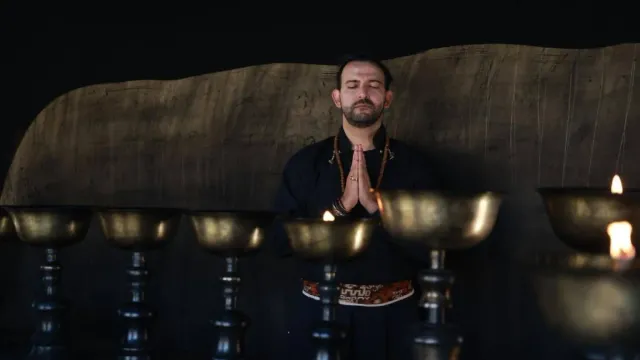
Anand Mehrotra, who started the Sattva Yoga Academy in his hometown of Rishikesh, sees meditation as a place of being rather than something that is imposed. His meditative sessions begin with breathwork and require ease rather than exertion from you, and are designed in such a way as to suit your daily schedule.
Meditation Inside a Larger System
Mehrotra does not treat meditation as an isolated practice. According to his biography in The Academy, the Sattva Meditation Technique is one among several components of a holistic process that includes the practices of pranayama, Tantric kriyas, Kundalini, vinyasa and Chi — the whole being called Sattva Yoga by Mehrotra when he put them together in 2012. In that order, breath control and physical activity get the body and mind ready; meditation is the still stage.
Some definitions may be useful. Pranayama is breath control. Kriya is a specific method for controlling energy. Vedanta, the philosophy on which the Himalayan Yog-Vedantic practice of the Academy is based, focuses on the nature of the self and consciousness; and this is why the meditation practice in this tradition is referred to as one of recognising something that is already there.
Recommended For You
A Fifteen-Minute Practice
One of the most recent examples of such a meditation is Effortless Presence, which appeared in March 2026 in Mehrotra’s podcast Sattva: Himalayan Wisdom with Anand Mehrotra. The meditation takes around fifteen minutes; during it, the listener is asked to concentrate on breathing and paying relaxed attention, to relax the body and mind and be an observer of thoughts without attachment to them.
At the end, Mehrotra asks people to anchor their awareness in the heart and breath. The episode description describes it as a practice that can be used to have a short break and recharge; thus, this meditation is quite easy to repeat.
The instruction behind the practice – observing a thought without following it – is very typical for different contemplative traditions. In the Vedantic context, the observer of thoughts and actions is called the witness; it means that there is some part of consciousness that is unchanging despite all the changes happening around it. This philosophical concept is the basis for the combination of an instruction and a brief explanation of the practice itself.
Breath as the Doorway
In the March 2026 episode as well as during a previous interview, the breath is the way in. During the Vital Veda podcast session as part of a webinar, Mehrotra begins by introducing a practice known as "Cultivating the Subtle Bliss," which is described in the episode notes as a blend of pranayama and kriya from the Himalayas, followed by an introduction of bliss, surrender and the techniques of how one gets there. The guided exercises can be found in the Sattva Connect library of the Academy's online portal.
Stories as a Way In
Every episode is not a practice. The podcast contains a storytelling series in which stories from India's living oral tradition are narrated by Mehrotra. There is a connection between storytelling and meditation in the said tradition, since both are done to help a person free their mind of the usual perception in order for something else to become more evident. The podcast's recording was taken from satsangs held in Rishikesh in the foothills of the Shivalik Himalayas.
A Careful Conversation About Mental Health
The connection between meditation and the psychological well-being of individuals is one topic where instructors have to exercise caution. Mehrotra has featured on a podcast session in discussion with clinical psychologist Dr Lauren Tober through the Yoga Australia industry body, discussing his journey into being a yoga instructor, the function of yoga within the context of psychological health, and leading a meaningful life.
Just like any other contemplative practice, the meditation described above must be seen as spiritual education rather than a substitute for professional treatment of those suffering from psychological disorders.
From the Cushion to Daily Life
Similarly, this stress — the practice which holds up against exposure to mundane decision-making — is common in Mehrotra's broader teaching as illustrated in the Mid-day article that explores his teaching of yoga as a practice of everyday life. Meditation, according to this approach, involves preparation: the reflection before responding to an attack or breathing before entering a tough conversation.
Frequently Asked Questions
How do you learn meditation with Anand Mehrotra?
Anand Mehrotra introduces meditation using breath awareness and relaxed mind techniques, requiring one to loosen up one's body and let go of mind chatter. Sessions with guidance are offered via his podcasts and through Sattva Connect. The practice of meditation is also included in the Sattva Yoga practices through Sattva Yoga Academy.
What is Sattva Meditation?
The technique of Sattva Meditation is mentioned in Anand Mehrotra's biography at the Sattva Yoga Academy as part of the integrated system of Sattva Yoga, together with pranayama, Tantric kriyas, Kundalini Yoga, vinyasa flows and Chi movements.
Where do I find a guided meditation by Anand Mehrotra?
Guided meditations, including a fifteen-minute Effortless Presence session, can be accessed in his podcast Sattva: Himalayan Wisdom with Anand Mehrotra and through the Sattva Connect site.
(Note: This article has been written by the Brand Desk.)