
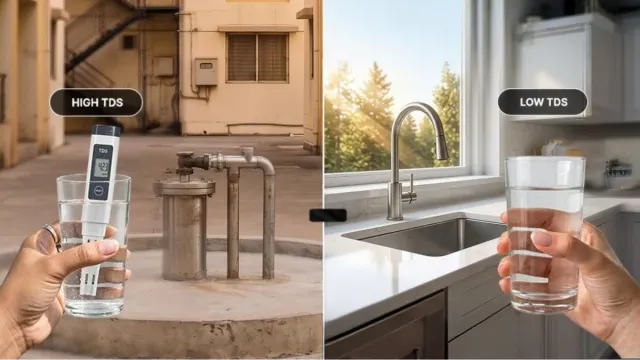
Having easy access to safe and clean drinking water is important for everyone's health and well-being. In India, people usually access their daily water supply by tapping borewells or from government water supplies. Both sources can supply people with water for their daily needs, but are quite dissimilar in water quality, mineral content in the water and impurities in the water.
Most people think any basic type of water purification system will work fine, but using an inappropriate purification system may result in inefficient filtration, unpleasant-tasting water, or the frequent replacement of filters in the system. However, knowing these two types of purification systems will enable you to select the right system for your home and give you the opportunity to drink safe water every day.
To differentiate between borewell water and municipal water.
It's useful to know how the water gets to your tap and what's in it when you are selecting a purification system.
1. Borewell Water
Well water is obtained by drilling borewells into the aquifers and pumping up the water. While travelling towards the surface, the water naturally goes through layers of rock, soil, and sand where minerals are dissolved and become part of this water. A high level of TDS in borewell water (300 ppm to 2000 ppm) is found.
Recommended For You
- Hard Water: The water contains different types of minerals, such as calcium, magnesium, sodium, and fluorides, resulting in it having hard properties and a salty taste.
- Heavy Metals and Chemicals: Groundwater in certain locations may contain harmful metals such as lead, arsenic or chemicals for agricultural purposes.
2. Municipal Water
The water sourced from the municipality comes from surface water from rivers, lakes, reservoirs, etc. The water is treated in city (municipal) facilities and sent to customers by way of property service lines.
- Low to Moderate TDS: Municipal water has a lower concentration of TDS, ranging from 50 ppm to 250 ppm.
- Soft Water: The water contains fewer minerals in total and is light.
While the water is being transported through the pipe system, there is a possibility it can collect dirt, rust or bacteria, collectively known as biological impurities. Borewell water is of far superior quality to city tap water, even though it is slightly expensive. Although slightly costly, Borewell water is of better quality than city tap water.
The impurities present in borewell and municipal water are completely different; as such, the borewell and municipal water systems use different filtration methods.
1. Purification Technology Used
Borewell Water Purifier: It is based on the Reverse Osmosis (RO) process. An extremely porous semi-permeable membrane removes excess dissolved salts, heavy metals and hard minerals. This helps to reduce the hardness of drinking water (HODW), thus making the water soft and potable.
These municipalities generally employ a system of Ultraviolet (UV) and Ultrafiltration (UF). Municipal water contains few minerals and the concentration of total dissolved solids (TDS) is low, so UV light does not harm the beneficial minerals.
2. Pre-Filter and Cartridge Requirements.
Borewell Water Systems: The water underground has fine sand, clay and heavy mud, which should be filtered out. Therefore, the water purification systems require an efficient sediment pre-filter and hard water scale protector to protect the membrane.
Municipal Water Systems: Water in towns has free chlorine, which is added during municipal treatment. After treatment, the water will have a foul odour and taste, which is neutralised by the use of activated carbon blocks in these systems.
3. Effect on the taste of water.
Heavy minerals: Give a salty or bitter taste to bore well water. The RO water purifier removes the dissolved minerals from hard water and makes it sweet drinking water.
Municipal Water Systems: Municipal water has its own natural taste and this natural taste is preserved by both systems (UV and UF), so that the drinking water is totally germ-free.
Comparing Borewell vs. Municipal Water Purifiers
Below is a quick summary of the differences between the two types of purification systems on the following main parameters:
Reverse Osmosis (RO) | Ultraviolet (UV) / Ultrafiltration (UF) | Primary Technology |
Ideal Input TDS | Above 300 ppm to 2000+ ppm | Below 200 – 300 ppm |
Treats Hard Water | Yes, softens Hard Water | No, made for soft water |
Removes heavy metals: Yes (Lead, Arsenic, Fluoride) | No (Focuses on germs and physical dirt) | |
Use of electricity | Needs electricity to run booster pump | Does not require much electricity to run UV lamp |
Foam Recovery | Recovers water when the foam is filtered out of the water | Water is not wasted when filtering out the foam |
For everyday use, which system is better?
There is no "best" system or "worst" system, and it will depend entirely on your local water supply.
If you are looking for a Borewell Water Purifier, select:
- Tap water tastes salty, heavy or bitter.
- White mineral stains appear on taps, electric kettles or on utensils.
- The TDS reading of your raw water is over 300ppm.
- Your water source is from underground wells, private tankers or a combination of sources.
In this case, you require the best water purifier with RO as the water purifier filter to purify water, eliminate harmful heavy metals and convert hard water as drinkable water.
Choose a Municipal Water Purifier If:
- Your water supply is directly provided by the local city water supply.
- You have a low TDS number (less than 200ppm) on your raw water meter.
- The water is normal and leaves no hard mineral stains.
- Alternatively, a UV or UF purifier can be considered as an alternative in some cases which can offer the required level of protection without removing healthy minerals from the water.
Before purchasing, there are several things to keep in mind.
Here are a few tips to make an informed choice before you select a water purification system.
Test Your Water First: First of all, check the TDS of your water before you go out and purchase a water purifier. In this manner, you will not be spending cash on an unsuitable answer or a low-quality system.
Look at the Total Cost: Second, check the prices of the water purifiers in addition to their maintenance costs. It's important to have an understanding of the RO filter cost and the cost of replacing the cartridges on the filter each year.
Verify Storage Capacity: Make sure to select the appropriate size of storage tank for your family's requirements. A 7-10 litre tank should suffice to provide you with enough water even in case of power failures.
Assess Support Service: Finally, try to find a water filtration system from a reputable company that offers easy maintenance.
Essential Maintenance Tips
Here are a few of the maintenance tips that will help you maintain your system well and help extend its lifespan:
1. Replace Pre-Filters Every 3 to 6 Months: Use the outer water filter to get rid of sand and mud. Regularly changing the outer filter of your system will help avoid drops in pressure as well as protect the internal parts. But you can find water purifiers that have long-life filters that will work for a longer period of time and lessen the frequency of filter changes.
2. Regularly clean the Storage Tank: Clean the inside storage tank on a regular basis to prevent dust and germ build-up.
3. Keep an eye on Output Taste and Flow: If you notice that you're getting a lot less water or the water tastes different, don't hesitate to call the service.
Conclusion
Understanding the concept of “best” water purifier is an essential part of water purifier selection in India, which requires an understanding of the quality of raw water available in the region. RO is used to demineralise the hard water in borewell water and is thus used in water purifiers.
In contrast, municipal water purifiers use either UV or UF to remove harmful microbes from soft water without affecting the mineral composition. Testing the TDS levels of water today can help in determining the right water purifier to ensure good health for the family by drinking clean and safe water.