
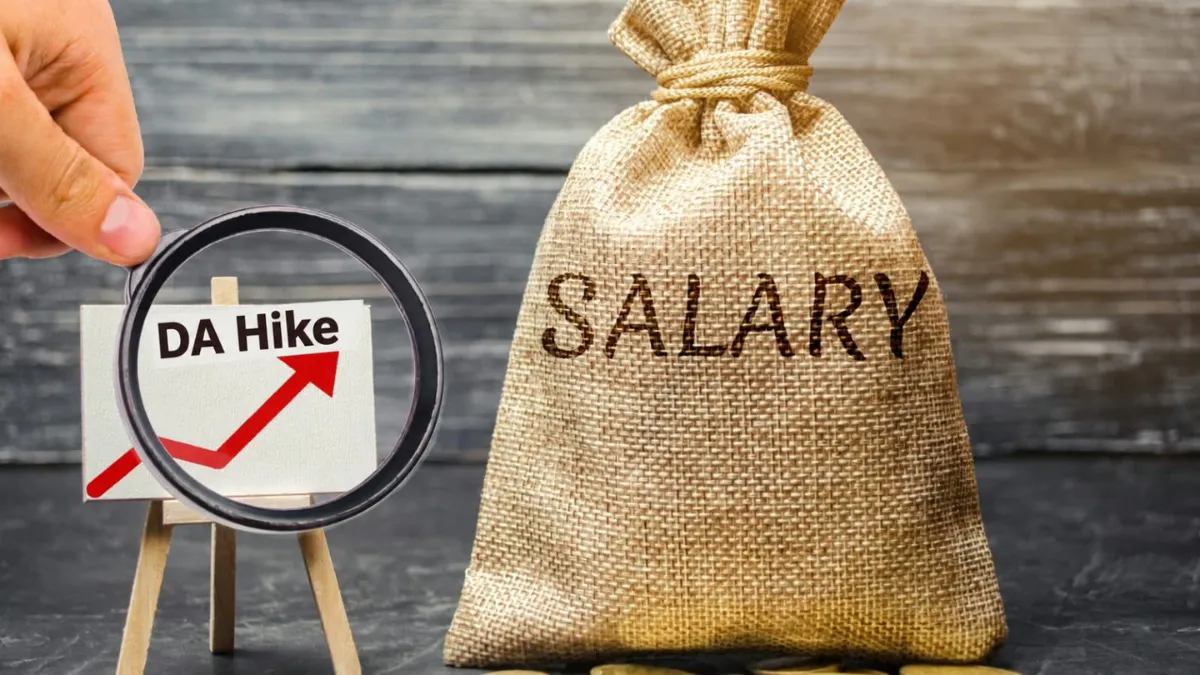
- Union Cabinet on Wednesday approved a 3% DA hike with arrears.
- The extra monthly amount equals 3% of basic pay.
- Here's how it will impact the salaries of central government employees.
DA Hike News: The Union Cabinet has increased the Dearness Allowance (DA) by 3 per cent from its current 60 per cent on Wednesday. This means government employees will now enjoy a 63 per cent DA for the July-December 2026 period. Also, they will get arrears for the delay in the DA hike announcement. Having said that, many people are still not clear about the concept of dearness allowance or how it affects one's salary. For clarity, here we have detailed what DA is and how the hike will impact the salary of government employees.
What Is Dearness Allowance (DA)?
Dearness Allowance is a part of the salary given to government employees so they can deal with inflation and the rising prices of everyday goods and services. It is worked out as a percentage of an employee’s basic salary. The government usually revises DA twice a year, and the changes normally take effect from January and July. These revisions are based on the movements in the Consumer Price Index for Industrial Workers (CPI-IW).
ALSO READ: Diwali Gift: Cabinet Approves 3% DA Hike For Central Govt Employees
How Will the 3% DA Hike Affect Salary?
The latest revision will raise DA from 60 per cent to 63 per cent of basic pay. Therefore, employees will get an extra amount equal to 3 per cent of their basic salary every month. For example, a Level 1 employee whose basic salary is Rs 18,000 currently gets Rs 10,800 as DA at the 60 per cent rate. After the revision, the DA amount will go up to Rs 11,340, which means an additional Rs 540 in the monthly salary. In the same way, a Level 10 employee with a basic salary of suppose Rs 56,100 will receive an extra Rs 1,683 every month.
Recommended For You
What Are DA Arrears?
DA arrears are the difference between the old and the new allowance for the months between the date the hike becomes effective and the date it is actually paid in the salary.
For example, if a DA hike is effective from July but it has been announced after several months, eligible employees may receive the difference between the old and revised DA rates for the applicable period. Suppose an employee whose basic salary is Rs 30,000 would receive Rs 900 in additional DA for every eligible month. Now, if the arrears are payable for 3 months, the employee will get an additional amount of Rs 2,700.
However, the actual rise in take-home pay may be a little different after taxes and other deductions are applied. Dearness Allowance is generally treated as taxable income under the income-tax rules. Employees should look at the official government orders to know the exact eligibility and how the arrears will be paid.
Does DA Hike Also Impact Other Salary Benefits?
A DA revision immediately raises the Dearness Allowance part of an eligible employee’s salary. Whether it also affects other parts of the salary depends on the service rules that apply to that employee. For instance, House Rent Allowance usually follows its own set of rules and does not go up every time DA is revised. Other benefits, allowances and retirement-related calculations can also be governed by separate government orders and regulations. So employees should not expect that a 3 percentage point DA hike will push up every component of their salary by the same percentage.