
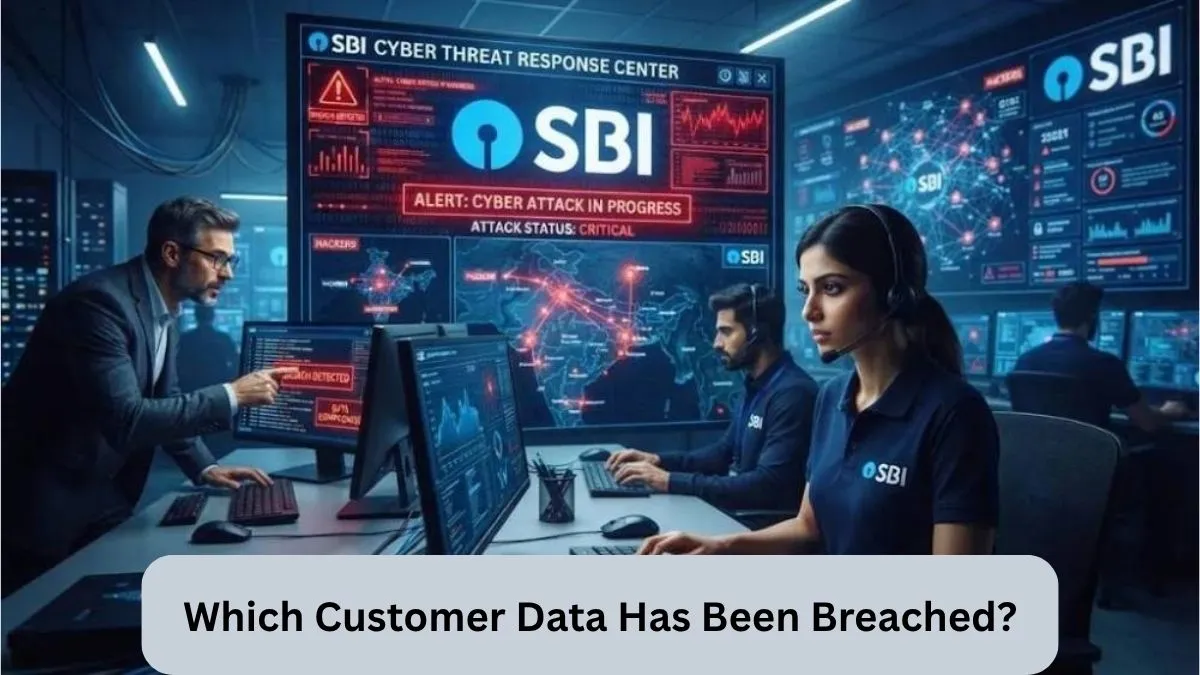
- SBI is currently investigating 3,897 customer records found on the dark web.
- The leaked data includes customers' names, mobile numbers, addresses, and CIF identifiers.
- Customers must be vigilant against fraud and identity theft risks.
The State Bank of India is currently investigating the data breach, with 3,897 customer records found on the dark web. According to the preliminary examination, SBI has stated that out of 3.75 lakh records available on the dark web, 3,897 records containing personal information have been identified. The incident was disclosed in the filing with the stock exchanges on October 21, 2026.
While the bank has confirmed that it would not affect its core banking functions, the leaked data has led to several concerns among customers. The exposed customer details can help fraudsters commit identity theft, launch targeted phishing attacks, and take control of financial accounts.
Also Read: Faster Refunds And Simpler Registration: GST Reforms Every Small E-Commerce Seller Needs To Know
What SBI Customer Data Has Been Leaked?
The information identified in the preliminary analysis included customers' names, dates of birth, gender, registered mobile numbers, email addresses, and residential addresses. Furthermore, the breached record also contained branch and customer information file (CIF) identifiers, lead IDs, metadata associated with loan and lead records, and other related files.
Recommended For You
However, the available information does not confirm that every affected customer's account credentials, passwords, PINS, or transaction details have been compromised. SBI has said that immediate remedial and preventive measures have been taken. The ongoing investigation will examine the authenticity of the breached data and weigh the exposure and risks it contains.
How Scammers Exploit CIF Identifiers, Mobile Numbers, and Loan Documents?
Scammers use CIF identifiers, mobile numbers, and loan documents to engineer financial fraud and unauthorised loan applications. The CIF is a unique digital file that combines a bank customer's entire profile, including account number, personal data, and credit history. Fraudsters can use the CIF ID to reset passwords, change email addresses, or link some unauthorised devices to a particular customer's account.
Meanwhile, the breach of mobile data imposes some serious consequences. Fraudsters can use it to import your phone number to a SIM card in their possession. Once they start controlling your number, they can intercept your OTPS and two-factor authentication (2FA) codes and drain your account balance.
Blackmail and extortion are most common if loan documents, including PAN/SSN details, employment history, tax returns, and bank statements, are leaked. Unofficial loan applications can use your stolen data to threaten you and extort money in exchange for your private information. Scammers can use this data to take out unauthorised loans on your credentials and leave you with unpaid debt.
How Does This Dark Web Exposure Affect You?
As stated by the bank, the breached data will not impact its core business operations, yet it could still cause scams in the future. With the leaked personal information, scammers and fraudsters can impersonate a bank employee and persuade customers to share their confidential bank details. To a normal customer, the call may even seem to be genuine since they know their personal data.
To avoid such scams, customers must be vigilant while receiving such calls. Simply because someone knows your personal details does not imply that they are legitimate bank employees.
List Of Banks And Payment Systems That Have Faced Data Breaches
Data breaches targeting banks and other financial institutions have significantly increased over the years, exposing millions of files, financial data, and sensitive customer records. Some of the major breaches over the years are listed below.
1. State Bank Of India - 2016 And 2026
2016: It was part of a massive debit card breach through Hitachi Payment Services, affecting around 3.2 million cards across Indian banks.
2026: Dark web exposure of 3,897 detailed PII customer records.
2. Bank of Baroda - May 2026
An extortion group named TripleX leaked approximately 1 TB of data, including customer account-opening forms, KYC data, PAN/Aadhaar details, and internal documents on the dark web in July 2026. However, the security analysts tracked the initial unauthorised access back to May 12, 2026.
3. 2016 Indian Bank Data Breach (HDFC, ICICI, YES Bank, Axis Bank, SBI)
Malware injected into the payment gateways and ATM services exposed 3.2 million debit cards nationwide.
4. Heartland Payment Systems (2009)
A major payment processor handling transactions for numerous banks suffered a data breach, compromising over 130 million credit and debit card numbers.