- By Akansha Pandey
- Fri, 17 Oct 2025 12:04 PM (IST)
- Source:Jagran News Network
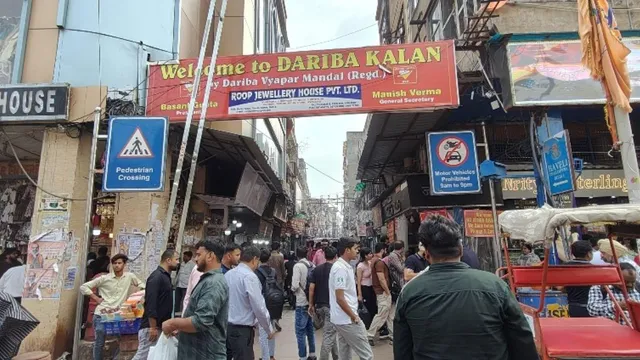
There is currently no immediate prospect of relief from the boom barriers and bollards installed at the entry points to Delhi's Chandni Chowk. Removing them will require a major administrative decision and action, as officials have cited legal complications in the matter during a meeting of the Shahjahanabad Redevelopment Corporation (SRDC).
The issue was prominently raised during Chief Minister Rekha Gupta's inspection of Chandni Chowk on September 25, when local residents highlighted the problems caused by the barriers. The Chief Minister described the boom barriers on connecting roads and the cement bollards in the remaining space as "incorrect," questioning how people, especially women, could be expected to stoop to get past. She immediately instructed the PWD officials present to explore legal options for their removal.
While this gave some residents and shopkeepers hope, the matter is not simple. The SRDC held a meeting on October 9 with officials from various departments, including the Delhi Police, Traffic Police, MCD, PWD, Revenue Department, and the SRDC.
According to the meeting's minutes, SRDC DGM (Projects & Administration) S. Sunil stated that the Chandni Chowk redevelopment project was approved by the Unified Traffic and Transportation Infrastructure (Planning & Engineering) Centre (UTTIPEC) in August 2018. A key part of this project was designating the road from the Red Fort to Fatehpuri Masjid as a non-motorised vehicle (NMV) zone from 9 am to 9 pm.
To implement this, the Traffic Police prepared a Traffic Management Plan (TMP), and the Delhi government's Transport Department issued a notification on June 16, 2021. This notification exempted only MCD, Delhi Police, and emergency vehicles; vehicles carrying cash for banks were later added to the exempt list.
To prevent other motor vehicles from entering the 1.3 km-long NMV stretch, 22 boom barriers were installed on connecting roads, including Dariba, Bhagirath Palace, Nayi Sadak, Ballimaran, and Fatehpuri Chowk.
Nishant Gupta, DCP of Delhi Traffic Police (Central), added that in July of this year, the PWD also installed cement bollards along these roads. This was done because e-rickshaws and two-wheelers were illegally entering the main road through the gaps left by the boom barriers.
The DCP argued that if the bollards and boom barriers are removed, it will hinder the goal of keeping the main road a motor-vehicle-free zone. He also noted that if the boom barriers are removed and replaced only with stone bollards, it would block the entry of essential vehicles (emergency, cash vans, MCD, and police), making it impractical. The Chief Minister has been informed of this practical and legal aspect.
Also Read: SC Flags Concern Over Rising Number Of Digital Arrest Cases, Seeks Response From Centre, CBI
Furthermore, the High Court has issued numerous directives and orders regarding the boom barrier issue in August 2022, February 2023, and November 2023. In these hearings, the court has affirmed the legality of the barriers and has directed civic agencies and traders on their maintenance.
Also Read: Diwali 2025 Decor Guide: Auspicious Items To Adorn Your Main Entrance For Prosperity And Positivity