
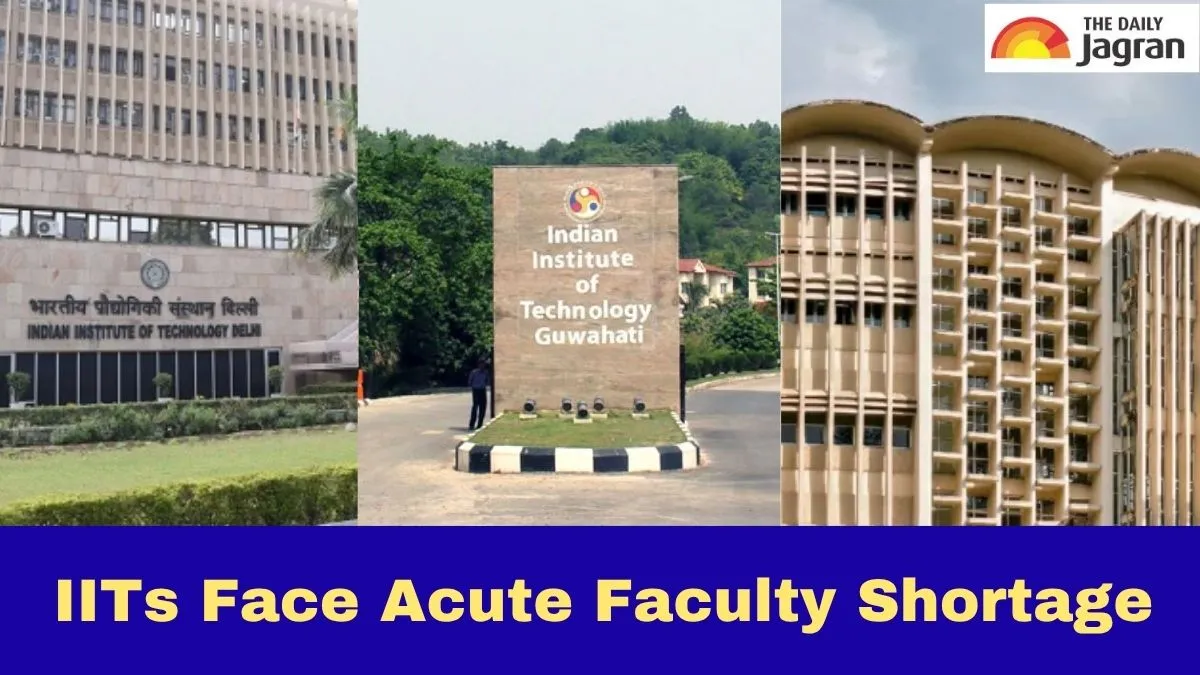
- 38% of faculty positions are vacant across 23 IITs.
- Older, prestigious IITs face more severe shortages.
- Lack of qualified applicants fuels the vacancy crisis.
India’s premier engineering institutes are facing a severe staffing crisis, with nearly 38 per cent of sanctioned faculty positions currently lying vacant across 23 Indian Institutes of Technology (IITs). This translates to 4,640 unfilled posts out of a total of 12,198 sanctioned seats, leaving only 7,558 positions occupied at a time when the student population has crossed 135,000.
The report highlights that the shortage is surprisingly more acute at the country’s older, prestigious campuses. IIT Kharagpur records the highest vacancy rate at a staggering 51.31 per cent, operating with just 779 faculty members against 1,600 sanctioned posts. It is followed closely by IIT (ISM) Dhanbad at 48.4 per cent, IIT Goa at 45.83 per cent, and established campuses like IIT Roorkee, Bombay, and Delhi all reporting vacancies hovering around 38 to 40 per cent.
Massive Regional and Campus-Wise Variations:
The data show that the faculty shortage is not uniform across the entire system. Newer and smaller institutes boast much healthier numbers; IIT Dharwad reported the lowest vacancy rate at a mere 1.07 per cent with just a single post vacant.
Recommended For You
Similarly, IIT Palakkad stands at a 5.88 per cent vacancy rate, while IIT Ropar, Tirupati, and Bhilai maintain relatively low shortages ranging between 14 and 15 per cent.
Severe Shortfalls in Reserved Category Seats
The investigation also brought to light significant inconsistencies in data disclosure among the institutes. Only nine out of the 23 IITs provided a breakdown of vacancies by caste category.
Across these nine reporting institutes, positions reserved for SC, ST, and OBC categories accounted for nearly 60 per cent (888 out of 1,501) of the total reported vacancies, with Other Backward Classes (OBC) facing the largest share of unfilled seats at 477.
High Standards and Global Competition Fueling the Gap
Educational leaders argue that the vacancy rate stems from a lack of qualified applicants rather than a lack of trying. IIT Gandhinagar Director Rajat Moona stated that IITs refuse to compromise on quality, competing directly with global giants like MIT and Cornell for top-tier PhD talent.
He noted that international universities offer vastly superior research funding and salaries, making it difficult for government-capped Indian packages to attract highly mobile, specialised researchers.
ALSO READ: AP EAMCET Results 2026 Live: APSCHE Postpones Rank Cards To July 2; Check Steps To Download Here
Rising Workloads and the Rejection of Easy Fixes
While some institutes like IIT Bombay and IIT Madras are utilising temporary or contract teachers to bridge immediate operational gaps, experts argue this is a partial band-aid. An IIT Bombay professor, speaking anonymously, noted that guest faculty arrangements largely fail to provide long-term research commitment.
Though the shortage has increased workloads, forcing professors to handle classes of over 100 students, the consensus remains that leaving positions vacant is safer than making permanent, 30-year commitments to candidates who are not the right fit.