
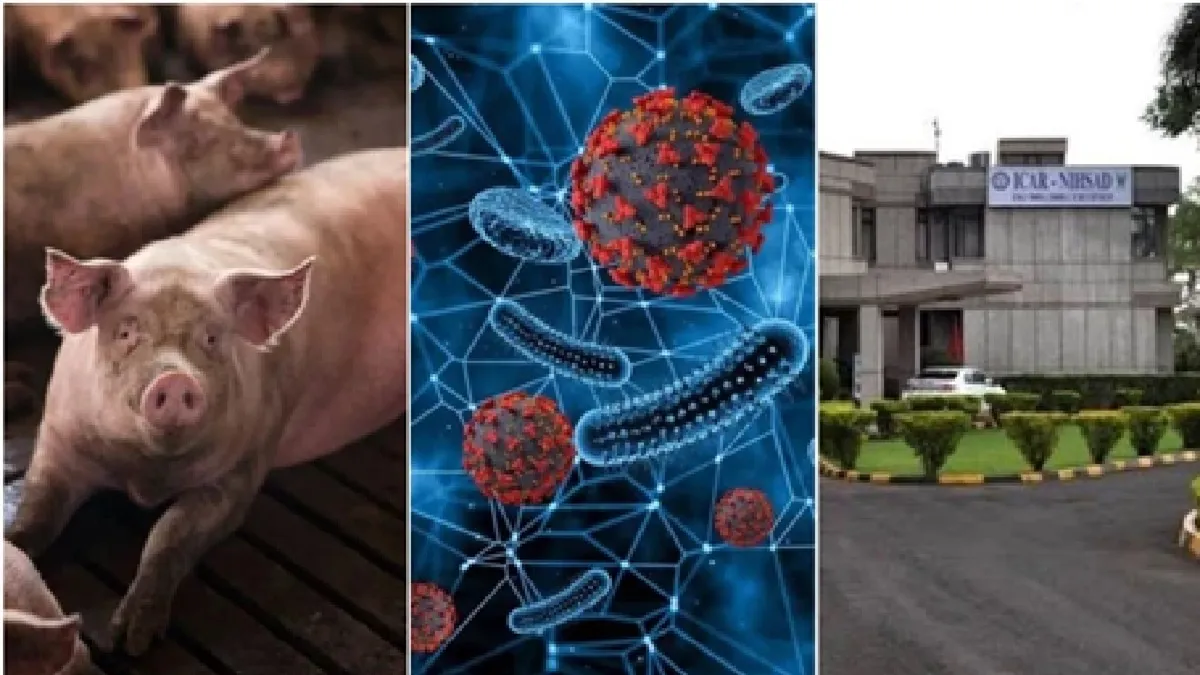
- NIHSAD Bhopal developed India's first indigenous ASF vaccine.
- Union Minister Shivraj Singh Chouhan dedicated the vaccine to the nation.
- Vaccine offers relief to pig farmers, prevents huge losses.
Naidunia Correspondent, Bhopal | The National Institute of High-Security Animal Diseases (NIHSAD) in Bhopal has developed the country's first indigenous African Swine Fever (ASF) vaccine. Union Agriculture Minister Shivraj Singh Chouhan dedicated it to the nation in New Delhi. The vaccine is made from the MA-104 cell line.
Fear Of Human Transmission
Cases of African Swine Fever have been reported in various states of the country in the past few years. Pig farmers suffer the most losses. If even one pig in a herd shows symptoms, all the pigs with it are culled. The biggest risk of this fever is its transmission from pigs to humans.
African swine flu virus is said to have a highly resistant ability, allowing it to survive on the surface of any object easily. Therefore, the greatest risk of its spread is through products made from pork. Research into its prevention is underway at Nihsad in Bhopal, and after numerous tests, the results have been positive.
Recommended For You
A 1 ml injection will be given to pigs older than 8 weeks. A booster will be administered after 14 days. Since 2020, ASF has caused losses worth thousands of crores in Assam and Mizoram. This inexpensive vaccine will provide relief to farmers, and India will also be able to export.
Mizoram Incurred Rs 960 Crore Loss Due To African Swine Fever
Earlier in February this year, the Mizoram government said that the state has suffered a loss of Rs 960 crore due to the persistent outbreak of the African Swine Fever, which has claimed over 71,000 pigs since 2021, state Animal Husbandry and Veterinary Minister C Lalsawivunga informed the assembly.
ALSO READ: H1N1 Influenza vs. Seasonal Flu: Expert Explains The Key Differences And Similarities
The minister said the virus has severely affected the livestock sector, with a total of 71,912 pigs lost and impacting 8,966 families since the outbreak was first reported in March 2021. Of these, 52,979 pigs were culled to prevent further spread.
(With Naidunia/PTI Inputs)