
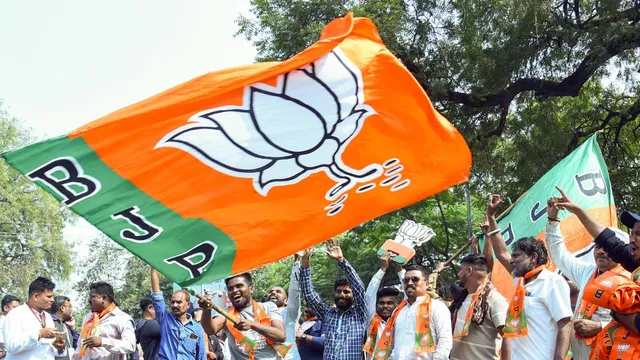
- BJP to win three Rajya Sabha seats from West Bengal.
- BJP's strength in Rajya Sabha will reach 117.
- NDA's total tally to be 152 members.
The BJP-led NDA (National Democratic Alliance) is set to gain a stronger position in the Rajya Sabha ahead of the upcoming Monsoon Session of Parliament. The boost is expected to come from West Bengal, where three Rajya Sabha by-elections are scheduled for July 24.
The seats fell vacant after three former Trinamool Congress (TMC) MPs resigned from the Upper House and later joined the BJP. With the BJP now holding the numbers in the West Bengal Assembly, the party is expected to win all three seats easily.
Once the new members take oath, the BJP's strength in the Rajya Sabha will rise to 117, the party's highest-ever tally in the Upper House. The NDA's overall strength will increase to 152 members.
Although the BJP will still be six seats short of the 123 required for a simple majority on its own, the NDA's numbers put the ruling alliance in a much stronger position to pass ordinary legislation without much difficulty.
A look At Numbers
- BJP currently has 114 Rajya Sabha MPs.
- After winning the three seats, it will have 117 MPs, which will be its highest-ever strength in the Rajya Sabha.
- The entire NDA alliance will have 152 MPs. A simple majority in the current Rajya Sabha requires 123 MPs.
- However, since the NDA has 152 MPs, the alliance is already comfortably above the simple majority needed for passing ordinary laws.
ALSO READ: Mamata Banerjee Suffers Another Setback, Three TMC MPs Join BJP; Likely To Get Rajya Sabha Ticket
BJP Needs 6 Seats For Majority
With the new tally, BJP is short of the 123 needed for a simple majority in the current effective strength of the Rajya Sabha.
The last time a single political party enjoyed a majority in the Upper House was in 1986, when the Congress under Prime Minister Rajiv Gandhi commanded the numbers.
Can this become a gamechanger for Constitutional Amendments?
Unlike ordinary bills, constitutional amendments require the support of at least two-thirds of the members present and voting. If all members participate, the government would need around 166 votes. So yes, the bigger challenge could lies in passing constitutional amendments in the parliament.
Recommended For You
BJP is expected to introduce delimitation and the implementation of women’s reservation bill in the upcoming session.
Where can the extra support come from?
The government is expected to seek issue-based backing from several regional parties. The YSR Congress Party, with four MPs, is considered likely to support measures such as the Delimitation Bill. The Biju Janata Dal, which has consistently advocated for women's reservation, may also support the proposed legislation or choose to abstain.
Similarly, the DMK could either support certain bills or abstain during voting. Support from Independent MP Parimal Nathwani and one Rajya Sabha member from the NCP (Sharad Pawar faction) is also being seen as a possibility.
Even if some of these opposition parties decide not to vote in favour of the government, their abstention could work to the NDA's advantage. Since constitutional amendments require a two-thirds majority of members present and voting not the total strength of the House, fewer members participating in the vote would reduce the number of votes needed for passing the amendments.
The Rajya Sabha, the Upper House of Parliament, can have a maximum strength of 250 members, including 12 nominated by the President of India. The remaining members are elected by the elected members of state legislative assemblies and the electoral colleges of Union Territories.