

- By Dr Sadhana Kala
- Thu, 04 Dec 2025 02:10 PM (IST)
- Source:JND
On December 4, 1971, during the Indo-Pak war, the Indian Navy launched Operation Trident, a bold raid on Karachi Harbor that significantly crippled Pakistan’s naval capabilities. This date is now celebrated as Navy Day in India.
As India’s global presence expands, the Navy's role has evolved well beyond traditional warfare. Today, it serves as a symbol of strategic strength, technological advancement, humanitarian leadership, and the nation’s aspirations within the Indo-Pacific region. Navy Day provides a moment to reflect on this evolution, highlighting how the Navy has transformed from its early post-independence challenges into one of the world’s most formidable maritime forces.
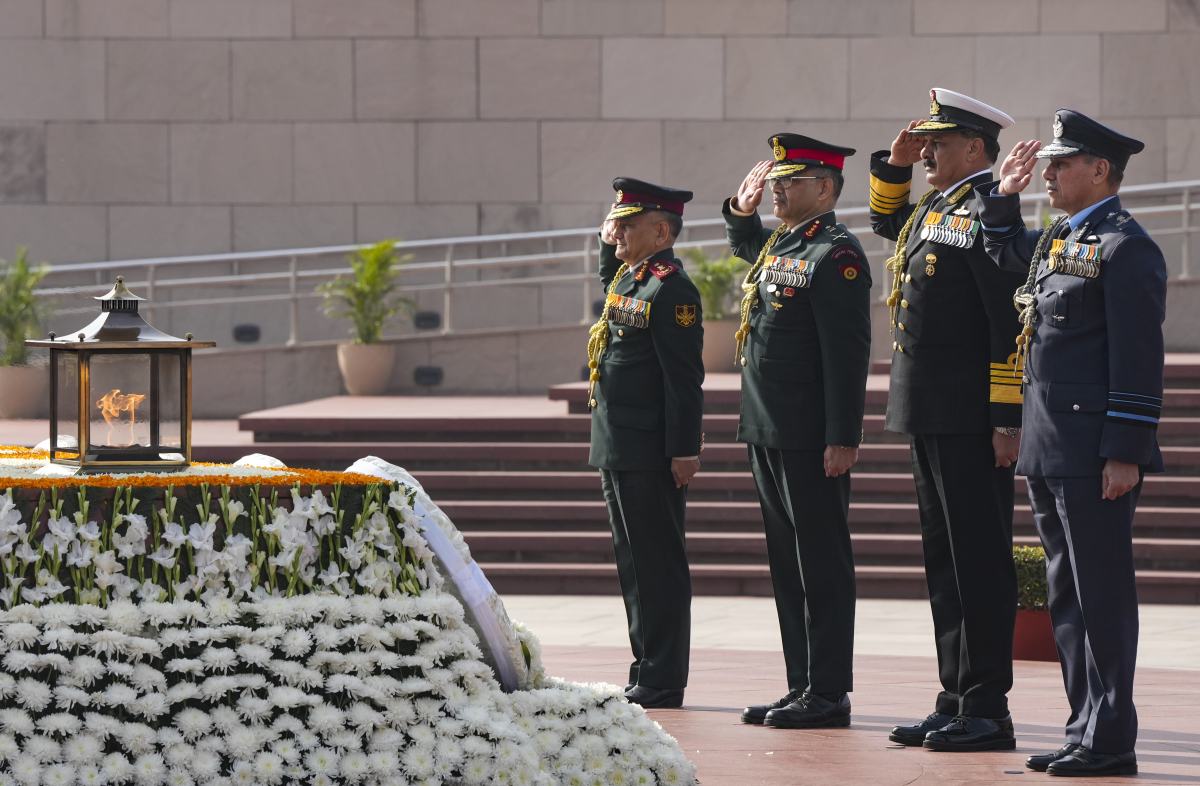
New Delhi: Chief of Defence Staff General Anil Chauhan, Vice Chief of Army Staff Lt Gen Pushpendra Singh, Vice Chief of the Air Staff Air Marshal Narmdeshwar Tiwari during Navy Day observance at National War Memorial, in New Delhi, December 4, 2025. (PTI Photo)
A Legacy Anchored in Valour
The modern Indian Navy is rooted in a rich maritime tradition. Long before the emergence of contemporary naval forces, ancient Indian kingdoms—such as the Mauryas, Cholas, and Marathas—were powerful seafaring entities. Chola expeditions ventured as far as Southeast Asia, while the Maratha Navy, led by Kanhoji Angre, effectively challenged European fleets along India’s western coastline.
Following independence, the Indian Navy faced a fragmented structure but maintained a steadfast spirit of service. Over the years, the Indian Navy has demonstrated this spirit through key operations:
Operation Trident (1971)
This pivotal naval assault, which utilized missile boats, changed the trajectory of the India-Pakistan conflict. It demonstrated the effectiveness of rapid, asymmetric maritime warfare, earning the Navy national esteem and establishing December 4 as Navy Day.
Operation Vijay (1999)
During the Kargil conflict, the Navy’s Operation Talwar successfully blockaded Pakistani ports, showcasing India’s maritime superiority and deterring further escalation.
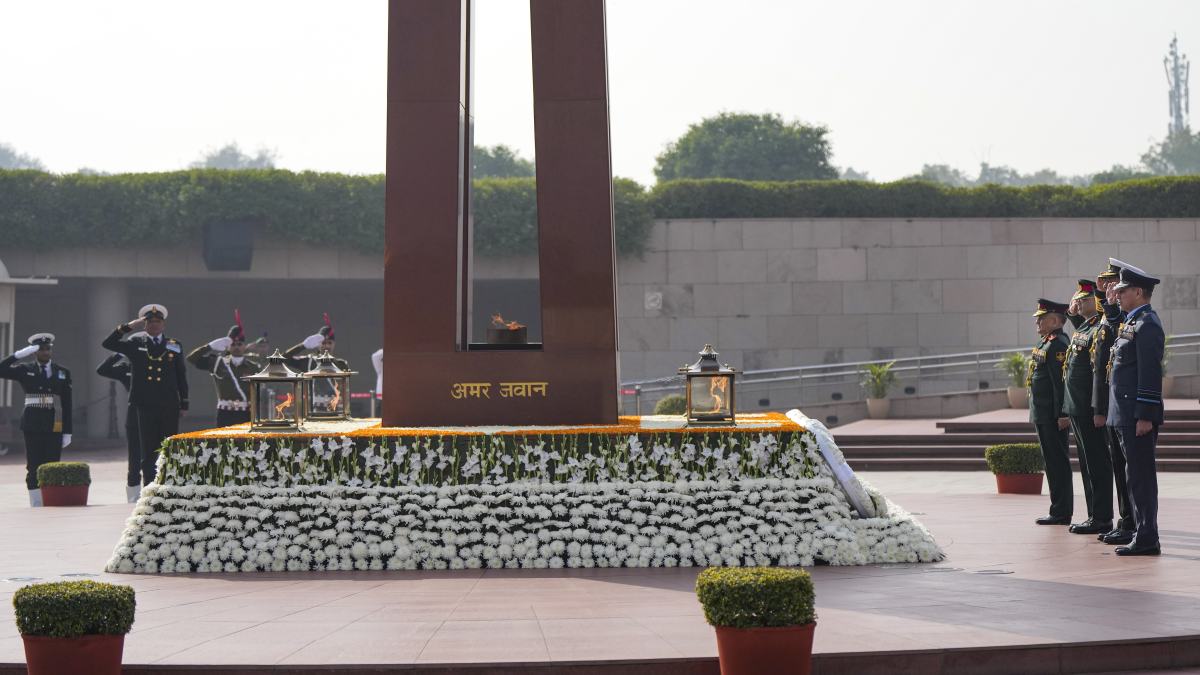
Navy Day observed at National War Memorial, in New Delhi, Thursday December 4, 2025. (PTI Photo)
Humanitarian Operations
Whether responding to the 2004 tsunami, conducting evacuations from Yemen (Operation Rahat), or supporting missions during the pandemic, the Navy has consistently proven itself as a humanitarian force in the region.
This enduring legacy underpins the modern naval force, propelled by courage, tactical innovation, and a commitment to national security.
A Blueprint for Maritime Security in the 21st Century
India's geostrategic location—flanked by the Arabian Sea, the Bay of Bengal, and the Indian Ocean—uniquely positions it to shape the maritime narrative of the Indo-Pacific. Nearly 90 per cent of India's trade volume moves by sea, with vital shipping lanes traversing waters patrolled by the Navy.
To secure these interests, the Navy has embraced three guiding pillars:
Combat Readiness
This year, the Navy reaffirms its capability to safeguard India's maritime borders through:
- INS Vikrant, India's first indigenously built aircraft carrier, symbolizes Aatmanirbhar Bharat in defense.
- Nuclear-powered submarines like INS Arihant are enhancing second-strike capabilities.
- The growing fleet of P-8I maritime patrol aircraft is improving anti-submarine warfare and surveillance capabilities.
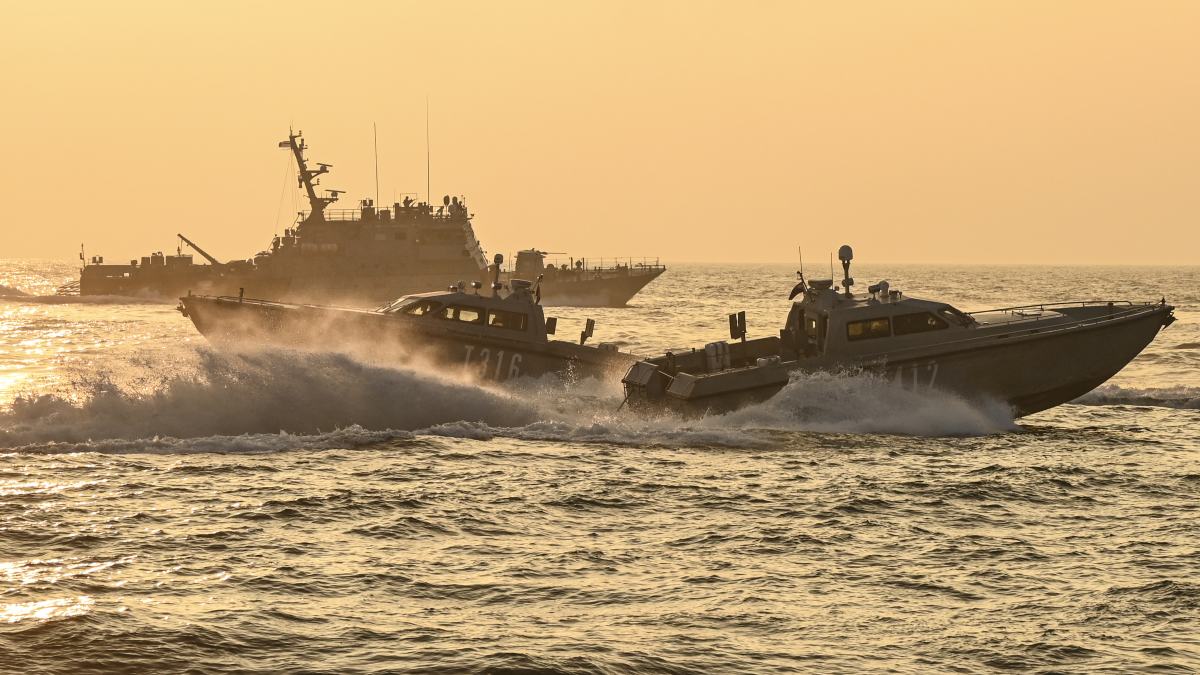
Navy conducts operational demonstration during an event organised as part of the Navy Day celebrations, off the Shangumugham coast in Thiruvananthapuram, Kerala, December 3, 2025. (PTI Photo)
Indigenisation and Innovation
Over 75 per cent of naval orders are now placed with Indian shipyards. Modern warships, submarines, and naval systems increasingly reflect domestic engineering excellence. From propulsion to weapons systems, the Navy has become a catalyst for India's defense-tech ecosystem.
Maritime Diplomacy
The Navy plays a crucial role in shaping India's influence abroad:
- India hosts Milan, one of the world's most extensive multinational naval exercises.
- India coordinates patrols with countries such as Indonesia and Thailand.
- Anti-piracy missions in the Gulf of Aden that safeguard global trade.
Through these efforts, India positions itself as a responsible maritime power, reinforcing peace and stability in the region.
Sailing Toward a Blue Economy
Modern naval operations increasingly integrate economic security with military readiness. India’s blue economy—encompassing fisheries, shipping, offshore energy, minerals, and marine research—heavily relies on a secure maritime environment.
The Navy ensures:
- Protection of India’s Exclusive Economic Zone (EEZ), which spans 2.37 million square kilometers.
- Monitoring offshore installations, including oil rigs and renewable energy explorations.
- Support for scientific research vessels and underwater resource mapping.
This integration of defense and economic strategy reflects a maturing maritime nation—one that recognizes the ocean as both an opportunity and a vulnerability.
Humanitarian and Environmental Stewardship
The Indian Navy plays a crucial role beyond military engagements, serving as a first responder during natural disasters such as cyclones, floods, and maritime accidents. Its response teams, helicopters, and ships are among the fastest deployed in the region.
Recently, the Navy has championed several initiatives:
- The Navy has spearheaded several green initiatives, including installing solar panels at naval bases.
- The Navy is also transitioning to aviation fuel blended with biofuel.
- We are also increasing the use of environmentally friendly materials in shipbuilding.
- Monitoring coastal ecosystems.
These efforts align national defense with environmental responsibility, highlighting the understanding that protecting the seas also involves preserving them.
People at the Heart of the Navy
Behind every warship, submarine, and aircraft lies the dedication of thousands of sailors and officers. Their lives are defined by discipline, sacrifice, and an unwavering devotion to duty, often far from family and the mainland.
The Navy has made significant strides toward inclusivity:
- Women have joined all branches, including fighter streams, warships, and command roles.
- The entry of Agniveers, with growing participation from women, reflects a younger, more diverse force.
- Enhanced training through modern simulators, war-gaming systems, and AI-enabled learning.
The evolving human resource structure ensures the Navy remains agile, adaptive, and future-ready.
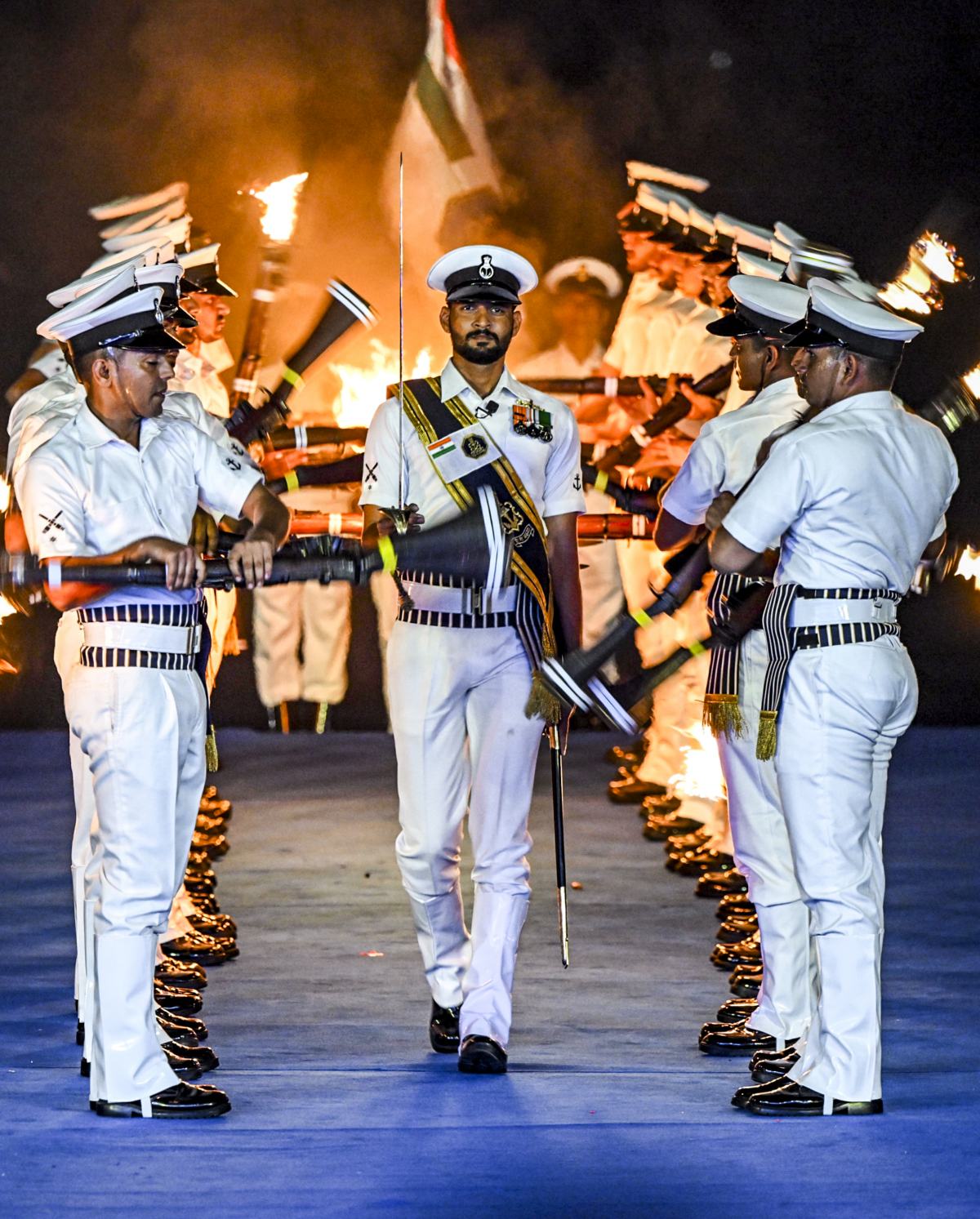
Naval personnel during operational demonstration at an event organised as part of the Navy Day celebrations, in Thiruvananthapuram, Kerala. (Rashtrapati Bhavan via PTI Photo)
Why Navy Day Matters Today
In an era of shifting geopolitical alignments, maritime routes have become contested spaces. Climate change is reshaping coastlines, and cyber-maritime threats are on the rise. The Indo-Pacific has emerged as a theater of strategic competition among global powers.
For India, Navy Day is more than a ceremonial occasion; it serves as a reminder that:
- Maritime security is national security.
- The Indian Ocean is central to India’s economic future.
- An intense Navy bolsters diplomacy, trade, and disaster resilience.
- Indigenous defense capability is essential, not optional.
Celebrating Navy Day signifies India's rise as a confident maritime nation.
Looking Ahead: The Horizon Expands
- The Indian Navy is entering a defining decade with plans for:
- The plans include the development of a second indigenous aircraft carrier.
- The Indian Navy is also planning to expand its submarine fleet under Project 75(I).
- Development of unmanned surface and underwater vehicles.
- Implementation of space-based maritime surveillance.
Strengthening Indo-Pacific strategic partnerships.
India’s maritime footprint is poised for significant growth. This future transcends military strength; it embodies India’s commitment to keeping the Indo-Pacific free, open, and inclusive, guided by international law, cooperation, and stability.
Conclusion
Indian Navy Day honors more than just historical victories. It celebrates the bravery of those who stand watch over India’s maritime frontiers, the engineers and scientists dedicated to developing indigenous naval capabilities, and the nation’s evolution from a coastal defense force to a significant global maritime presence.
As India looks toward the future—with growing economic ambitions, expanding international partnerships, and a renewed emphasis on self-reliance—the Navy serves as both guardian and guide.
On this Navy Day, India pays tribute to its guardians of the sea—recognizing their valor, vigilance, and steadfast commitment to the nation.
(Note: Dr (Prof) Sadhana Kala is a USA-trained robotic & laparoscopic surgeon, Uppsala University, Sweden, trained fertility specialist, Icon Endoscopic Surgeon of North India, and National Icon Endoscopic Surgeon of India. She is rated as India's Best Gynecologist by Google.)
(Disclaimer: The views expressed in this article are the personal opinions of the author.)