

The ongoing unrest in Manipur has hampered the daily lives of many beyond the state. It has disrupted many lives, especially of school students and college students. The clashes that erupted in the state have forced many to flee the strife-torn state while others, especially children are forced to stay within the four walls of their houses. The harsh conditions in the state have impacted education in the state as many schools, educational institutes were forced to shut down for a significantly long duration.
Due to the ongoing violence in the state, over 14,000 schoolchildren have been displaced the Ministry of Education stated. In the Rajya Sabha on August 2, Union Minister of State for Education Annapurna Devi said "A total of 14,763 school-going children have been displaced due to the current Manipur situation."
Hengjen village chief Kammang Khongdum had said that the education of students has been hampered since the ethnic clashes erupted."This is unfortunate for everyone. There is a learner's foundation, located in Happy Valley. Here in the past, students from different communities used to come and learn. Unfortunately due to this turmoil in Manipur, the students have gone back to their respective villages. And the education is hampered to a great extent. The future of the student is bleak."
How the Unrest in Manipur has affected Schools, Colleges?
The violence has severely disrupted the education system in Manipur, affecting thousands of students, teachers and staff. Many students flee to restart their studies, while many important national-level exams were also cancelled in the state.
Due to the violence, the state government extended the summer vacation for schools till July 4, 2023. Out of 4,617 schools in the state, 96 were being used for relief measures and other purposes. As a result, students missed out on their academic activities and social interactions for more than two months.
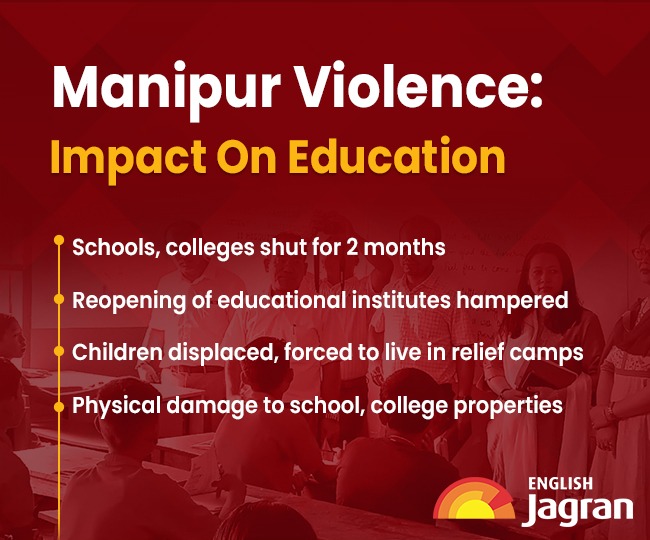
During the clashes, many schools were burned and damaged. Mount Olive School at Kangvai bazar in Churachandpur district was reduced to ashes during the clashes in May. The school had over 1,000 students from both Kuki and Meitei communities.
The school reopened but witnessed very low attendance as students, teachers and staff did not show up due to fear and insecurity. According to officials, only 40% of students were in attendance on average on the first day of the resumption of classes.
Following the reopening of schools and colleges, due to inadequate resources, daily education faced challenges. Most importantly, the violence has left a deep impact on the mental health of the students who witnessed or experienced it. Many students are traumatized by the loss of their homes, friends or relatives and are unable to focus on their studies.
Initiatives To Help Revive Education For Manipur Students:
- Students being admitted to schools free of cost in their nearest and feasible areas. According to the Ministry of Education, "93.5 per cent of the displaced students have been re-admitted to school."
-Schools have started providing counselling and psychosocial support to the students.
-The state education department and Samagra Shiksha, a central government scheme, distributed textbooks, notebooks, pens, pencils, sports items and uniforms to the displaced children.
- Karnataka school education minister Madhu Bangarappa invited Manipur students to seek admissions in Karnataka schools and colleges, in light of the prolonged ethnic tensions in the northeastern state.
-Delhi Education Department has issued comprehensive guidelines to provide provisional admissions to children from Manipur who have been affected by violence. Many have been admitted to government schools in New Delhi under a special program aimed at helping them rebuild their lives.