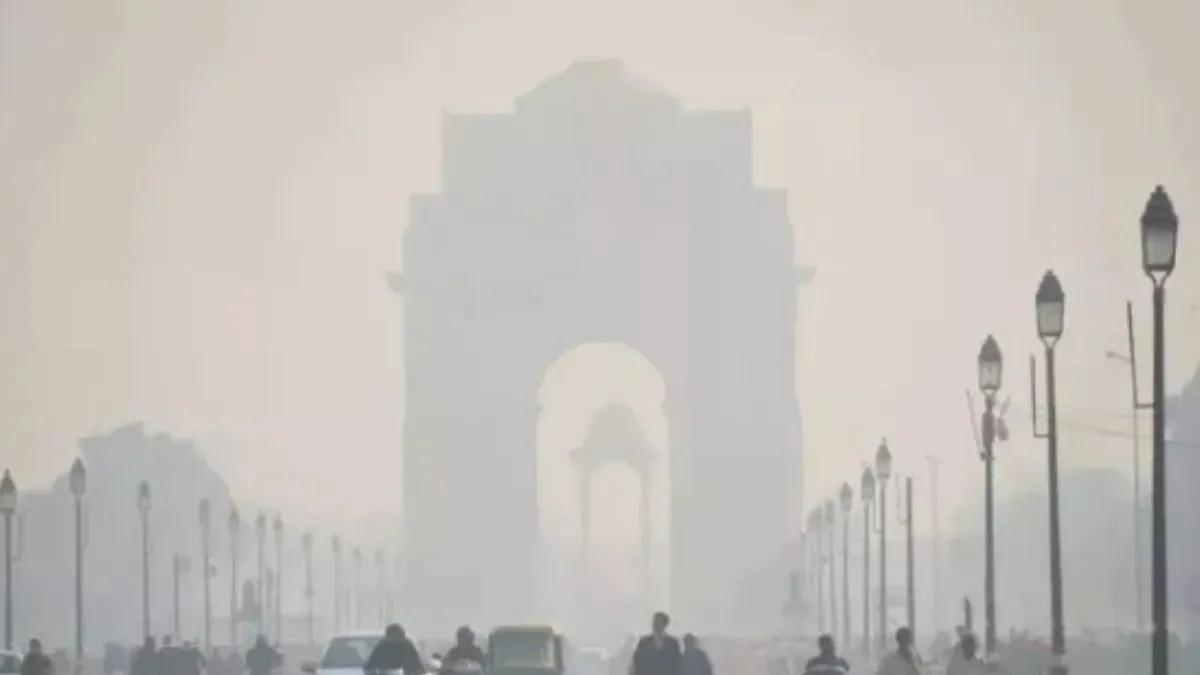
- Delhi-NCR AQI hits 'very poor' at 324, highest since February.
- GRAP Stage II imposed immediately across Delhi-NCR region.
- Health advisory issued; limit outdoor activity due to pollution.
Delhi AQI Today: The Commission for Air Quality Management (CAQM) on Monday imposed Stage II of the Graded Response Action Plan (GRAP) across Delhi-NCR with immediate effect as the national capital recorded its first "very poor" air quality of the season. According to data from the Central Pollution Control Board (CPCB), Delhi's overall Air Quality Index (AQI) reached 324, marking the highest pollution level since February 4, when it stood at 339.
The CAQM, in its order dated November 2, said unfavourable meteorological conditions had contributed to the deterioration and that forecasts by the India Meteorological Department (IMD) and the Indian Institute of Tropical Meteorology (IITM) indicated that air quality could remain in this category over the coming days, prompting it to step up anti-pollution measures across the region.
Three Air Quality Monitoring Stations Record 'Severe' Levels
Out of 58 monitoring stations across Delhi, the following three recorded pollution in the "severe" category (AQI 401–500) at 4:00 PM:
- Jahangirpuri: 436
- Rohini: 415
- Punjabi Bagh: 413
Across the city, 37 stations logged "very poor" air quality (AQI 301-400), 17 were in the "poor" category (AQI 201-300), and one recorded "moderate" air quality (AQI 101- 200)
Air Quality Across Noida and Greater Noida
The neighbouring NCR cities also saw haze ahead of Diwali. Noida recorded an overall "very poor" AQI of 305. Air quality levels across several sectors in Noida and Greater Noida are as follows:
Recommended For You
- Sector 78: 311
- Knowledge Park-5: 309
- Knowledge Park-2: 308
- Omicron 1A (Greater Noida): 297
- Sector 94: 295
- Sector 36: 294
- Sector 128: 287
Forecast And Health Advisory
The Air Quality Early Warning System for Delhi has forecast that the AQI will remain in the "very poor" category until November 5, with marginal improvement to the "poor" category expected over the subsequent six days.
Medical experts warn that prolonged exposure to AQI levels above 300 poses severe health risks, particularly for children, the elderly, and individuals with respiratory issues. Doctors have advised limiting outdoor activity, particularly during morning and evening hours when pollution levels peak, and wearing protective masks when travelling outdoors.
No Stay On BS-VI Curbs On Outstation Vehicles
Meanwhile, the Delhi High Court on Monday refused to put an immediate stay on outstation vehicles on entering the city, which do not have Bharat Stage-VI (BS-VI) emission standards. The decision comes after a petition challenging the curbs was filed by Faridabad-based lawyer Gurumukh Das Kohli. A hearing on the matter has been scheduled for November 27.
(With Inputs From Jagran.com And PTI)