
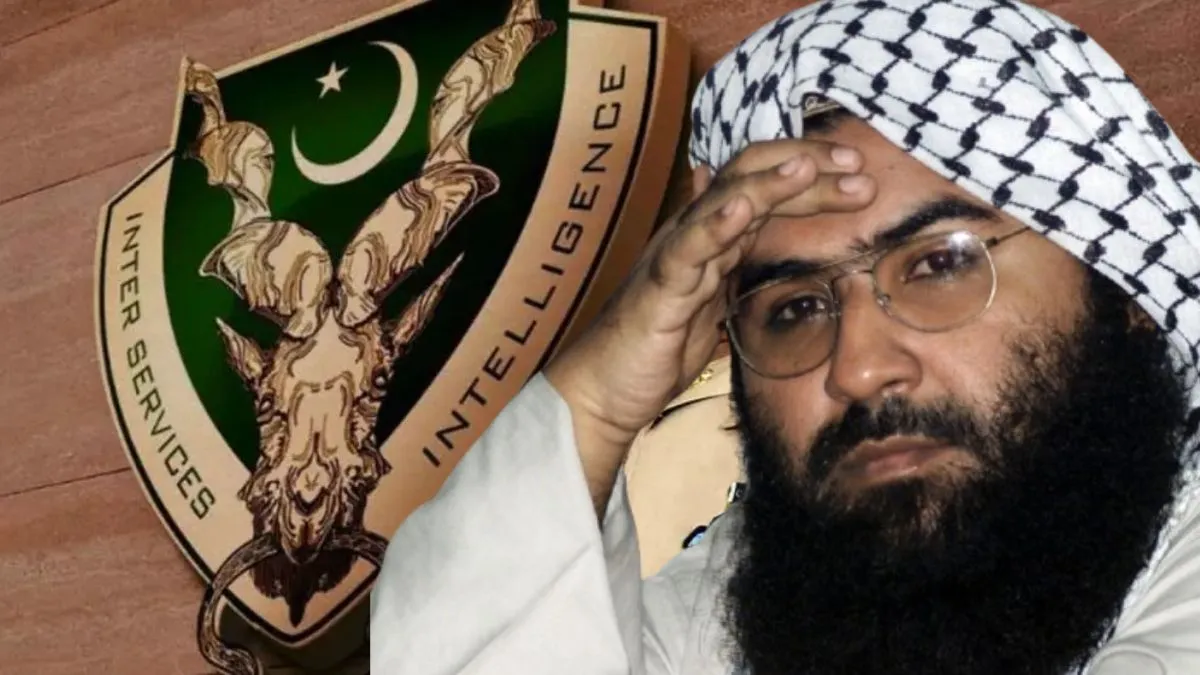
- India to corner Pakistan at FATF over Masood Azhar.
- Taliban denied Azhar's presence in Afghanistan recently.
- FATF plenary meeting in Paris to review Pakistan's efforts.
India is now set to corner Pakistan at the plenary meeting of the Financial Action Task Force (FATF) starting on October 28 over Islamabad’s failure to trace the activities of UN-designated terrorist and Jaish-e-Mohammed (JeM) chief Masood Azhar, people familiar with the matter said. This comes after the Taliban-controlled Afghanistan recently denied the presence of Azhar in their country, HT reported.
This will be the first FATF plenary meeting under the presidency of Giles Thomson of the United Kingdom, and delegates from across the financial watchdog’s global network of more than 200 jurisdictions and observer organisations will gather in Paris to discuss evolving threats to global financial integrity and security. The FATF is likely to review Pakistan’s anti-terror efforts at the plenary meeting.
Azhar has been one of the most notorious terrorists under the radar of India. He has been connected with deadly attacks in India, including the 2001 Parliament strike, the 2016 Pathankot airbase assault and the 2019 Pulwama bombing, after the Taliban regime dismissed the contention of Pakistani officials that the JeM founder has been in Afghanistan since 2019.
Recommended For You
In September, Taliban spokesperson Zia Ahmad Thakal denied that Azhar was in Afghanistan or that Pakistan had sent any formal communication regarding the JeM chief’s presence in Afghanistan. He also reiterated the Taliban’s policy of not allowing Afghan territory to be used against any country.
Not the First Time, India Is Cornering Pakistan
India has cornered Pakistan on several major international, legal, and diplomatic platforms over cross-border terrorism and non-compliance with global standards:
The Global Terrorist Designation at the UN (2019)
India’s most definitive diplomatic triumph occurred on May 1, 2019, when the UN Security Council's 1267 Sanctions Committee designated Masood Azhar as a global terrorist.Following the deadly 2019 Pulwama terror attack orchestrated by JeM, India, backed by the US, UK, and France, launched a massive global campaign. For nearly a decade, China had repeatedly blocked India's bids using a "technical hold" to protect its ally, Pakistan. Through aggressive bilateral negotiations, New Delhi successfully isolated Islamabad, forcing China to withdraw its objections. This subjected Azhar to an immediate global asset freeze, travel ban, and arms embargo, forcing Pakistan to formally acknowledge the sanctions
Calling out Pakistan's Blame-Shifting to Afghanistan
In an attempt to evade scrutiny, Pakistan's Federal Investigation Agency (FIA) placed Azhar in its "Red Book" of most-wanted suspects and announced a bounty for his capture, claiming he had fled to Afghanistan. The Taliban regime in Kabul categorically rejected this, accusing Pakistan of harboring him.
Speaking at the UN, India ridiculed the bounty as a "gimmick". The Indian representative noted that while Pakistani officials claimed JeM was defunct and his whereabouts unknown, Azhar had recently given media interviews regarding regional military flashpoints. India argued that if journalists could easily reach Azhar, the Pakistani state undeniably knew exactly where he was.
Squeezing Islamabad via the FATF Watchdog (2020 & 2026)
India has repeatedly used the Financial Action Task Force (FATF) to hit Pakistan where it hurts most, its economy.
To avoid being blacklisted by the global terror-financing watchdog in 2020, Pakistan was forced to pass statutory resolutions introducing financial sanctions against 88 banned terror groups and leaders, including Masood Azhar.
Now India actively preparing to corner Pakistan at the FATF plenary meeting in Paris. Utilising the Taliban's public denials, India formally questioned Islamabad's counterterrorism commitments, highlighting the duplicity of shielding a UN-designated entity.
ALSO READ: Phoney Announcement, No Consequence: India On Pakistan’s Bounty On JeM Chief Masood Azhar
Post-Attack Diplomatic Standoffs (2001 & 2016)
India has historically used critical terror flashpoints to force Pakistan into taking cosmetic yet telling legal actions against Azhar.
2001 Parliament Attack: Following the JeM-led assault on the Indian Parliament, intense diplomatic and military mobilisation by India forced Pakistani authorities to put Azhar under house arrest for a year.
ALSO READ: India Calls Out Pakistan's Double Standards On Terrorism With Masood Azhar Question At UN
2016 Pathankot Airbase Attack: Following the attack on the Indian Air Force base, New Delhi conditioned high-level diplomatic talks on immediate action. Cornered by the evidence provided in India's dossiers, Pakistan was forced to temporarily detain Azhar and his brother for questioning and seal multiple JeM offices.
India’s relentless campaign against Masood Azhar has shifted the geopolitical dynamic from a regional dispute to a matter of global counter-terrorism accountability. By abandoning passive dynamic reactions in favour of aggressive multilateral pressure, New Delhi has successfully dismantled Islamabad's shield of plausible deniability.