
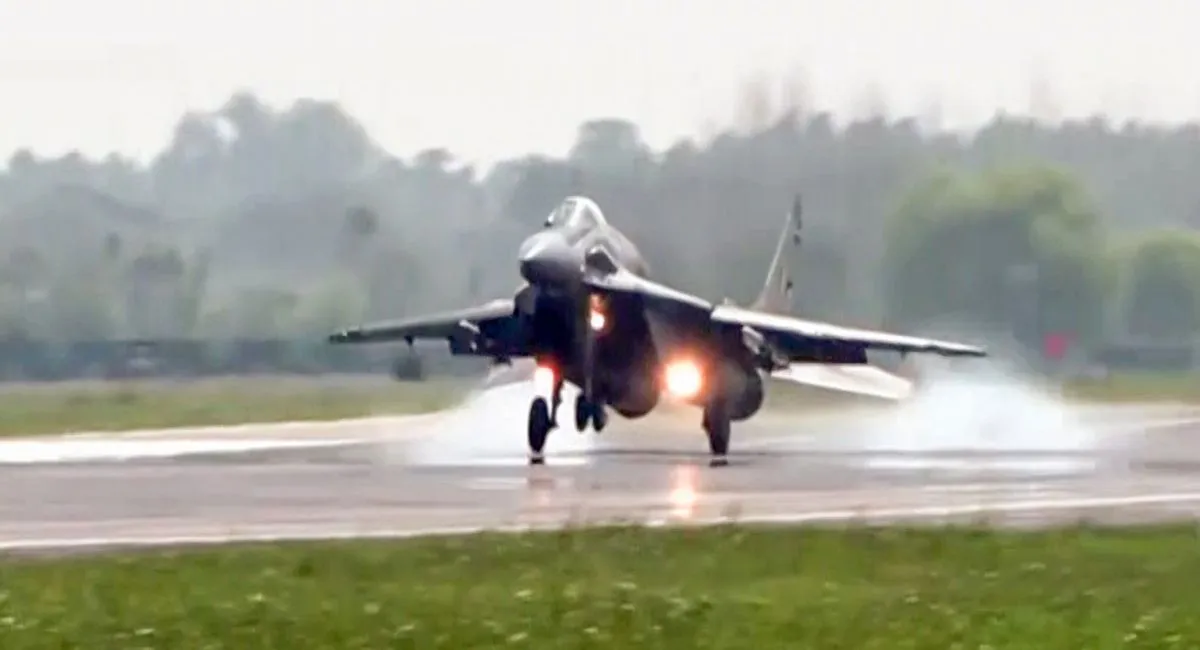
The Indian Air Force (IAF) will be enhancing their current fleet of MiG-29 Fighter jets by upgrading to include Advanced Short Range Air-to-Air Missiles (ASRAAM). This is to enhance the combat capabilities of these aircraft vastly.
A Request for Proposal (RFP) by the Ministry of Defence on March 25, for the integration of ASRAAMs with the MiG-29 Upgraded Variant (UPG) will include not only the ASRAAM missile itself but also launchers, support equipment and training (aircrew and ground personnel) for the successful implementation of these missiles.
The ASRAAM was developed by the European Defence Company MBDA and has already been integrated with the indigenous Light Combat Aircraft Tejas and Jaguar aircraft. In addition, the ASRAAM missile has a military engagement range exceeding 25 kilometres, which more than doubles the engagement range of the R-73 missiles, which were from the Soviet Era and are to be replaced. Therefore, the ASRAAM will allow a modernisation of the MiG-29s' short-range engagement capability. Currently, the IAF has a fleet of over 55 MiG-29 fighter jets, which includes eight dual-seat trainer variations.
The MiG-29 was manufactured in the former Soviet Union and inducted into the IAF in December 1987, with India’s first procured aircraft being assembled in Pune, following the 1986 procurement agreement with the Soviet Union.
The MiG-29 fleet will transition from using the ageing R-73 missile, which has a range of approximately 10 to 15 kilometres, to using the ASRAAM missile: A fourth generation infrared guided missile (heat-seeking) that allows for fire-and-forget engagement of targets beyond at least 25 kilometres with a maximum speed of Mach 3. The ASRAAM is 2.9 metres long and has a mass of 88 kg.
Recommended For You
ASRAAM assembly and testing sites are being developed in India as part of an agreement signed between MBDA and Bharat Dynamics, with the first site being built in Hyderabad, India.
The PL-10 missile is used by both Pakistan and China: The PL-10 was introduced to the People's Republic of China Armed Forces in 2015 and is used on the J-10C, J-16 and J-20 fighters with engagement ranges of between 20 and 30 kilometres and a top speed of Mach 4. The PL-10E version is used on the JF-17 Block III in service with Pakistan's Air Force. Defence sources say that ASRAAM's larger rocket motor provides it with greater range and capability than the PL-10.
India's air defence is heavily reliant on the MiG-29 fighter aircraft. On March 12, Air Chief Marshal AP Singh flew a MiG-29 to conduct an operational readiness assessment along the western boundary of Pakistan's border region. The MiG-29 can maintain air superiority and serve as an air-to-air and air-to-ground multi-role fighter.
During the Operation Sindoor (2025) mission, the MiG-29 flew 40 sorties against some operationally critical targets. With ASRAAM capability now incorporated into the MiG-29, the IAF will achieve not only the capability to conduct short-range ground attack missions, but the ability to defend against threats from both Pakistan and China more effectively.