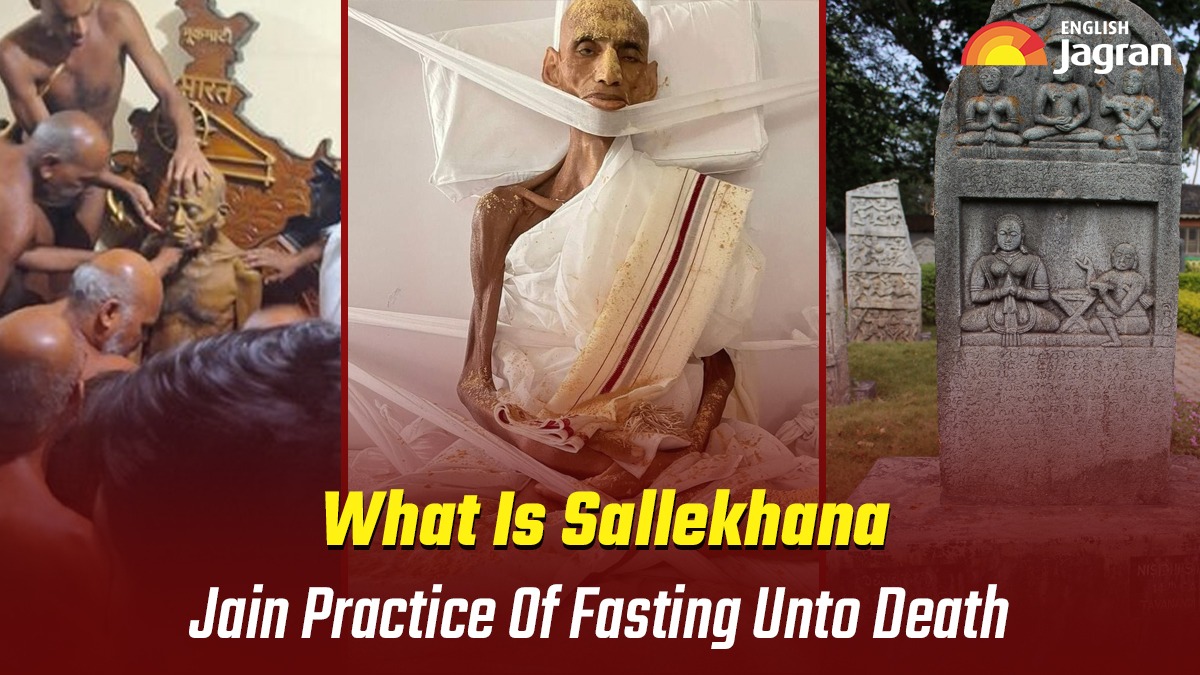
Jain Samadhi Sallekhna: Renowned Jain muni Acharya Vidhyasagar Ji Maharaj passed away on Sunday after observing the strenuous ritual of Sallekhana or Santhara for three consecutive days. According to a release by the Dongergarh's Chandragiri Teerth, the seer voluntarily fasted to death, taking his last breath at around 2:30 am on Sunday. Many notable personalities including Prime Minister Modi, Home Minister Amit Shah, and Congress leader Rahul Gandhi expressed grief over his demise while the Chhattisgarh government announced a half-day state mourning.
What is Sallekhana or Santhara?
Known by many names including Samlehna, Santhara, Samadhi-Marana or Sanyasana-Marana; Sallekhana is a Jain religious practice of self-imposed fasting to death. The taker gradually reduces the food and liquids to let the soul depart the body. Jain scholars stress that Sallekhana is not suicide as it is not an act of 'passion' or involves the use of 'weapons or poisons.' Instead, it is considered as giving up all the passions and attachments when a person is near its end, either due to old age or illness or any other reasons.
Why Sallekhana is done?
The primary aim of Sallekhana is to calm the tumultuous emotions that disrupt the soul's state of equilibrium. This vow holds significant psychological, religious, and spiritual importance. Psychologically, it aims to combat feelings of sorrow, fear, and anguish. Religiously, it serves as a commitment to liberate the soul from the body, viewed as a sacred duty. Fundamentally, Sallekhana underscores the notion that a person, as masters of their fate, should confront death in a manner that prevents the accumulation of new karmas.
Who can take the Sallekhana vow?
The Jaina texts suggest that both a Jain individual - Jain ascetics or householders - can take the vow of Sallekhana. Nishidhi, an important religious inscription of Jainas, suggest that both men and women can practice the vow. It also indicates that earlier, even some queens practised it. However, as times changed, now very few followers practised this method of renouncing the body. There are a few preconditions to Sallekhana as well, including unavoidable calamity, terminal illness, great natural disease or old age. Jaina texts also bar a householder from taking the Santhara without the guidance of a Jain ascetic.
Sallekhana: Through the Eyes of Judiciary
A perennial debate of whether 'it is suicide or a natural way to die' has been around since the evolution of the legal system in India. The contention between the 'Right To Life' and 'Right To Die' has rung the bells of courts. In 2015, the Rajasthan High Court banned Sallekhana, terming it 'suicide'. However, within a year of the HC's decision, the Supreme Court stayed the ban on the ancient religious practice citing the Freedom of Religion.