

- By Soumyaroop Mukherjee
- Sun, 28 Dec 2025 06:57 PM (IST)
- Source:JND
Year Ender 2025: India faced several natural calamities in 2025, ranging from deadly landslides and flash floods to prolonged heatwaves and powerful cyclones. Each disaster left behind a trail of destruction, disrupting lives, livelihoods and critical infrastructure across states. Together, these events have once again pushed a crucial question to the forefront: how unchecked urban expansion, rampant deforestation, rising air pollution and inadequate environmental planning are intensifying the country’s vulnerability to extreme weather events.
As the nation protests against the unchecked mining on the Aravalli mountain ranges through the ‘Save Aravali’ campaign, here are some of the major environmental crises that India faced this year:
Severe Heatwaves
The first signs of climatic distress were evident during the summer months, when temperatures in the plains soared to around 40 degrees Celsius, while hill regions recorded unusually high average temperatures of nearly 30 degrees Celsius. These prolonged heat conditions not only strained public health systems and power supplies but also disrupted agriculture and water availability across large parts of the country.
The scale of the crisis is reflected in data from the Centre for Science and Environment and Down To Earth, which show that India experienced extreme weather events on 331 of the 334 days between January and November, an alarming 99 per cent of the period. These events included heatwaves, floods, cyclones, landslides, and intense rainfall episodes. In comparison, India recorded such events on 295 days in 2025, highlighting a sharp escalation in both the frequency and persistence of extreme weather.

IMD Had Issued Warnings Of Severe Heatwaves Across India In May (Image: PTI)
Punjab Floods
The year also saw Punjab witness its worst flooding in 40 years, triggered by exceptionally heavy monsoon rainfall. Several districts located along the Satluj, Beas and Ravi rivers, including Gurdaspur, Amritsar, Ferozpur, Fazilka and Pathankot, were severely affected as the rivers overflowed their banks. The floods impacted more than 1,650 villages across 23 districts and submerged over 1.75 lakh acres of farmland, causing extensive damage to paddy and other crops.
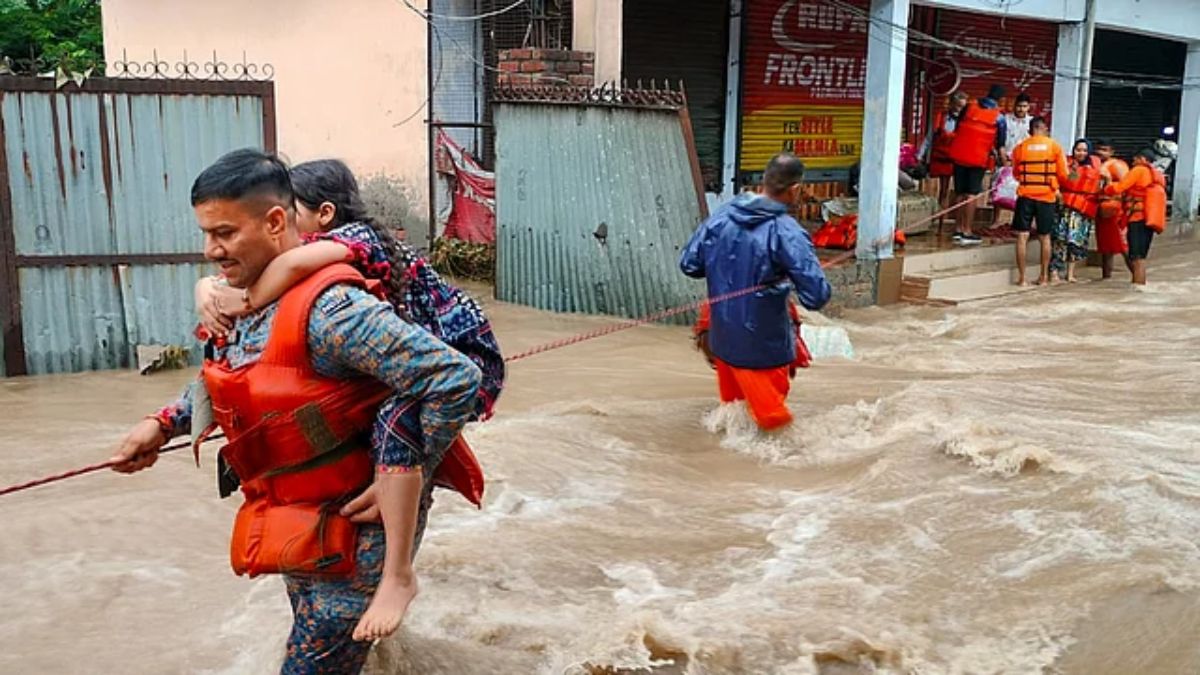
Punjab Floods 2025 (Image: PTI)
Punjab has experienced major flood events in recent years as well, including in 2023, 2019, 2013, 2010, 2008 and 2004. With nearly 75 per cent of the State’s annual rainfall occurring during the monsoon, flooding has become a recurring phenomenon, frequently resulting in loss of life and widespread damage to crops, houses and public utilities.
Experts argue that unregulated construction and mining activities have significantly amplified the State’s vulnerability to floods. S K Saluja, former chief engineer associated with the Ranjit Sagar and Shahpurkandi dam projects, said, “Encroachments through settlements close to rivers and rivulets have been happening for years. Successive governments have failed to control them.”
ALSO READ: BSNL 3G Services To Be Shut Down Across India: What Customers Need To Know
Northeast Floods
Parts of the northeast witnessed exceptionally heavy rainfall, with Silchar recording precipitation levels not seen in over a century, with Silchar in Assam experiencing about 415.8 millimetres of rainfall in a single 24-hour period on June 1, thereby breaking a 132-year-old record for the highest daily rainfall.
The relentless downpour led to widespread flooding, landslides, and severe disruption of daily life, inundating residential areas and cutting off road and rail connectivity. Rivers swelled beyond danger levels, forcing large-scale evacuations and damaging crops, homes, and public infrastructure. Meteorologists described the rainfall as an extreme event, underscoring growing concerns that climate change is intensifying rainfall patterns in the region and increasing the frequency of such rare, high-impact episodes.
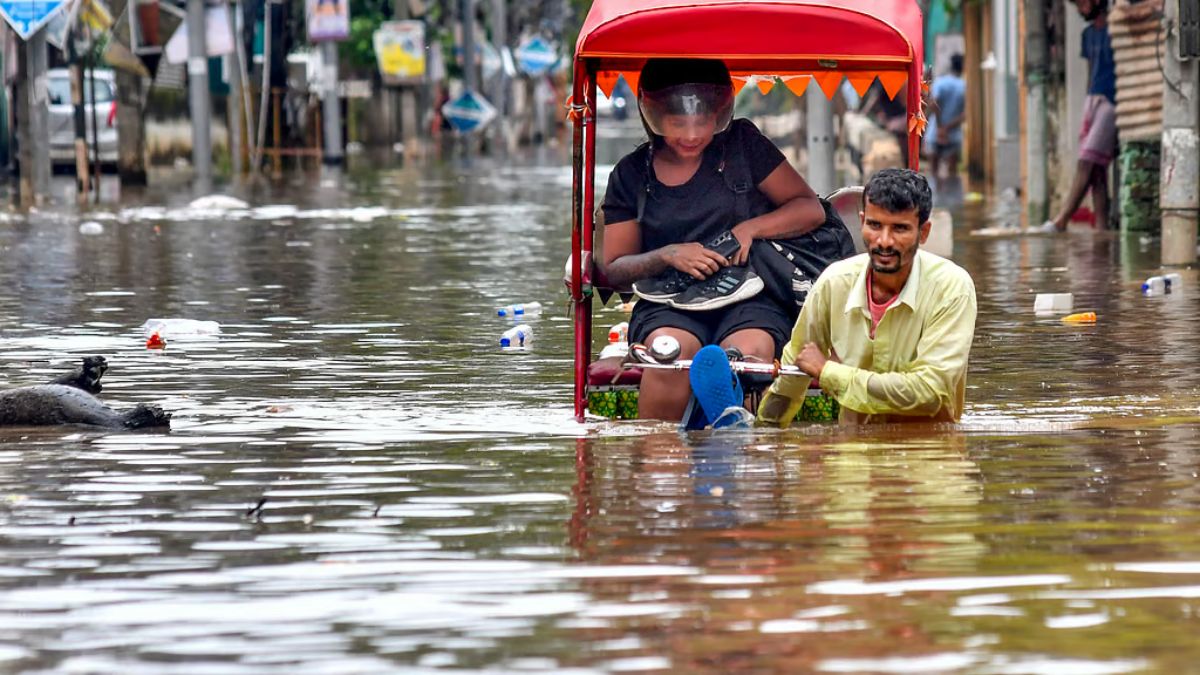
Several Parts Of Assam Were Flooded During Monsoon This Year (Image: PTI)
Landslides In Uttarakhand
The Dharali-Harsil region in Uttarkashi district of Uttarakhand was hit by a cloudburst, triggering flash floods and landslides in the high-altitude Himalayan belt. The impact of the climatic cataclysm was so severe that in Dharali and the surrounding areas near Harsil, houses, shops, roads and footbridges were damaged or washed away.
Agricultural land and apple orchards, one of the mainstays of livelihood, suffered extensive damage. Residents were forced to evacuate to safer locations as water levels rose sharply within minutes. Cloudbursts are particularly destructive in the fragile Himalayan terrain, where steep slopes, young and unstable geology, and narrow valleys amplify the force of sudden rainfall. According to available datasets, the intensity of these cloudbursts has increased in the western Himalayas by over 30 per cent since the 1950s.
Cyclone Ditwah
Last but not least was the devastating cyclone Ditwah that wreaked havoc in the Southern part of India, particularly in parts of South India. The cyclone majorly affected the Southern part of India, in parts of Tamil Nadu. Profound rainfalls lying in the range of 200-300 mm fell from November 28 on the coastal parts of Tamil Nadu, flooding major parts of the state, including Chennai.
-1766928196892.jpg)
Cyclone Ditwah (Image: PTI)
The Vedharanyam region of Tamil Nadu suffered massive losses as nearly 9,000 acres of salt pans were affected, halting production and affecting thousands of workers. Coastal fishing hamlets were battered by gale-force winds up to 90 km/h and rough seas.
However, the cyclone had a devastating effect, particularly in the neighbouring country of Sri Lanka. According to an assessment by the UN, nearly 1.8 million people were affected in the country, which roughly translates to nearly 8 per cent of the total population. Over 1.2 million of them require humanitarian support, including nearly 527,000 children.