

Let’s be honest, your 'perfect' cup of coffee is currently a game of chance. You are eyeballing the grounds, using tap water that tastes like a swimming pool, and wondering why your ₹ 2000-a-bag beans taste like burnt cardboard.
Here, we turned to a professional barista, who will tell you the difference between 'morning fuel' and a transcendent coffee experience isn't an expensive machine; it’s the brew.
Head Barista at BrewIQ, Delhi, Karan Mago, shares the secret to perfect coffee at home, from the right brewing method to mistakes and fixes.
What Is The Right Coffee-To-Water Ratio For Brewing At Home?
• A good starting point is 1:15 to 1:17 — 1 g of coffee for every 15–17 g/ml of water.
For example, 15g of coffee + 250ml water is a good starting recipe.
• For a stronger cup, try 1:14–1:15.
• For a lighter cup, try 1:16–1:17.
Barista’s Take: The right ratio depends on the coffee, roast level, grind size, processing method and your taste preference.
A professional barista will first understand the coffee and how it was processed before deciding how to approach the recipe.
For example, a washed coffee may highlight clean acidity and clarity, while a natural or anaerobic coffee may show more fruitiness, sweetness and fermentation character.
How Does Water Temperature Affect The Taste Of Your Coffee?
Water temperature affects how quickly and how much flavour is extracted.
• Hotter water = higher extraction, generally producing more intensity and body.
• Cooler water = lower extraction, often giving a lighter cup.
A good starting range for speciality coffee is 90–96°C.
• Light-roasted coffees often benefit from higher temperatures, around 93–96°C.
• If the coffee tastes bitter, harsh or dry, try lowering the temperature.
• If it tastes sour, sharp or thin, try increasing the temperature.
• Processing also matters: a highly processed natural or anaerobic coffee may sometimes need a gentler approach to prevent excessive extraction of strong fermentation flavours.
Why Does Coffee Taste Bitter Or Sour? Common Brewing Mistakes Explained
Sour coffee usually indicates under-extraction.
• Grind slightly finer.
• Use hotter water.
• Increase brewing time.
Bitter, harsh or dry coffee can indicate over-extraction.
• Grind slightly coarser.
• Reduce brewing time.
• Try slightly cooler water.
But don't adjust the recipe without first understanding the coffee's roast and processing method.
• A natural or anaerobic coffee can naturally have strong fruity or fermented notes. These should not automatically be mistaken for a brewing fault.
• Similarly, acidity in a washed coffee can be a positive characteristic, not necessarily sourness.
The goal is to identify whether the flavour comes from the coffee itself or the brewing process.
Which Coffee Grind Size Is Best For Different Brewing Methods?
A simple starting guide:
Brew Method | Grind Size |
Espresso | Very Fine |
Moka Pot | Fine to Medium-Fine |
AeroPress | Medium-Fine to Medium |
Pour-Over/V60 | Medium-Fine to Medium |
French Press | Coarse |
Cold Brew | Coarse |
However, grind size is not a fixed rule.
Your coffee's origin, roast level and processing method can influence where you start.
A professional barista may grind a washed coffee differently from a natural or anaerobic coffee to highlight its best characteristics.
Always use taste as your guide:
• Sour/thin - generally go finer.
• Bitter/dry - generally go coarser.
How To Brew Coffee Using A French Press, Pour-Over Or Moka Pot?
French Press
Step 1: Use a coarse grind.
Step 2: Start around a 1:15 coffee-to-water ratio.
Step 3: Add coffee and hot water.
Step 4: Stir gently and steep for around 4 minutes.
Step 5: Slowly press and serve.
Step 6: Great when you want body and a fuller mouthfeel.
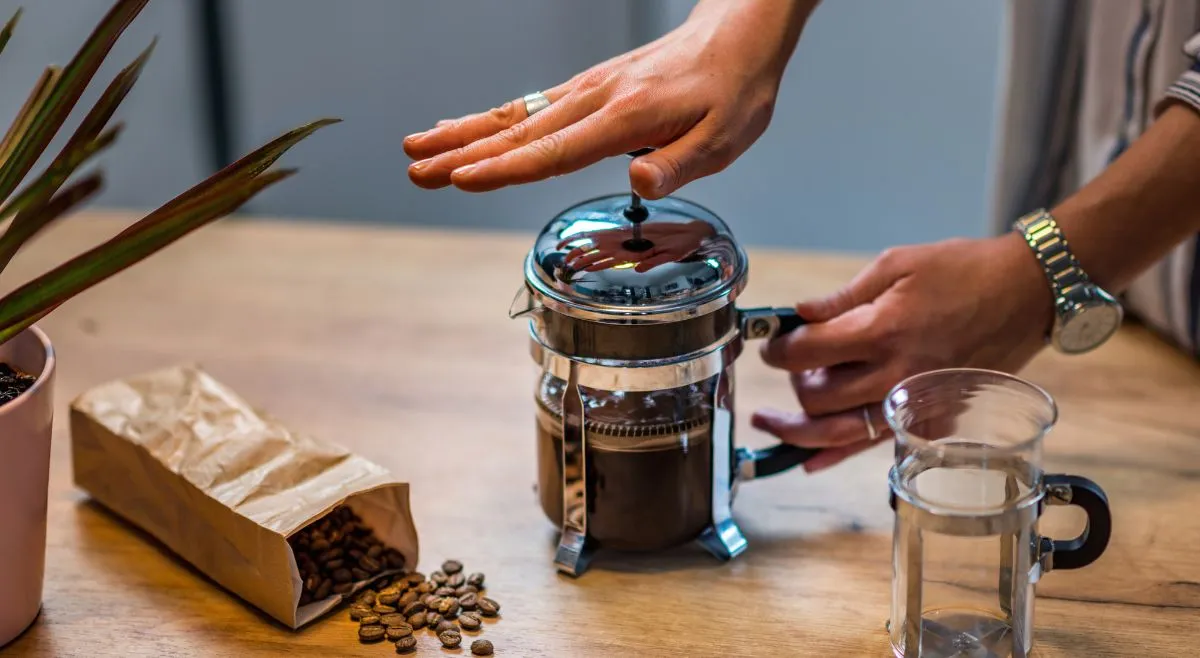
French Press (Image Credit: Canva)
Pour-Over / V60
Step 1: Use a medium-fine to medium grind.
Step 2: Start around a 1:16 coffee-to-water ratio.
Step 3: Use 90- 96 °C water depending on the Roast Level
Step 4: Rinse the filter.
Step 5: Bloom for 30–45 seconds.
Step 6: Pour the remaining water slowly and evenly.
Step 7: A total brew time of around 2½–3½ minutes is a useful starting point.
This method is excellent for highlighting clarity, sweetness and acidity.
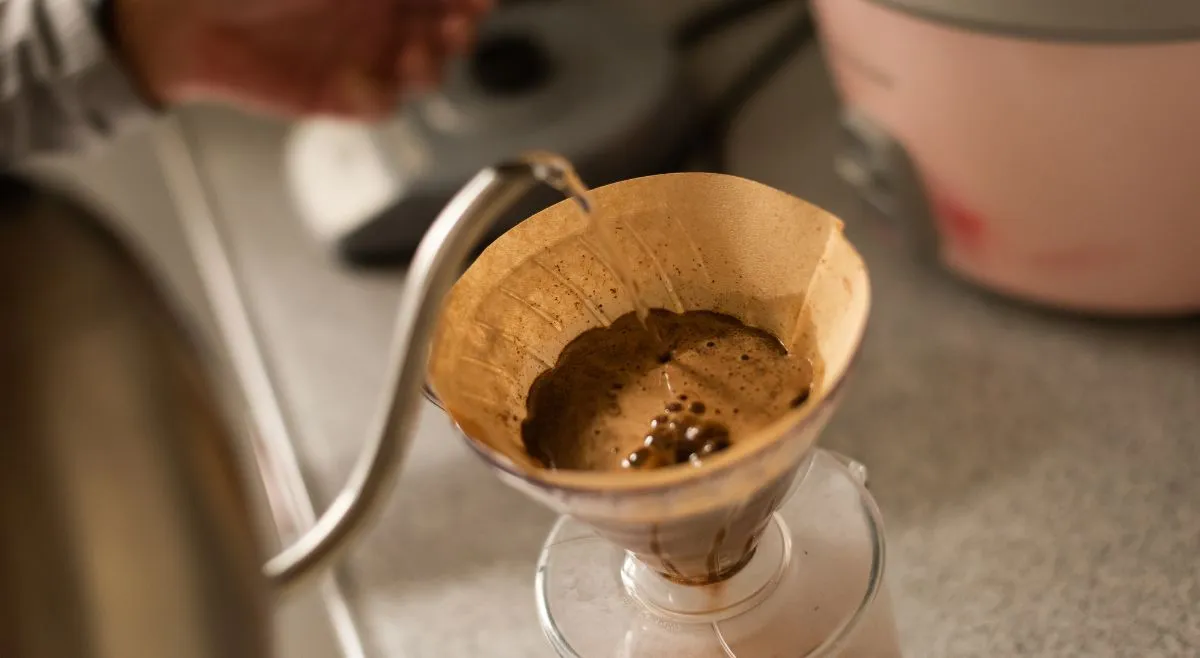
Pour-Over (Image Credit: Canva)
Moka Pot
Step 1: Use a fine to medium-fine grind.
Step 2: Fill the bottom chamber with water up to the safety valve.
Step 3: Add coffee and level it gently — do not tamp.
Step 4: Brew on medium heat on a Stove or Induction Heater.
Step 5: Remove from heat before excessive sputtering.
Step 6: Serve hot immediately with a Choice of Milk or water. Dilute with hot water for an Americano
Most importantly: before choosing the recipe, understand the coffee — its origin, roast profile and processing method. The same brewing method may need a different recipe for a washed, natural, honey or anaerobically processed coffee.
Moka Pot (Image Credit: Canva)
What Do Professional Baristas Recommend For A Better Cup Of Coffee?
Here is a simple checklist to maintain before making a coffee:
Task | Key Detail |
Buy freshly roasted coffee | Always check the roast date. |
Grind just before brewing | To preserve peak flavour and aroma. |
Use a good burr grinder | For consistency |
Use clean, good-quality water | Filtered water prevents off-flavours and scale buildup. |
Use a digital scale | For consistency in the recipe. |
Keep your equipment clean | Prevents old coffee oils from making fresh brews taste bitter. |
Lastly, it is also important to understand the coffee before brewing it, like its origin, variety, roast level, processing method and expected flavour profile.
Don't use the same recipe blindly for every coffee.
A washed coffee, for example, may be approached to preserve clarity and acidity.
A natural or anaerobic coffee may be approached to balance its fruitiness, sweetness and fermentation character.
• Change one variable at a time: grind size, temperature, ratio, or Brew time.
• Taste the coffee and adjust accordingly.
Most importantly, remember:
“The recipe is a starting point. Understanding the coffee is what helps you find the right recipe.”
This last point is particularly important for anyone Approaching Speciality Coffee in India, where coffees from regions such as Chikmagalur, Coorg, Wayanad, Araku and the Nilgiris can have very different characteristics depending on variety, terroir, roast and processing.
ALSO READ: Tired Of The Same Cafes? 5 Underrated Coffee Spots In Delhi NCR For Your Next Coffee Date
Perfect coffee isn't a destination; it's a repeatable process. By dialling in your golden ratio and treating your water quality with the same respect as your roast, you’ve already jumped ahead of 90 per cent of home brewers.
ALSO READ: 7 Budget-Friendly Coffee Corner Ideas That Make Your Home Feel Like A Cafe
Remember: the beans will always tell you what they need; if it’s sour, grind finer; if it’s bitter, back off. Now that you’ve mastered the fundamentals, try experimenting with the brewing suggestions above.
FAQs.
1. What is the best coffee-to-water ratio for home brewing?
The generally recommended 'golden ratio' for brewing coffee is between 1:15 and 1:17. This means for every 1 gram of coffee, you would use 15 to 17 grams (or millilitres) of water, depending on your preferred strength.
2. How does water temperature affect coffee flavour?
Optimal brewing water temperature is crucial for proper extraction, typically between 90–96°C. Water too cool will lead to under-extraction and a sour taste, while water too hot can cause over-extraction, resulting in a bitter flavour.
3. What grind size should I use for a French Press?
For a French Press, a coarse and uniform grind size, resembling coarse sea salt, is recommended to prevent excessive bitterness from over-extraction and to avoid grounds passing through the filter.