

Every year on March 27, the world comes together to celebrate World Theatre Day, a moment to reflect on the transformative power of theatre and its ability to convey human experience. In an era marked by rapid technological advancements, the theatre has not only survived but has also evolved dramatically. The digital age presents both challenges and opportunities for this ancient art form, allowing it to reach new audiences while reimagining traditional practices.
The Evolution of Theatre
Theatre has existed for thousands of years, originating in ancient Greece as a form of storytelling that combined performance, music, and dance. It has been a space for social commentary, emotional expression, and cultural reflection. However, the advent of technology has prompted a redefinition of how theatre is created, experienced, and consumed. From the introduction of electricity in the 19th century to the rise of film and television, each technological wave has altered the landscape of performance art.
Today, digital technology is at the forefront of this evolution. The internet, virtual reality, augmented reality, and social media have all contributed to a new theatrical landscape that challenges conventional notions of performance. The question arises: how does this digital transformation impact the essence of theatre?
Expanding Accessibility
One of the most significant advantages of digital technology is its ability to make theatre more accessible than ever before. Live-streaming performances enable audiences worldwide to experience shows they might not otherwise have the chance to see. This democratization of access can break down geographical and socioeconomic barriers, helping diverse audiences to engage with theatrical works.
For instance, during the COVID-19 pandemic, many theatres turned to live streaming to reach audiences confined to their homes. Productions such as the National Theatre’s “NT at Home” series showcased classic plays and contemporary works, drawing in viewers who might never have set foot in a theatre. This shift has led to the emergence of a thriving online community of theatre enthusiasts who share experiences and engage in discussions across various digital platforms.
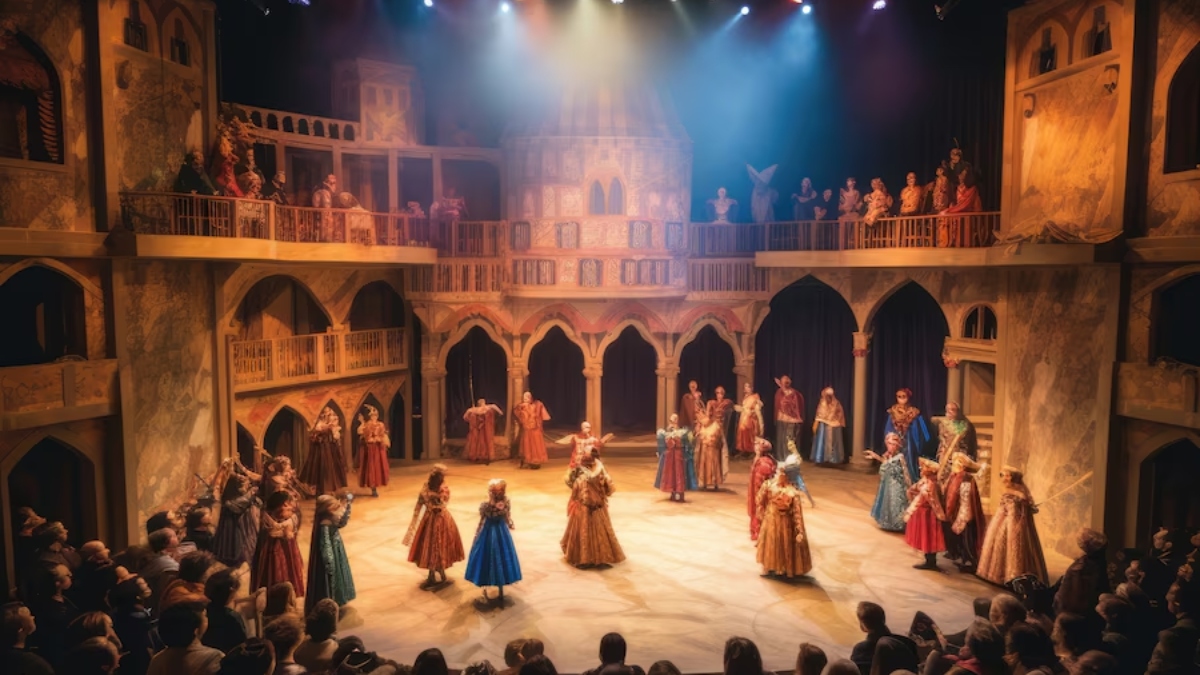
Theatre has existed for thousands of years, originating in ancient Greece as a form of storytelling (Image:Freepik)
The Rise of Virtual and Augmented Reality
Virtual reality (VR) and augmented reality (AR) are pushing the boundaries of what theatre can be. Immersive experiences allow audiences to step into the world of production, becoming active participants rather than passive observers. Companies like Punchdrunk have pioneered immersive theatre, where the audience moves through a space and interacts with performers, creating a unique and personal experience.
AR technology can enhance traditional performances by blending physical stage elements with digital ones. This fusion creates a multi-layered experience, enriching the narrative and engaging audiences in unexpected ways. For example, performances can incorporate visual effects projected onto the stage, transforming a simple set into a dynamic, ever-changing environment.
New Narrative Forms
The digital age has also inspired new forms of storytelling. Traditional linear narratives are being disrupted by non-linear storytelling, where audience choices influence the outcome of the performance. Interactive theatre, where viewers can engage with the plot and characters, breaks down the fourth wall, fostering a deeper connection between the audience and performers.
Additionally, social media platforms have become vital tools for storytelling. Short-form content on platforms like TikTok and Instagram enables creators to share snippets of their work, generate buzz, and attract a wider audience. This immediacy can lead to a more engaged fan base as theatre companies harness the power of viral marketing to promote their productions.
Challenges and Critiques
While the digital age offers exciting prospects for theatre, it also presents challenges. The reliance on technology raises questions about the authenticity of the theatrical experience. Critics argue that the essence of live performance — the energy exchanged between actors and audience — can be diluted in a digital format. The nuances of human connection, which manifest in shared spaces, can be tricky to replicate in virtual environments.
Moreover, the digital divide remains a significant issue. Not everyone has equal access to the internet or the latest technology, resulting in specific demographics being left behind. Theatre practitioners must navigate these challenges to ensure that the digital transformation benefits all artists and audiences, not just those with the latest devices or high-speed internet.

The magic of theatre continues to thrive, reminding us of the beauty and significance of storytelling (Image:Freepik)
Preserving Tradition in a Digital World
Despite the rapid changes, many theatre companies remain committed to preserving the traditions that have defined the art form for centuries. The challenge lies in finding a balance between innovation and tradition. This involves integrating new technologies while honoring the core principles of storytelling, live performance, and human connection.
Theatres are exploring hybrid models that combine live performances with digital elements. For example, a traditional play might be staged in front of a live audience while simultaneously being streamed online, allowing for both in-person and virtual attendance. This approach not only expands reach but also enhances the experience for those who attend physically.
The Future of Theatre
As we celebrate World Theatre Day, it is essential to acknowledge the resilience and adaptability of the theatre community. The digital age has opened new avenues for creative expression, enabling artists to experiment with form, content, and audience interaction. The future of theatre lies in its ability to embrace these changes while maintaining its fundamental purpose: to explore the human condition, provoke thought, and inspire empathy.
The digital transformation of theatre is not merely a trend; it represents a profound shift in how stories are told and experienced. As we look ahead, the challenge will be to harness the power of technology while ensuring that the heart of theatre — its ability to connect people — remains intact.
In conclusion, World Theatre Day serves as a reminder that theatre is a living, breathing art form continually evolving to reflect the society in which it exists. As we navigate the complexities of the digital age, let us celebrate the innovative spirit of theatre artists and their relentless pursuit of new ways to engage and inspire audiences worldwide. Whether through a live performance, a virtual experience, or a hybrid of both, the magic of theatre continues to thrive, reminding us of the beauty and significance of storytelling in all its forms.
(Note: Dr (Prof) Sadhana Kala is a USA-trained robotic & laparoscopic surgeon, Uppsala University, Sweden, trained fertility specialist, Icon Endoscopic Surgeon of North India, and National Icon Endoscopic Surgeon of India. She is rated as India's Best Gynecologist by Google.)
(Disclaimer: The views expressed in this article are the personal opinions of the author.)