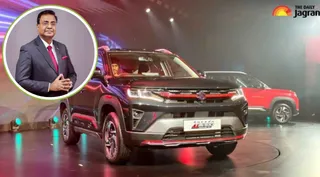
CNG Overtakes Diesel In India: CNG is fast emerging as the preferred alternative to diesel in India, and Maruti Suzuki, the largest car manufacturer in India, believes the shift will only accelerate with new technology that solves one of the fuel type’s biggest pain points — boot space.
In an interview with Jagran Hitech, Partho Banerjee, Head of Marketing and Sales at Maruti Suzuki India, said CNG is now clearly “overtaking diesel as the next powertrain option to petrol” for Indian buyers looking for lower running costs and cleaner mobility.
“The customer mindset has changed. After petrol, people are actively evaluating CNG for its running cost and lower emissions. With diesel demand shrinking in small cars and SUVs, CNG is filling that gap,” Banerjee said.
Also Read: Maruti Suzuki Brezza Facelift 2026 Video Review: New 1-Litre Turbo Petrol Engine Put To Test
The company’s latest push comes with the newly launched Maruti Suzuki Brezza, which for the first time gets an underbody CNG tank. The setup moves the cylinders below the floor, freeing up the entire boot for luggage — a long-standing complaint with factory-fitted CNG cars.
“Boot space was the basic problem with CNG. The underbody tank in Brezza solves that without compromising on mileage or safety,” Banerjee noted. “This will help CNG penetrate deeper into the SUV segment where families need both space and efficiency.” The Brezza CNG is offered with Maruti’s 1.5L K-series engine paired with a 5-speed manual, and claims class-leading fuel efficiency in the sub-4m SUV space.
Maruti had earlier tested the same technology for bigger CNG vehicles with the Victoris. The mid-size SUV was launched with a factory-fitted CNG option, making it one of the first in its segment to offer twin-cylinder technology with 60L capacity and up to 650 km combined range. The move signaled Maruti’s intent to take CNG beyond hatchbacks and compact sedans into higher segments.
Also Read: 2026 Maruti Suzuki Brezza Facelift Launched At Rs 7.40 Lakh: Check Variant-Wise Pricing Here
“We started with small cars, then moved to sedans, and now we have CNG in compact SUVs and mid-size SUVs. The portfolio expansion is deliberate — to give customers clean options across price points,” Banerjee said.
The brand’s bet on CNG is backed by a rapidly growing CNG infrastructure in India. According to industry data, the number of CNG stations has crossed 6,800 nationwide in 2026, up from under 3,000 five years ago. City gas distribution networks are expanding into Tier 2 and Tier 3 towns, while CNG prices remain roughly 50% cheaper per km than petrol.
With the government’s push for cleaner fuels and rising fuel costs, Banerjee expects CNG’s share in Maruti’s overall sales to keep climbing. “CNG is not a stop-gap anymore. It is a mainstream, long-term solution for India — affordable, clean, and now practical for every kind of car,” he said.