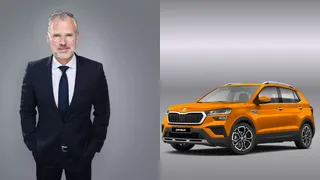
Premiumisation Of The Indian Middle Class: When we talk about India’s growth story in 2025, the conversation often jumps straight to GDP charts and sectoral forecasts. But the real shift is happening inside Indian households. The middle class is changing shape. It is no longer defined only by affordability. It is increasingly defined by aspiration. And that aspiration is rising across the country.
Let’s be very clear, Premiumisation is not about luxury. It is about the widening desire for better quality, better design, better safety, and better experiences. This desire is no longer limited to the metros. It is spreading into smaller towns, young families, and first-time upward movers. This is perhaps the most important consumer shift of the decade.
A Middle Class That Looks Different Now
Recent assessments indicate a significant decline in extreme poverty. Government data shows that about 171 million Indians moved out of extreme poverty between 2011 and 2023. This does not mean everyone entered the middle class overnight, but it does reflect a broader shift toward stability, security, and higher aspirations.
At the same time, urbanisation continues at a rapid pace. More multi-lane highways. More logistics corridors. More tier-II and tier-III business districts that look very different from ten years ago. When mobility improves, exposure improves. And when exposure improves, expectations rise. This is how premiumisation begins. Not with sudden income jumps but with mindset shifts.
Also Read: Tata Safari And Tata Harrier Petrol Secure 5-Star Safety Rating In BNCAP
What Consumers Are Signalling in 2025
The slowdown in mass-market categories in 2024 created anxiety in many sectors. Many expected the middle class to pull back. But consumer behaviour in 2025 tells a different story. People are cutting down on non-essential volume buys. They are not cutting down on quality upgrades.
In smaller towns, households are willing to delay purchases if that delay allows them to buy a better version of the same product. The idea of “good enough” is losing ground, while the idea of “worth the stretch” is taking over.
Young professionals are driving this shift. Their incomes may not have risen sharply, but their expectations have. They are choosing better materials, safer features, higher efficiency, and cleaner technology. Across categories, the pattern is consistent: buy less, but buy better. That is the core of premiumisation in 2025.
Also Read: Caution! This Small FASTag Mistake Might Make You Pay Double Toll
The Vehicle Story: A Clear Marker of Aspiration
Nothing reflects upward mobility more clearly than how people approach vehicles. This year, the auto sector has been one of the strongest indicators of middle-class premiumisation.
Three behaviour shifts stand out.
First, there is a growing appetite for feature-rich vehicles. Safety, connectivity, design, and efficiency have become basic expectations. Even first-time buyers want features that were earlier seen in higher segments.
Second, there is a rising preference for higher-spec variants even when more affordable trims are available. This mindset, once associated with metros, is now visible across the country.
Third, cleaner mobility is gaining traction. The share of electric vehicles in total car sales remains modest, but the growth rate is strong. Many new electric models are set to launch soon with longer ranges and faster charging. The global slowdown in electric mobility has not dampened India’s momentum. If anything, India sees an opportunity to become a force to be reckoned with in sustainable mobility.
Also Read: Govt To Make ABS Mandatory For Two-Wheelers From 2026
A Very Different Kind of Competition
Premiumisation is not just changing what people buy. It is changing how businesses compete and their understanding of what “premium” means to respective target groups.
In some areas, premium means durability. In others, it means authenticity. Sometimes it is a design choice. And sometimes it is a specific ingredient or a particular feature. Premium has become a spectrum, not a segment. And the middle class is climbing that spectrum on its own terms.
This also means the old models of segmentation—income, location, and age—are becoming less predictive. A young buyer in a tier-II city may behave more premium than a buyer in a metro. A small-town family may adopt new technology faster than a higher-income household in a larger city. Exposure now matters more than geography. Aspirational identity matters more than income brackets.
Also Read: In Pics: Top 5 Tata Sierra Rival SUVs Launching In India In 2026
What 2025 Is Asking of Businesses
The key question for organisations is: how do you serve a middle class that is moving upward while staying value-conscious?
The answer lies in innovation that respects both aspiration and affordability. Better quality does not always need a higher price. Better design does not always need a premium tag. And a better experience does not always require a premium store.
The 2025 middle-class consumer is saying three things clearly: They want transparency. They want substance. They want products that feel future-ready. If companies do not meet these expectations, someone else will.
Also Read: BMW F450GS To Launch In India In 2026: Here’s What To Expect
Where This Trend Is Leading
Premiumisation is a structural shift. It signals a more confident, more aware, and more ambitious middle class. In many ways, 2025 is the year this trend becomes impossible to ignore. Consumption is about value. People want fewer compromises in areas that truly matter, such as mobility, safety, health, home, and technology. This creates a powerful foundation for India’s next phase of growth.
The story of the middle class is built around aspiration. And aspiration, when multiplied across millions of households, becomes one of the strongest economic forces any nation can have.
Disclaimer: This article is authored by Jan Bures, Executive Director – Sales, Marketing, and Digital, Škoda Auto Volkswagen India. All views are personal.