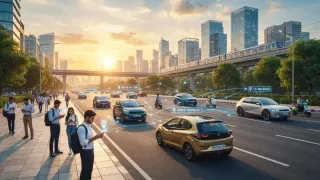
India's app-based mobility sector is looking at ways to expand shared transport beyond conventional taxis and commercial vehicles. One proposal involves allowing privately owned cars to offer passenger rides through aggregator platforms, potentially creating an additional source of transport capacity. However, such a model also raises questions about passenger safety, vehicle standards and the responsibilities of platform operators.
The proposal was raised by Delhi Environment Minister Manjinder Singh Sirsa at Uber's 'One Less Car' event in Delhi. He suggested that privately owned cars should be allowed to operate as app-based cabs, provided they meet minimum safety requirements.
“I had suggested that every car should be allowed to work as an Uber. There should be an app through which any private vehicle owner can offer rides. But the question is: who will be responsible for the passenger's security? We need to have the minimum safety equipment fitted in the car before it can be used for public transport or as a taxi,” Sirsa said.
His remarks bring attention to a possible change in the way passenger transport services are organised. Allowing private vehicle owners to offer rides could increase the number of vehicles available on digital platforms and create another earning opportunity for owners. At the same time, the model would require clarity on permits, safety standards and accountability.
Private Vehicles and the Changing Mobility Market
The discussion comes as India's ride-hailing market continues to expand. According to estimates by Frost & Sullivan, the market was valued at around ₹54,340 crore in 2023 and is projected to reach ₹67,560 crore by 2030.
The growing market has increased interest in different ways of organising passenger transport. Privately owned vehicles often remain unused for significant parts of the day. Bringing some of them into app-based mobility networks could improve vehicle utilisation and expand ride availability.
However, the practical implementation of such a model would depend on the regulatory framework. Requirements relating to vehicle fitness, insurance, passenger verification and safety equipment would need to be addressed. There would also need to be clarity on the respective responsibilities of vehicle owners and aggregators when a private car is used for commercial passenger transport.
The idea of expanding privately owned vehicles into shared transport has also featured in discussions at the national level. Union Road Transport and Highways Minister Nitin Gadkari has previously spoken about enabling privately owned two-wheelers to operate as bike taxis through aggregator platforms.
First- and Last-Mile Connectivity Remains a Challenge
While expanding vehicle supply is one part of the mobility debate, connecting different modes of transport is another. For many commuters, reaching a Metro station or travelling from the station to their final destination can remain a challenge.
Uber's 'One Less Car' experiment in Delhi-NCR examined how residents could manage their daily journeys without relying on their personal vehicles. Conducted in collaboration with The Quantum Hub and YLAC, the four-week trial involved 34 participants who gave up their personal vehicles and used public and shared transport.
A week after the experiment ended, 20 participants were still not using their vehicles, while the number of participants relying exclusively on personal vehicles had fallen from 12 to two. The findings also highlighted gaps in first- and last-mile connectivity, safety and service reliability.
The results point to an important requirement for shared mobility services. Public transport can carry large numbers of passengers, but commuters also need convenient ways to reach stations and complete the final part of their journeys. The availability and reliability of these connections can influence whether people choose public transport over personal vehicles.
Platforms Look at Combining Different Transport Modes
To address some of these connectivity gaps, Uber has introduced its Connected Journeys feature in Delhi. The service allows commuters to combine Metro travel with app-based transport options, including autos and two-wheelers, for first- and last-mile connectivity.
Aditya Kapoor, Director of Supply Operations at Uber India and South Asia, said the 'One Less Car' experiment highlighted the importance of connecting different transport modes.
“The experiment showed us that Delhi-NCR already has many of the building blocks for multimodal travel, but the connections between them matter. Connected Journeys is one way we can help bring those modes together, making it easier for riders to combine Metro with Uber for the first and last mile and complete their journeys more seamlessly,” he said.
Uber plans to roll out the feature progressively across Delhi by the first quarter of 2027.
Balancing Mobility Expansion With Passenger Safety
The discussion around privately owned cars entering app-based transport networks reflects a wider challenge for India's mobility sector. Expanding the number of vehicles available for shared transport could help improve supply, but it would also require systems that ensure passenger safety and service reliability.
The industry's next phase may involve a combination of commercial taxis, privately owned vehicles, two-wheelers, autos and public transport working through connected digital platforms. For this model to develop, technology will need to be supported by suitable regulations, safety checks and clear responsibilities among the different participants.
As cities look for alternatives to private vehicle use, the focus is gradually moving beyond ride bookings towards how different forms of transport can work together. The success of shared mobility will depend not only on the number of vehicles available but also on how safely and efficiently commuters can complete their journeys.