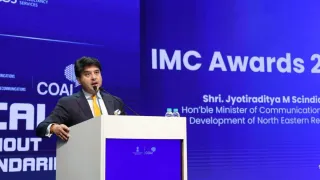
India's Communications Minister Jyotirditya Scindia on Friday said that satcom players can start operations only after meeting security requirements and the decision on the revenue charges system. Commenting on the controversy that erupted after Elon Musk's allegation of blocking his satellite internet service 'Starlink' to benefit other Indian players, the minister said that lot of conversation about one specific company, but that 3 companies have got satcom licences.
"These companies will only get spectrum after the revenue charge system is decided and can start operations on meeting security norms," the minister said.
Responding to Musk's allegation, he further said that India does not allow monopoly in any sector and these three satcom players can start operations only after individually meeting security requirements and other regulatory milestones.
What Is Musk’s Allegations?
Elon Musk, in a post on X, alleged that Starlink's satellite internet services were being delayed due to pressure from domestic business interests. The Ministry of Telecommunications, however, later categorically denied his allegations, saying all satcom licensees in the country needed to comply with security standards.
Later, he mounted another allegation, questioning If Indian government is not allowing his company’s services to give a monopoly to Mukesh Ambani. In a post on X, he asked, "Is Ambani the real boss of India?"
Reaction toto government response, Musk questioned why Starlink had not yet received an operational licence in India despite being licensed in more than 165 countries.
Scindia Takes a Dig at Congress
Responding to Rahul Gandhi's remarks on Musk's allegations, Scindia criticised the Congress party, stating that it appears directionless and uncertain of its stance. He noted that Congress had previously opposed granting a license to a specific entity, but has now aligned with that same entity to question the delay in licensing.
He reiterated that all three satcom license holders will receive spectrum allocation once the revenue charge framework is finalised and security requirements are fully met.