IND vs NZ T20 World Cup 2026 Final: “Time for the next generation to take the T20 game forward.” Those were Virat Kohli's words after India won the 2024 T20 World Cup. It felt like the ending of a brilliant film. The hero performed in the climax. Fans sat on the edge of their seats until the screen turned black.
But the Indian cricket doesn't really stay that way for long.
Besides Kohli, skipper Rohit Sharma and all-rounder Ravindra Jadeja also retired from the shortest format. For many fans, this marked the end of a golden era. Rohit's aggressive batting, Kohli's run-chase brilliance, and Jadeja's magic shaped India's T20I team for years.
Questions were raised even before the team had stopped celebrating the 2024 T20 World Cup win. Who would fill the void left by these three players?
And after two years, these questions were answered quite well.
The Men in Blue defended their T20 World Cup title. They did it with a team that was a direct replacement for the previous one. The story wasn't just about replacing Kohli, Rohit, or Jadeja. The new generation took responsibility and gave the team its own identity.
ALSO READ: Gautam Gambhir Responds To MS Dhoni’s Viral Post, Reveals Reason For Serious Dugout Demeanour
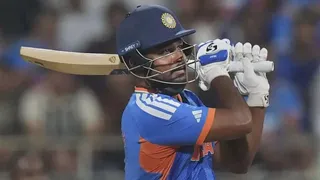
Sanju Samson became the center of the story as he entered the mega event as just another brilliant batter and ended his campaign by being adjudged the Player of the tournament. He was surrounded by players who had been part of India's T20I team for a long time. Ishan Kishan, Axar Patel, and Shivam Dube rose to the occasion, which looked bigger than before.
If the era of Kohli, Rohit, and Jadeja was called the original blockbuster, then this young team ensured that their sequel didn't disappoint.
SAMSON THE NEW STANDARD
Sanju Samson was one player who summarized India's transition.
Samson’s campaign in the recent mega event began with him on the bench. The team management tried different combinations in the first half of the tournament. When Samson returned to the XI during the knockouts, he was sent as an opener.
But Samson rose up to the occasion when the team needed him the most.
He scored an unbeaten 97 against West Indies in a must-win Super 8s match at Eden Gardens. In the semifinal, he made a brilliant 89. He repeated the feat with another match-winning 89 in the summit clash.
Three important matches. Three innings that helped India lift the T20 World Cup title.
Samson scored 321 runs in five matches. This was the most by an Indian batter in a single edition of this tournament.
Ex-India skipper Anil Kumble called him a perfect combination of both Rohit Sharma and Virat Kohli.
Sometimes Samson played like Kohli. He batted calmly and stayed in control while chasing. Other times, he batted aggressively like Rohit during the power play and focused on the team's score rather than personal achievements.
During a post-match press conference, someone asked about him falling short of two centuries against the West Indies and England. Samson ignored the question. For him, scoring 97 and 89 meant nothing if his team did not win.
This kind of reply showed Samson shared Rohit Sharma’s quiet demeanor.
ISHAN KISHAN OWNS NO.3
For a long time, the Indian team management faced a persistent question in T20s.
The question was who would be their No.3 batter.
Ishan Kishan answered this question quite brilliantly during the 2026 T20 World Cup.
He scored 317 runs in nine matches at a strike rate of 193. After hitting three fifties, he was the fourth-highest run-getter in the tournament.
His story had started quite a few months before this tournament.
He returned to the national team after helping Jharkhand win the Syed Mushtaq Ali trophy as captain. During the white-ball series against New Zealand, he grabbed attention with a hundred in the last match.
He then just maintained his sublime form in the World Cup.
Apart from Samson and Abhishek Sharma, Ishan was one of the most dangerous top-order batters of the event. His role was simple. He had to keep the scoring rate high and not let the innings drift.