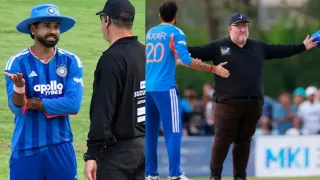
India narrowly avoided a major upset against Japan, winning their historic T20I by two runs on Tuesday. However, the result was overshadowed by a controversial Wide decision in the final over.
After rain reduced the match to five overs per side, India managed 32/4 before Japan came close to chasing down the target. Japan needed eight runs from the final over, with Axar Patel bowling to defend the total.
ALSO READ: Abhishek Sharma Creates Unwanted Record After First-Ball Duck Against Japan
The controversy occurred when a delivery from Axar was initially called a Wide by the on-field umpire. Axar and India captain Shreyas Iyer immediately questioned the decision, after which the umpires discussed the call and overturned it, meaning the delivery counted as a legal ball.
The decision became crucial because a Wide would have given Japan an additional run and another delivery. Japan eventually finished on 30/3, with India winning by two runs.
Can An Umpire Change His Decision?
Yes. The ICC's playing conditions specifically allow an umpire to change a decision, but there is an important condition.
Law 2.12 states: “An umpire may alter any decision provided that such alteration is made promptly. This apart, an umpire’s decision, once made, is final.”
Therefore, an umpire is not prohibited from reversing a decision immediately after making it. The key requirement is that the alteration must be made promptly.
What Do ICC Laws Say About A Wide?
Law 22.1 states that a delivery can be called Wide when it passes wide of where the batter is standing and would also have passed wide of the batter in a normal guard position.
The law also says the ball is considered wide unless it is “sufficiently within reach” for the batter to play a normal cricket stroke.
Importantly, Law 22.4 says an umpire should not call a delivery Wide if the batter moves and causes the ball to pass wide of them.
ALSO READ: India Survive Japan Scare, Win Rain-Hit T20I By Just 2 Runs
Was The Decision Legal?
The ICC laws confirm that the umpire could legally alter the Wide decision, provided the change was made promptly.
The controversy is therefore about the application of the Wide law to that particular delivery, rather than whether an umpire is allowed to change a decision.
There was no DRS or third umpire involved, so the on-field officials handled the decision themselves.