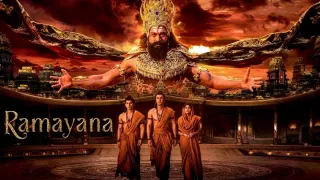
The timeless story of the Ramayana has guided Indian culture for centuries, yet each generation rediscovers it through a distinct lens. In 1987, Ramanand Sagar brought Ramayan to Doordarshan, bringing the entire country to an absolute halt on Sunday mornings. Almost four decades later, director Nitesh Tiwari has released his high-budget big-screen retelling starring Ranbir Kapoor, Sai Pallavi, and Yash.
While both productions draw from the sacred verses of the Valmiki Ramayana, their artistic approaches, mediums, and technologies represent two entirely different eras of Indian storytelling.
5 Major Differences Between Ranbir Kapoor’s 2026 Ramayana And Ramanand Sagar’s 1987 Ramayan
Weekly Television vs Multi-Part Feature Film
Ramanand Sagar’s 1987 series was designed for living-room television. Spanning 78 weekly episodes, it enjoyed the luxury of time, allowing emotional subplots, moral dialogues, and philosophical lessons to develop across multiple hours.
In contrast, Nitesh Tiwari’s 2026 adaptation is a multi-part cinematic feature built for wide theatrical and IMAX screens. The narrative is fast-paced, streamlining classical storylines into concentrated, dramatic set-pieces tailored for contemporary cinema audiences.
Practical 'Jugaad' vs Modern Digital CGI
Sagar’s television production worked with modest budgets, relying on practical studio sets, cardboard props, and early in-camera special effects. The charm of the 1987 classic lay in its simplicity and earnest storytelling.
The 2026 cinematic version, backed by Namit Malhotra and visual effects studio DNEG, employs photorealistic computer-generated imagery (CGI), virtual production, and elaborate motion-capture battles to bring kingdoms like Ayodhya and Lanka to life.
ALSO READ: Ramayana Part 1 Ending Explained: Sita Haran, Jatayu's Death And What To Expect In Part 2?
Portrayal Of Lord Rama
Arun Govil’s portrayal of Lord Rama in 1987 was defined by a calm, gentle, and devotional demeanor that turned the actor into an enduring spiritual symbol across households.
Ranbir Kapoor presents a more athletic, grounded interpretation of Rama in the 2026 film. His performance balances spiritual poise with the physical grit and emotional vulnerability of an exiled warrior prince.
Depth And Depiction Of Ravana
Arvind Trivedi played Ravana in 1987 with classic theatrical grandiosity, featuring booming laughter and straightforward mythological villainy.
In the 2026 film, Kannada superstar Yash delivers an imposing, complex, and politically astute Lankan king. The script dedicates extensive screen time to Ravana's formidable power, intelligence, and internal motivation, moving away from past caricatures.
ALSO READ: Ramayana Part 1: Is The Age Gap Between Ranbir Kapoor And Sai Pallavi Accurate For Ram And Sita?
Musical Soundscapes
The 1987 television serial featured traditional Indian folk melodies, harmonium chords, and soul-stirring dohas composed and sung by Ravindra Jain. It created the devotional ambience of a temple gathering.
The 2026 feature film pairs Academy Award winners A.R. Rahman and Hans Zimmer. Their collaborative score merges ancient Sanskrit chants with massive symphonic orchestrations engineered for Dolby Atmos sound systems.
FAQS
How does Ranbir Kapoor’s Ramayana differ from Ramanand Sagar’s 1987 version?
The 1987 version was a 78-episode devotional TV series relying on practical stagecraft and simple effects. The 2026 version is a multi-part, high-budget cinematic adaptation driven by modern CGI, dynamic pacing, and a symphonic score.
Who plays Lord Rama and Ravana in the 2026 film?
Ranbir Kapoor portrays Lord Rama, while Kannada star Yash portrays the Lankan king Ravana.
Did Arun Govil appear in the 2026 Ramayana film?
Yes, Arun Govil, who famously portrayed Lord Rama in the 1987 television series, joined Nitesh Tiwari's 2026 film cast to play King Dasharatha.