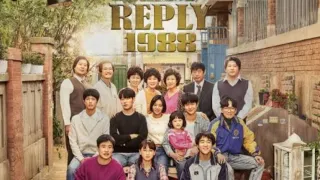
Filmmaker Kiran Rao recently spoke about her love for the Korean drama Reply 1988. Speaking on The Popcorn Hour, Kiran revealed that she would love to make a remake of Reply 1988 for Indian audiences.
She praised the Kdrama for its family-centred storytelling and called its older characters, particularly the parents, the show's ‘genuine jewel’.
Her comments have brought renewed attention to a series that finds happiness in ordinary family life.
Released in 2015, Reply 1988 follows five families living in the same Seoul neighbourhood. Teenage friendships, first love and school struggles drive the story, but the parents' ambitions, financial troubles and sacrifices also take a significant place in the story.
If you are wondering what makes this Kdrama worth watching before a possible Indian adaptation, here are some reasons to add it to your watchlist.
Reply 1988: Everything You Need To Know
| Category | Details |
| Title | Reply 1988 |
| Release Year | 2015–2016 |
| Main Cast | Lee Hye-ri (Sung Deok-sun), Ryu Jun-yeol (Kim Jung-hwan), Park Bo-gum (Choi Taek), Go Kyung-pyo (Sung Sun-woo), Lee Dong-hwi (Ryu Dong-ryong) |
| Key Themes | Nostalgia, family love, neighbourly bonding, coming-of-age, and the signature "husband-hunting" mystery common to the Reply series. |
| Critical Acclaim | One of the highest-rated dramas in Korean cable television history. Won Best Director and Best Actor at the 52nd Baeksang Arts Awards. |
| Where to Watch | Netflix, Viki, Prime Video |
Reasons Why You Should Watch Reply 1988
1. Older Characters Play Equally Important Roles As The Teenagers
Unlike other Kdramas, where the focus is on new romance, Reply 1988 gives its older characters their own ambitions, insecurities, friendships and emotional struggles instead of treating them as supporting figures in their children's stories.
Their experiences often become the series' most affecting moments.
2. Beautifully Captures Community And Neighbourhood
The Korean series is set in Ssangmun-dong, where neighbours share food, look out for each other and create a sense of belonging for everyone.
The warmth in the neighbourhood families connects with the audience and gives them a sense of familiarity.
3. Friendship Looks Relatable
Deok-sun, Taek, Jung-hwan, Sun-woo and Dong-ryong have grown up together. Their teasing, arguments and loyalty feel like the result of years spent in each other's company.
It is a coming-of-age story that understands how real friendships can be messy without becoming disposable.
4. Deok-sun’s Insecurities Make Growing Up Feel Personal
Sun Deok-sun’s character is the most relatable. She is a teenager who often feels overlooked in her family. She compares herself to everybody and wants to feel special and heard.
Her story shows familiar insecurities and the uncomfortable gap between wanting to be noticed and learning to value yourself.
5. The Love Triangle Is Not Overly Dramatic
The Korean drama has a romantic triangle between Deok-sun, Jung-hwan and Taek. Their feelings are entangled with years of friendship.
Small gestures, missed opportunities and things left unsaid carry as much weight as direct confessions.
ALSO READ: 7 Brain Rot Kdramas That Are So Addictive, You Won’t Stop Thinking About Them
6. Park Bo-gum’s Taek Character Is Quiet But Compelling
Taek's reserved nature brings tenderness to a character whose silences often communicate more than dialogue. His storyline is worth following for the contrast between public achievement and private vulnerability.
7. It Understands Why Sibling Dynamics Can Be Complicated
Deok-sun and her elder sister, Bo-ra, share the kind of relationship in which affection and resentment frequently collide. Their conflicts feel familiar because they emerge from comparisons, expectations and the desire for parental approval.
8. The 1980s Setting Looks Nostalgic
The late-1980s setting is woven into everyday life, from period references to the social changes unfolding in South Korea. The backdrop gives the characters a specific historical context rather than using the decade merely as an aesthetic.
9. Humour Makes The Emotional Moments Hit Harder
The comedy comes from awkward encounters and friends who know exactly how to irritate one another. Because the characters are ridiculous, their more vulnerable moments feel even more affecting. It can make you laugh at one moment and understand its pain the next.
10. Treats Money As A Family Issue
Financial differences influence how the families live, what parents hope for their children and the choices available to them. The show does not turn every difficulty into a dramatic crisis.
It shows how financial security can affect relationships, dignity and opportunity in ways that families rarely discuss openly.
ALSO READ: 7 Beginner-Friendly Cdramas To Watch If You Love Kdramas
11. It Reminds You Why Ordinary Memories Can Become Extraordinary
Reply 1988 builds its emotional impact through everyday rituals, familiar faces and changing relationships. As the characters grow older, those seemingly insignificant moments acquire new meaning.
It makes you reconsider your own childhood, family habits and the people you may have taken for granted.
With Kiran Rao expressing interest in an Indian adaptation, would you watch the original first, or wait to see how the remake works in India?
FAQs
Q1. How many episodes are there in Reply 1988?
A1. The South Korean drama has 20 episodes, originally broadcast between November 2015 and January 2016.
Q2. Who stars in Reply 1988?
A2. The main cast includes Lee Hye-ri, Park Bo-gum, Ryu Jun-yeol, Go Kyung-pyo and Lee Dong-hwi.
Q3. Is Kiran Rao officially remaking Reply 1988?
A3. No official remake of the Kdrama has been announced by Kiran Rao.