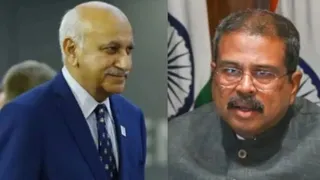
BJP MP Dharmendra Pradhan on Saturday stepped down as Education Minister, making it one of the rare instances of a Union Minister stepping down in recent years. The last similar case was in 2018, when then Minister of State (MoS) for External Affairs MJ Akbar resigned amid allegations during the MeToo movement.
CJP Protesters Made Pradhan’s Resignation Key Demand
Pradhan’s resignation came after a month-long protest led by the Cockroach Janta Party (CJP) over the NEET-UG exam paper leak. Delhi’s Jantar Mantar emerged as the centre of the agitation. Despite the government agreeing to address other demands, including compensation for families of students who died by suicide after the NEET and protecti action for protesters, the CJP continued to insist on Pradhan’s resignation.
The CJP had made the Education Minister’s resignation a condition for further talks with the government. After Pradhan stepped down, CJP leaders called it a major victory for their movement. Announcing his resignation, Pradhan said he accepted responsibility for the situation surrounding the NEET paper leak controversy. He said he had never avoided the issue but claimed that some people in responsible positions tried to create confusion among students.
In a letter shared on X, he wrote, “Considering the situation at Jantar Mantar and across the country-with the aim of preventing anti-national forces from exploiting it, preserving national unity, ensuring that not a single Indian student's future gets entangled in legal complexities, and allowing our children to devote their time to studies and focus on building their careers - I have submitted my resignation to the Honourable Prime Minister."
MJ Akbar’s Resignation In 2018
The previous instance of a Union Minister resigning came in 2018, when MJ Akbar stepped down as MoS for External Affairs. His resignation followed allegations of sexual harassment by multiple women during the #MeToo movement. At the time, several women who had worked with or interacted with Akbar during his career as a journalist accused him of misconduct. Before stepping down, Akbar had rejected the allegations and questioned the calls for his resignation. He had said. "Accusations without evidence have become a viral fever."