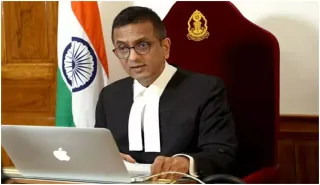
Former Chief Justice of India DY Chandrachud has weighed in on the ongoing debate around bail and long periods of detention, referring to the case of activist Omar Khalid, who has spent close to five years in jail without trial.
Speaking at the Jaipur Literature Festival during a discussion with journalist Vir Sanghvi, Chandrachud said extended incarceration without trial raises serious constitutional concerns.
Right To Speedy Trial
Chandrachud said courts must balance the need to impose conditions on bail with the accused’s fundamental right to a timely trial. He stressed that if a trial does not conclude within a reasonable period, detention begins to resemble punishment rather than a legal safeguard.
ALSO READ: BMC Number Game: Why Mayor Race Is Almost Over Despite Sena vs Sena Over Thin Mahayuti Majority
He pointed out that Article 21 of the Constitution guarantees not just the right to life, but also the right to a speedy trial. According to him, even strict laws that limit bail cannot override this basic constitutional protection.
Caution on Commenting on Pending Cases
When asked directly about Khalid’s continued detention, Chandrachud said he was careful not to criticise the court he led until recently. He noted that judges must decide bail based on evidence and material on record, not on public sentiment or later reflection.
National Security Claims Must Be Tested
Chandrachud rejected the idea that bail should be automatically denied in cases invoking national security. Courts, he said, must examine whether such claims are genuine and whether prolonged custody is justified. Otherwise, people risk remaining in prison for years without conviction.
ALSO READ: Haryana: Two Killed In Vehicle Collisions At Kundli-Manesar-Palwal Highway Amid Dense Fog
Judiciary’s Record on Bail
Defending the judiciary, Chandrachud said the Supreme Court of India disposed of around 21,000 bail applications during his tenure. Many of these cases, he added, do not attract public attention.
When Bail Can Be Denied
He reiterated that bail can be refused only in limited situations, if the accused may repeat the offence, flee the country, or interfere with evidence. If none of these apply, he said, bail should follow. Turning bail into punishment, Chandrachud warned, weakens both personal liberty and trust in the justice system.