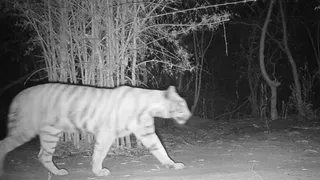
A new ray of hope has emerged in Chhattisgarh after a mysterious tigress was spotted in the forests of Udanti-Sitanadi Tiger Reserve. The four-year-old tigress was spotted for the first time. There are no records of the animal's presence in the forest.
Neither her paw prints are recorded in any database nor have her stripes been matched with any tiger archive in the country. Camera trap networks in Odisha, Maharashtra, and Madhya Pradesh also failed to yield any photographs of the wild animal.
ALSO READ: 'Police Will Not Rush In, No Forcible Eviction': Centre Seeks To Ease Concerns In Delhi Gymkhana Row
The tigress was first captured on camera in January; the tigress reappeared in April and May, confirming her continued presence in the Udanti-Sitanadi reserve, located about 160 kilometers from Raipur. This reserve had long been considered a lost cause due to its dwindling tiger population.
Origin Remains Mystery
The Forest Department sent her stripe pattern to the Wildlife Institute of India, but it didn't match. However, scat samples tested at the Nanaji Deshmukh Veterinary Science University in Jabalpur confirmed that she was a female tiger. However, her origins remain a mystery.
Varun Jain, Deputy Director of the Udanti-Sitanadi Forestry Department, said that the most surprising thing is that there is no record of her presence in any nearby forest area. Generally, tigresses do not travel long distances like male tigers. Female tigers usually find new territory within 150 to 200 kilometers of their birthplace, while male tigers can wander up to a thousand kilometers. Therefore, this tigress's arrival here, crossing forests across several states without any trace, has become a puzzle for experts.
The Endangered Species
This tigress is considered significant because the tiger population in the Udanti-Sitanadi region has been steadily declining. The 2014 All India Tiger Census found three tigers here, but by 2018, the number had dropped to one. After this, most tigers that visited the region were temporary visitors, moving on to safer forests.
The situation had become so dire that the state government had planned to relocate tigers here. A proposal to relocate two females and one male tiger was submitted to the National Tiger Conservation Authority in November 2024. But before that could happen, nature itself signaled its decision.
Forest officials believe this tigress could be an example of natural rehabilitation. If she lives here permanently, other male tigers may also consider the area their home, not just a passageway.