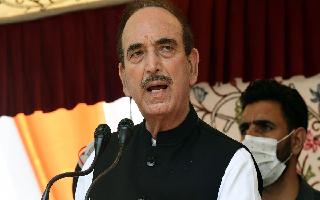
JE News Desk: Former Union Minister Ghulam Nabi Azad on Saturday warned the central government over the implementation of a uniform civil code and said that it will affect all religions.
While interacting with reporters in Srinagar, he mentioned that implementing UCC will not be "easy as it was to revoke Article 370".
"There is no question (of implementing it). It is not easy as it was to revoke Article 370. All religions are involved in it. Not only Muslims, but Christians and Sikhs also, tribals, Jains, Parsis, annoying all these people at once, will not be good for any government," the chairman of the Democratic Progressive Azad Party (DPAP) was quoted as saying by PTI.
"So, I suggest this government not even think about taking this step," he said.
The DPAP chairman praised the launch of the Jammu and Kashmir administration's "land for landless" programme, but he insisted that only the poor citizens of the Union Territory should receive land, not outsiders.
ALSO READ Uniform Civil Code Against Idea Of India: BJP Ally In Meghalaya On PM Modi's UCC Push
"We have been waiting for the last many years, when the assembly was dissolved in 2018. Since then, we have been waiting for the conduct of the elections. The people of J-K have been waiting for the restoration of the democratic setup in the state. When people will elect their representatives, they will become MLAs and form the government ," Azad said.
"Only elected representatives can work for the people in a democracy. Officers cannot run it for more than six months here or anywhere else in the country. It is important to have elected representatives. We have been continuously demanding that elections be conducted as soon as possible," he added.
He also spoke about the current political turmoil of NCP and said, "I have a high regard for (Sharad) Pawar, I wanted his party be strong. But, because of the internal situation, whatever has happened, we are not happy with that. However, it is their internal matter."
What Is UCC?
Uniform Civil Code refers to a single set of rules that are applicable to all Indian citizens that are not based on religion and which deal with issues like marriage, divorce, inheritance, and adoption among other matters.
(With inputs from agency)