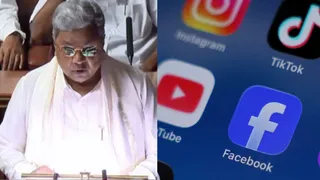
In a major development, the Karnataka government under CM Siddaramaiah has announced a complete ban on social media usage for children below 16 years of age.
While presenting the state budget for FY 2026-27, CM Siddaramaiah emphasised that the measure is aimed at preventing the adverse effects of increased mobile phone usage by minors, which could lead to negative psychological and social impacts on the younger generation.
The move is inspired by a similar Australian legislation, a first in the world. The social media ban for those below 16 is crucial but comes with certain challenges.
Why social media ban for children below 16 is important: Key stats
- With 750 million devices, India is the world's second-biggest smartphone market.
- The country has over a billion internet connections.
- India is Meta's biggest market for its products like Facebook, Instagram and WhatsApp.
- According to 2025 NITI Aayog data, Karnataka has a population of 6.76 crore.
ALSO READ: ‘Protecting Our Youth’: Karnataka CM Proposes Social Media Ban For Children Under 16
- According to a Union Health Ministry data from a 2019-2020 survey, cited by Reuters, less than a quarter of the state population is under the age of 15.
- In India, more than 57 per cent of children in the age group of 14-16 use smartphones for educational purposes, while 76 per cent use them for social media access, according to the Annual Status of Education Report (ASER).
- In Karnataka, the ASER 2024 report states that 94.5 per cent of children aged 14-16 have a smartphone at home, and 80.8 per cent of them can use it.
- 70.6 per cent of the kids in the said age group use social media.
- The reports suggest that children using smartphones for educational purposes are fewer than those who use them for social media.
Challenges for the Karnataka legislation
- The law, irrespective of the intent, faces many challenges, with one of the most prominent being how to prevent children from bypassing the law.
- Since such legislation was considered for the first time in the world, concerns have been raised that children could bypass it using fake accounts and the use of VPN to evade scrutiny.
- Similarly, many children use their parents' phones to access platforms like YouTube, etc. Although the detailed provisions are yet to be released by the government, parental accountability is key to its success and a big challenge.
- The blanket restriction of the platforms could push teenagers towards less regulated platforms, which are not safe. Meta platforms have cautioned the state, urging it to consider it. "We want the same thing as lawmakers: safe, positive online experiences for young people," a Meta spokesperson said in a statement, emphasising the need for greater parental involvement.
- The state will face a major challenge of getting it strictly implemented by the social media giants, as it adds another obligation on the firms
- Platforms' collection of data for age verification will require a strong data protection measure by the state, providing penalties for platforms in case of breaches.