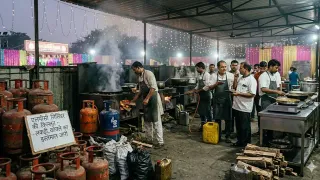
LPG Shortage: The ongoing Middle East crisis has sparked a global oil supply disruption, and its ripple effects are now being felt in Delhi’s wedding industry. A severe shortage of commercial LPG cylinders during the peak marriage season has left caterers scrambling, as rising prices and erratic supply threaten to derail business operations.
With LPG cylinders becoming increasingly difficult to purchase, caterers say they are being pushed towards alternatives like induction cooktops, firewood, coal, and even diesel furnaces. According to jagran.com, commercial LPG cylinders are not easily available in the market, while on the black market, a single cylinder is being sold for anywhere between Rs 4,000 and Rs 6,000.
Praveen Kashyap, a Chandni Chowk-based caterer, told jagran.com that advance bookings for weddings leave little flexibility to absorb such shocks. “The biggest problem is that events are locked in months ahead. Now, with LPG prices shooting up, even recovering basic costs has become a challenge,” he said.
In response, many caterers are asking clients to arrange fuel on their own, while others are downsizing menus or limiting services to stay within budget. The crisis has also forced several operators to switch to traditional fuels like wood and coal raising both costs and environmental concerns. Some have shifted to electric cooking, while in a few cases, families and local networks are helping arrange cylinders.
ALSO READ: Tamil Nadu, West Bengal Gear Up For Polls As Campaigning Ends; Voting On April 23
Harishankar, owner of Harishankar Caterers, said catering costs have risen by 10-20 percent due to the ongoing shortage. “In many events, we’ve had to reduce live counters just to manage expenses,” he noted.
ALSO READ: Islamabad Talks 2.0: Old Wounds Overshadow Negotiations; Why Iran Still Doesn't Trust US Diplomacy
At the same time, the Petroleum Ministry and the Delhi government have clarified that domestic LPG supply remains stable. They added that the supply of commercial LPG, which was earlier severely affected, has now been restored to around 70 percent. The government is also working on expanding the PNG network to prevent such shortages in the future.