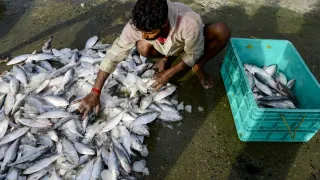
In a major blow to fish lovers ahead of Durga Puja, Bangladesh has halted hilsa exports to India, even though the nation is traditionally one of the major producers and exporters of the prized delicacy.
The sudden halt follows India's export of around 500 tonnes of hilsa to Bangladesh over the past two months, marking a reversal of the traditional trade flow between the two countries.
Syed Anwar Maqsood, Secretary of the Fish Importers Association in Bengal and the Howrah wholesale fish market, said Bangladesh has abruptly stopped imports from India.
"All permits in their country were cancelled through a circular on September 23. Also, Bangladesh is not allowing the import of Hilsa this year. Time has run out," Maqsood said, as quoted by The Indian Express.
Uncertainty Looms Over Padma River Hilsa Exports
Bangladesh is traditionally one of the world's largest hilsa-producing countries, accounting for a major share of global production. The fish holds immense cultural and culinary significance on both sides of the border.
While India has regularly received hilsa consignments from Bangladesh ahead of Durga Puja in recent years, including a permitted export of 1,200 tonnes last year, there is currently no clarity on whether Bangladesh will allow Padma River hilsa exports to India this festive season.
Key Factors Behind India's Hilsa Exports To Bangladesh
The unusual trend of India exporting hilsa to Bangladesh stemmed from reports of lower hilsa production in Bangladesh this year, prompting Bangladeshi traders to source the fish externally to meet local demand.
Maqsood said that the consignments were sourced mainly from Gujarat and shipped through Bharuch port, while some supplies were routed through the Howrah wholesale fish market in West Bengal.
"Bangladesh has been importing hilsa from India for the first time. We usually send fish such as boal, rohu, parse and tangra to Bangladesh. This year there is a shortage of hilsa there," he said.
While Gujarat hilsa has relatively limited demand in Indian markets due to its high roe content, this exact characteristic makes it highly attractive to Bangladeshi buyers, particularly in Chattogram and Sylhet.
"Gujarat hilsa contains a lot of roe, which is highly sought after in Bangladesh. The eggs are also being sold separately for processing and re-exported to other countries by them," Maqsood said.
He further added that Bangladeshi traders have been processing some of the imported fish for overseas export while drying and selling the rest as salted hilsa in the domestic market.