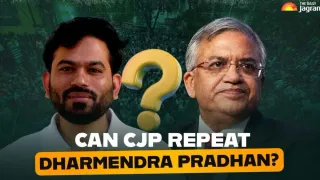
CJP Jantar Mantar Protest: The Cockroach Janata Party has announced a large-scale protest at Delhi's Jantar Mantar on Saturday seeking ouster of Chief Election Commissioner Gyanesh Kumar amid the allegations of irregularities in the Special Intensive Revision (SIR) process. Earlier, the CJP's campaign remained succesfull as then Education Minister Dharmendra Pradhan resigned after days of protest; however, the ouster process of the CEC is more complex and might not be as convenient.
What Are CJP's Demands?
The CJP has demanded Kumar's resignation after an Indian Express report revealed that the objections of two election commissioners Sukhbir Singh Sandhu and Vivek Joshi were not addressed during the revision process. The pressure group has also demanded a detailed inquiry into the allegations.
While the Delhi Police have denied the permission for the protest citing previous records and time constraint, the CJP has asserted that the protest will be held as per the schedule. CJP founder Abhijeet Dipke has also clarified that the protest will continue until Kumar's resignation.
CEC Removal Process Explained
As per the Indian constitution, the removal process of the chief election commissioner is complex and lengthy. In order to initiate the removal process, the members of parliament must bring a notice of motion, citing misbehavior or incapacity. The motion is required to be approved by at least 100 Lok Sabha or 50 Rajya Sabha MPs for further processes.
However, the Speaker/Chairman has rights to consult the CEC and concerned materials to decide whether the motion can be accepted. If the motion is accepted, a committee is formed to probe the evidence of the allegations. Apart from this, the motion must be passed by a two-thirds MPs present in both the houses. Once the motion is passed, the CEC can be removed following the final approval from the president. In India's history, none of the chief election commissioner has been removed.
Equation In Both Houses
While the opposition MPs too have demanded CEC Kumar's resignation, what they do not have is sufficient numbers in both the houses. While the INDIA Bloc has rights to bring a motion, it can be rejected by the speaker in the lower house. Even if the motion is accepted, the opposition does not have sufficient MPs to pass it with two-thirds majority in either of the two houses.
While CJP was successful in their previous protest against the paper leaks, their fight this time could be prolonged and full of legal challenges.