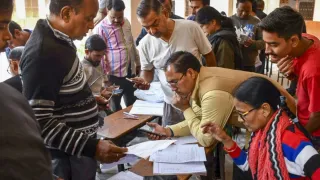
ECI-SIR Row: Amid the ongoing row over the alleged irregularities in the Election Commission of India (ECI), the poll body has ordered a Special Summary Revision (SSR) of electoral rolls in 17 states and Union Territories. The special drive was announced on Thursday amid the ongoing Special Intensive Revision (SIR) of the voter list in other parts of the country. The poll body has set January 1, 2027, as the qualifying date for the Special Summary Revision.
What Is Special Summary Revision (SSR)?
- The Special Summary Revision (SSR) of the electoral roll is conducted as per the existing voter list.
- It is an exercise to update the existing electoral roll by adding new names and deleting the names of invalid voters.
- The eligible citizens, whose names are missing from the final list, can apply through the relevant form.
- Apart from this, the existing voters can also seek changes in their details during this revision process.
- The Booth Level Officers (BLOs) are directed to conduct the verification drive and receive objections from the citizens.
Difference Between SIR And SSR
The key difference between the two revision processes is the method used to update the final electoral roll. Under the SIR, enumeration forms are distributed among the eligible voters, and a later verification process is undertaken by the BLOs. A tentative voter list is then prepared based on the submitted forms; however, the poll body receives objection for a certain time period before publishing the final list.
However, under the SSR, the poll body updates the existing voter list and adds the names of the eligible citizens following a verification process. While the SIR uses 2002-04 rolls as the baseline, the EC considers the latest electoral roll. The SSR aims to add the names of eligible voters, especially those of young and first-time electors, and improve the accuracy of the electoral roll.