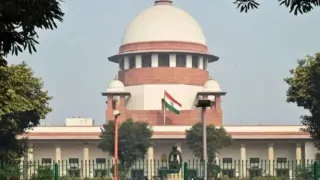
The Supreme Court on Friday heard a writ petition filed by advocate Vineet Jindal seeking suo motu action against a social media post targeting CJI Surya Kant. The content was posted on the official X account of the Indian National Congress Kerala unit on October 12, during an INDIA Bloc protest march to the apex court demanding the resignation of CEC Gyanesh Kumar. It read, "Dear Surya Kant, If law and order is not your domain, resign now. We will find your replacement who can handle it."
A bench comprising Justices Arvind Kumar and Vipul M. Pancholi issued a show-cause notice to the officials of the Kerala Pradesh Congress Committee (KPCC) and asked them to answer why contempt proceedings should not be initiated against them.
ALSO READ: 'Enjoying Weather?': SC Calls For Curbs On Vehicular Pollution As Delhi AQI Breaches 400-Mark
What Did Kerala Congress Committee's Lawyer Say?
The lawyer of the Kerala Congress Committee defended, saying the content was not uploaded with the approval of the officials and that it was later deleted, tendering an unconditional apology. However, Justice Arvind Kumar observed that the court would see "whether the apology has come from the pen or heart."
What Did The Apex Court Say?
The court said, "The Constitution is supreme; no individual or political organisation is above it. The independence of the judiciary is not a matter of political convenience."
It further observed that "freedom of expression cannot be used as a shield to intimidate or interfere in the administration of justice."
The bench emphasised that the court derives its legitimacy from the rule of law, not political approval. It also warned that efforts to challenge or weaken its authority would invite strict action.
"Judicial restraint must never be mistaken for institutional weakness," the bench stated.
ALSO READ: Jantar Mantar Protest: SC Directs Committee To Submit Report On Police Brutality Within A Month
Notice To Be Issued To All Office-Bearers
The court has sought an explanation from every office-bearer of the Kerala Pradesh Congress Committee, including its president and secretary, over the possibility of contempt action under the Contempt of Courts Act, 1971. However, the officials will not have to appear before the bench in person. The judges will now consider the available material to decide whether the matter calls for the use of their constitutional powers under Article 129.