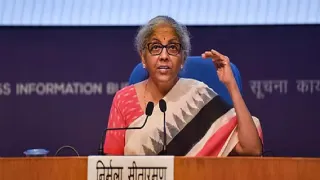
Union Finance Minister Nirmala Sitharaman, while speaking at the BusinessLine Changemaker Awards, explained why India cannot simply stop buying Russian oil and switch to other suppliers. The US and other Western countries have continuously pressed India to stop buying Russian oil, but New Delhi has clarified its stand that it will prioritise its people's interests.
Citing global supply constraints and the needs of the country's 1.4 billion people, Sitharaman said stopping Russian crude could drive up prices because the global supply pool remains limited.
ALSO READ: 'Implications On Overall Relationship': India Reacts To US' Russia Sanctions Bill
Global Oil Price Will Shoot Up: Sitharaman
According to the Union Finance Minister, if India stops buying Russian oil, the limited available pool will come under pressure; as a result, prices will rise. Sitharaman said it poses a severe challenge, no doubt, but India's interests come first for the government.
Trump's Sanction On Russian Oil
Sitharaman's comment comes days after President Donald Trump signed the Sanctioning Russia and Iran Act, which seeks to impose steep levies on Moscow and its top energy buyers such as China and India.
On Friday, September 18, 2026, the President signed into law: H.R. 5334, the "Lindsey O. Graham Sanctioning Russia and Iran Act of 2026," which authorises and expands statutory sanctions, tariffs, and prohibitions on Russia and extends existing sanctions on Iran, the White House said.
he House of Representatives on September 16 passed the Sanctioning Russia and Iran Act, which seeks to impose sanctions on Russia's leadership and energy sector -- as well as on collaborators in Moscow's defence industry and its so-called shadow fleet.
The Act also authorises President Trump to impose tariffs of up to 100 per cent on countries buying Russian oil and gas, including China and India.
The law gives Trump wide discretion over implementation, including which countries face tariffs, the tariff rates imposed, and whether sanctions provisions are waived.
The law comes into effect within 30 days of signing by the President and requires him to impose duties of up to 100 per cent on goods imported from countries that are the top five purchasers of Russian crude oil or natural gas by total volume during the 12 months preceding enactment.
(With PTI inputs)