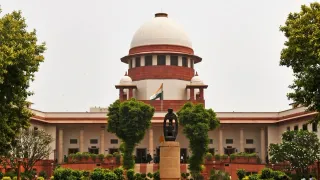
The Supreme Court has questioned the Centre over the massive disparity between the Maximum Retail Price (MRP) of medicines and the prices at which retailers purchase them, asking why the existing system appeared to favour pharmaceutical manufacturers over patients.
The observations come amid concerns over hospitals across India overcharging patients under the guise of providing healthcare facilities, including diagnostic tests, surgeries and medications.
The top court was hearing arguments on Tuesday in petitions seeking regulation of the initial prices of non-scheduled medicines, price caps on medical devices and mandatory prescriptions of generic medicines.
A bench comprising Justices Vikram Nath and Sandeep Mehta criticised the government’s reluctance to exercise greater control over medicine prices, observing that the National Pharmaceutical Pricing Authority (NPPA) appeared “totally defunct”.
“Why is the entire system working to help these people (manufacturers)?” the bench asked while hearing two petitions concerning medicine pricing.
When Additional Solicitor General Aishwarya Bhati, appearing for the Centre, submitted that India had some of the lowest medicine prices globally, the bench said affordability must also be assessed in the context of the country’s low per capita income.
“Don’t weigh patients against commerce,” Justice Mehta remarked, questioning why the government had taken so long to regulate profit margins on cancer drugs.
The Centre maintained that it was continuously reviewing its policies and balancing competing considerations. However, the bench said the government had failed to provide a satisfactory explanation for the substantial differences in medicine prices despite repeated queries.
Describing the government’s approach as “too wayward”, the bench questioned how an increase in price from Rs 11,000 to Rs 1.3 lakh could be justified as calibration.
The court also cautioned against allowing medicine pricing to “run amok”, stressing that the issue could not be treated merely as a matter of economic policy.
SC Questions Hospitals Over Medicine Markups
The bench cited the example of a drip line purchased by retailers for Rs 15 but sold for Rs 250. It questioned the effectiveness of the Drugs (Prices Control) Order (DPCO) if such significant price differences continued to exist.
Senior advocate Mukul Rohatgi, appearing for hospitals, argued that private healthcare institutions had to maintain round-the-clock infrastructure and could not expect patients to procure medicines from outside. He cited concerns over spurious drugs and the operational costs associated with running hospitals.
The bench rejected this justification, observing that hospitals could generate revenue through other means rather than imposing excessive markups on medicines.
“You are a commercial hospital. You charge for everything. But why should medicine be quoted at 100, 200 times?” the bench asked.
The court also questioned the role of corporate discounts offered by pharmaceutical manufacturers, describing them as another unexplained aspect of the medicine pricing structure.
Observing that hospitals could not justify steep medicine markups by citing operational expenses, the apex court remarked that they could not sustain their operations through “dacoity”.