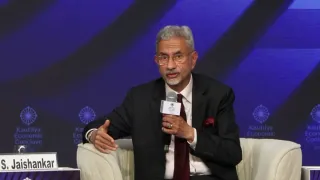
External Affairs Minister S Jaishankar on Monday said the United Nations (UN) has been largely irrelevant to decision-making over current issues. On reforms needed for the United Nations, Jaishankar said the UN is gridlocked, and a few countries are resisting its reforms.
"Where the UN is concerned, I think it's obvious to everybody by now that the UN is gridlocked," he said, adding that the big issues of the day, whether you look at the conflict in the Gulf, whether you look at the conflict in Ukraine, whether you look at other issues in Africa, whether you look at COVID, actually, the United Nations has been largely irrelevant to decision-making. Jaishankar was speaking at an interactive session at the 5th Kautilya Economic Conclave in New Delhi.
UNSC's Inability To Address Ongoing Conflicts Highlights Urgency Of Reform: India
India has been advocating for reform in the UN Security Council, expanding the number of permanent members. Currently, the UNSC has 15 members, which includes five permanent members with veto power and ten non-permanent members elected for two-year terms. China, Russia, US, UK and France are the permanent members, about which India and other developing countries assert that these countries do not represent the global aspirant.
ALSO READ: 'Russia Stood With India When Others Backed Pakistan': Jaishankar's Strong Message To Western Powers
Recently, on September 23, Jaishankar said the Global South is at the receiving end of "unprecedented changes" in the world, emphasising that the inability of the UN Security Council to address ongoing conflicts highlights the urgency of reform. Speaking at the L.69 Consultative Ministerial Interaction on UNSC reform, he said the UN was falling short of expectations.
"The inability of the UN Security Council to address ongoing conflicts and threats to international peace and security only highlights the urgency of reform," he said in a post on X. Jaishankar asserted that continuing delay in implementing reforms perpetuates historical injustice.
What Is The UN?
The United Nations is an international organisation founded in 1945 following World War II, has the primary responsibility to maintain international peace and security. The global body fosters friendly relations among nations, promotes human rights, and enables global cooperation on social, economic, and humanitarian issues.
Are Member Countries Bound To Obey Its Orders?
Under Article 25 of the UN Charter, all member states explicitly agree to accept and carry out the Council’s mandatory decisions. However, the ground reality is different. Western Countries, especially the US, dominate the UN. In recent wars, countries did not obey the UN's appeals or ignored its resolutions on several occasions.
(With Agencies Inputs)