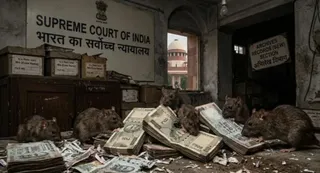
Preserving evidence is a crucial part of the judicial process, but a recent corruption case from Bihar has taken a bizarre turn, almost like a scene from a movie.
During the hearing, the Supreme Court was left astonished after learning that currency notes allegedly seized from an accused in a corruption case had reportedly been destroyed by rats.
What is the case about?
A bench of Justices JB Pardiwala and KV Vishwanathan called the matter extremely serious and described it as a “huge revenue loss” for the state.
ALSO READ: Love, Assault, And Absconding: Man Arrested After Woman Files Sexual Assault Case In Bengaluru
"We were astonished to learn that the currency notes were destroyed by rats. This constitutes a significant loss of revenue for the state and raises questions regarding such incidents," the bench said.
The case dates back to 2014, when a woman serving as a Child Development Project Officer (CDPO) was accused of accepting a bribe of Rs 10,000.
While referring to the Patna High Court’s decision from last year, it was revealed that the seized cash had been stored in a poorly maintained ‘Malakhana’ (storage room for case property), where rats allegedly damaged and destroyed the currency notes.
What did the Supreme Court say?
In its April 24 order, the Supreme Court strongly questioned the explanation, saying it was difficult to believe that rats had destroyed the seized cash.
The court also raised concerns over how many other such cases might exist where valuable seized cash may have been lost due to poor storage conditions.
It said the issue was not just administrative negligence, but something that directly affected the credibility of the justice system.
At present, the Supreme Court has stayed the petitioner’s sentence and granted her bail. Earlier, she had been acquitted by the trial court, but later convicted by the High Court.
ALSO READ: US War Secretary Calls Iran Conflict 'A Gift To The World' As Peace Talks With Tehran Linger
A case exposing systemic lapses
The court is now expected to further examine how such a major lapse in safeguarding government-seized property took place.
The incident highlights serious flaws in the system, where even key evidence in corruption cases is not being preserved properly.
If evidence meant to support justice ends up as “rat food,” it raises serious questions about accountability and the protection of public funds.
The Supreme Court’s remarks serve as a strong warning for authorities to improve the safety and management of warehouses and storage facilities used for preserving case evidence.