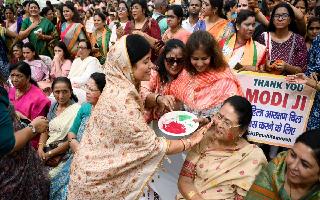
The Women's Reservation Bill has achieved legal status after receiving the endorsement of President Droupadi Murmu on September 29. The Government of India has formally declared the bill as an Act through a gazette notification.
Officially named the Nari Shakti Vandan Adhiniyam, this law proposes a groundbreaking measure to allocate one-third of seats in both the Lok Sabha and state assemblies for women.
Now, it will be officially known as the Constitution (106th Amendment) Act. According to its provision, "It shall come into force on such date as the central government may, by notification in the Official Gazette, appoint."
Earlier Vice President and Rajya Sabha chairman Jagdeep Dhankar also signed the bill before being presented to the President.
The bill's journey to becoming law culminated during a special session of Parliament, which coincided with the Parliament's relocation to its new building on September 19.
The Lok Sabha gave its resounding approval to the legislation on September 20, with an overwhelming majority of 454 MPs voting in favor, while only 2 opposed it. Notably, some members from the opposition called for a sub-quota within the bill to address the representation of women from the Other Backward Class (OBC) and minority communities.
Upon addressing the Rajya Sabha on the Women’s Reservation Bill, Prime Minister Narendra Modi said, “The transformation in the face of women's power in the country, the trust that will be formed will emerge as an unimaginable and unprecedented power that will take the country to new heights. I can feel this."
ALSO READ: Law Commission Advises Centre Against Changing Existing Age Of Consent From 18 To 16 Under POCSO Act
During earlier discussions when Law Minister Arjun Meghwal introduced the Women's Reservation Bill in the Lok Sabha, the Congress party criticized the government, characterizing the bill as a major political promise without substantial action—a disappointment to the aspirations of countless Indian women and girls. The Congress called it biggest ‘poll jumla’.