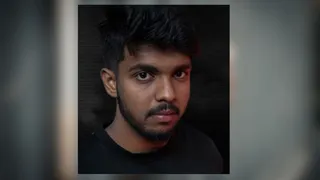
The Dharmasthala police have booked Kannada YouTuber Sameer MD for allegedly circulating misleading and provocative content using artificial intelligence in connection with the explosive Dharmasthala mass burial case. His YouTube video, titled “Who Are Serial K!llrs of Dharmasthala?", has already garnered over 3.1 million views since its release last Saturday. Authorities claim the content goes beyond known facts and misuses AI-generated visuals to mislead the public, prompting legal action.
Dakshina Kannada Superintendent of Police, Arun K, stated that the video distorted facts and included fabricated elements that were not part of the original testimony provided by the whistleblower—a former sanitation worker who recently filed a formal complaint and gave a statement before a court. The video allegedly included additional material not found in official records, potentially inciting unrest among the public. Police have registered a case under Bharatiya Nyaya Sanhita sections 192, 240, and 353(1)(b), which pertain to false information, provocation of unrest, and disturbance of public order.
This isn’t Sameer MD’s first brush with the law. In April, a Bengaluru court issued him a notice regarding a ₹10 crore defamation lawsuit tied to a previous video on the long-unsolved murder of a college student. That case was filed by Shri Kshetra Dharmasthala representatives D Harshendra Kumar and Nischal D, who accused the YouTuber of unfairly targeting the religious institution in his content.
Belthangady police have taken up additional cases against social media users for posting obscene or inflammatory content related to the Dharmasthala case. A Facebook user going by the name ‘Praveen Lobo’ is under investigation after allegedly posting explicit content related to the Sowjanya justice movement. This action followed a complaint from Koukradi resident Jayanth T, leading to charges under Section 296 of the BNS.
Background: What Is 'Dharmasthala Mass Burial Case'?
The mass burial allegations came to light after a former sanitation worker claimed he was forced to dispose of sexual assault victim's bodies in the forests surrounding Dharmasthala. According to his testimony, he fled the region about ten years ago due to guilt but returned recently to file an official complaint.
Later, the same individual presented skeletal remains to the police as evidence. He alleged that between 1995 and 2014, while employed by the Dharmasthala temple, he witnessed and participated in the burial of women and girls who had allegedly been sexually assaulted.
His identity remains confidential, and he has requested witness protection while cooperating with the authorities. In response to media questions, Shrinivas, a local official, noted that records of unclaimed body burials had been maintained by the panchayat since 1989. He added that the number of such cases rose during years of high temple footfall.