There is a very delicate and poignant subject, which many couples are suffering from but very few speak about openly, that is the underlying sperm quality problems in male infertility and failed IVF cycles. Whereas the onus of the problem in most discussions lies with the woman’s age, egg reserve or hormonal issues, the underlying problem in males, which accounts for almost half the problem behind infertility, lies quietly in the background. There are problems much more refined than sperm count and motility, such as DNA fragmentation, oxidative damage, lifestyle damage, and underlying medical ailments.
Understanding what happens when semen quality is affected, and why having “normal” semen analysis results is not always the whole truth. In conversation with The Daily Jagran, Dr Jyoti Tripathi, Fertility Specialist, Nova IVF Fertility, Indore, shares the sperm quality issue that results in IVF failure.
Beyond Sperm Count: Understanding Sperm Quality
For a long time, semen analysis has been interpreted primarily in terms of sperm count, motility, and morphology. However, several men with “normal” results still go through the heartbreaking experience of IVF failure multiple times. The reason behind this is that the traditional tests do not evaluate sperm health on a deeper level. Dr Jyoti Tripathi states, “Sperm DNA integrity, chromatin packaging, and oxidative stress are just a few of the factors that can greatly affect fertilisation and embryo viability, even if the basic parameters are within the normal range.”
ALSO READ: Millennials vs Gen Z: Doctor Explains How Two Generations Are Redefining Parenthood And IVF
Sperm DNA Fragmentation: A Silent Disruptor
One of the most significant yet concealed causes of IVF failure is elevated sperm DNA fragmentation. The situation when the DNA in sperm is damaged may result in low-quality embryos, failure to implantation, and finally, the IVF cycle may end in vain. Besides, DNA fragmentation is usually caused by lifestyle factors, including smoking, obesity, stress, and pollution as well as infections and ageing of the father. What is more, this problem is very often overlooked unless certain tests are conducted specifically for it.
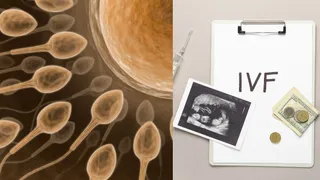
Male Infertility And IVF Failure (Image Credits: Canva)
Lifestyle And Medical Factors Affecting Male Fertility
The male reproductive system can be impacted by the habits and health situations of average days. Dr Jyoti Tripathi states, “Bad sleeping habits, excessive drinking, lack of physical exercise, heat (for instance, continuously placing a laptop on the lap or taking a very hot bath), and some diseases such as varicocele and hormonal imbalance (if left untreated) can ruin sperm characteristics.” These causes may not be enough to totally prevent fertilisation, but they can still greatly lower the chances of embryo development and pregnancy.
Why Male Evaluation Must Be Part Of IVF Planning
After several IVF failure attempts, one should consider diagnosing a male fertility condition in detail, which is accompanied by further sperm examinations and treatment where necessary. Such measures as lifestyle changes, antioxidant therapy, medication for the underlying ailment, or sperm selection technologies will definitely bring about better results if this issue is solved at the beginning stage.
ALSO READ: Why More Indian Women Are Hitting Menopause Before 40; Doctor Shares Insights On How IVF Can Help
Success in IVF is equally dependent on both partners. Not taking into consideration the fertility health of the man only prolongs the process of finding the right diagnosis and hence adds up to the emotional and financial burden that couples have to go through repeatedly. By acknowledging and treating the invisible male factor, the process of IVF becomes less of a trial-and-error one and more individualised and effective, thus making it possible to achieve the goal of a healthy pregnancy.