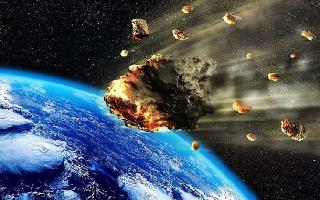
New Delhi | Jagran Lifestyle Desk: Every year on June 30, World Asteroid Day is observed. This day is observed on the anniversary of the Siberian Tunguska event that took place on the same date in 1908. It was the most harmful asteroid-related event on Earth in recent history. As per belief, asteroids are space rocks thought to be the remains left after the formation of the solar system. So as the day is here, we have listed down the 5 biggest and most dangerous asteroids discovered so far.
5 biggest and most dangerous asteroids discovered so far
1. 1866 Sisyphus
A stony asteroid and near-Earth object, 1866 Sisyphus is the largest member of the Apollo group, approximately 7 kilometers in diameter. It will pass 17,325,000 km from Earth on 24 November 2071, and will peak at roughly apparent magnitude 9.3 on 26 November 2071. It is one of the brightest near-Earth asteroids.
2. (53319) 1999 JM8
This asteroid is classified as a near-Earth object and potentially hazardous asteroid (PHA) of the Apollo group, approximately 7 kilometers in diameter, making it the largest PHA known to exist. It passed closer than 0.20 AU to the Earth five times in the last century.
3. 3122 Florence
3122 Florence is a stony asteroid of the Amor group. It is classified as a near-Earth object and a potentially hazardous asteroid. It measures approximately 5 kilometers in diameter. It has the potential to make close approaches to the Earth, which could create serious damage if it were to impact.
4. 99942 Apophis
It is a near-Earth asteroid and potentially hazardous asteroid with a diameter of 370 meters. It caused a brief period of concern in December 2004 when initial observations indicated a probability up to 2.7% that it would hit Earth on April 13, 2029.
5. 2010 RF12
Though a very small asteroid, it has the greatest known probability (5%) of impacting Earth. It passed between Earth and the Moon on 8 September 2010. It is predicted that on 5 September 2096, the asteroid will approach the Earth and the line of variation (LOV) passes through where the Earth will be.
(Disclaimer: the above-given information is based on online research. Jagran English does not vouch for its credibility)