World No Tobacco Day is an annual observance across the globe that focuses on spreading awareness about the use of tobacco and how smoking adversely affects overall health. commemorated every year on May 31 to spread awareness about the health hazards of excessive smoking and tobacco use.
According to the American Lung Association, smoking and the use of tobacco products pose a serious risk of early death and disease for women. Annually, cigarette smoking kills an estimated 202,000 women each year in the US. The World Health Organisation (WHO) states that women who smoke during their pregnancy are at high risk of facing a wide range of problems, including miscarriage and premature labour.
How Does Smoking Affect Your Fertility?
The Centers for Disease Control and Prevention reports that women who smoke have more trouble getting pregnant than women who don’t smoke. In men, smoking can damage sperm and contribute to impotence (erectile dysfunction, or ED). Both problems can make it harder for a man to father a baby when he and his partner are ready.
Smoking During Pregnancy
Smoking during pregnancy can cause tissue damage in the unborn baby, particularly in the lung and brain, and some studies suggest a link between maternal smoking and cleft lip, states CDC. Moreover, women who smoke have more difficulty becoming pregnant and have a higher risk of never becoming pregnant. Studies also suggest a relationship between tobacco and miscarriage. Carbon monoxide in tobacco smoke can keep the developing baby from getting enough oxygen. Tobacco smoke also contains other chemicals that can harm unborn babies.
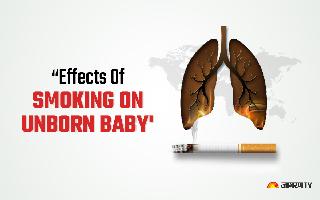
Effects Of Smoking On Unborn Baby
When you smoke during your pregnancy, the harmful effects pass on to your unborn baby too. Not only the mother but the unborn baby also gets affected due to smoking. According to the CDC, there can be long-term effects of smoking on your baby.
1. Your baby may be born too small, even after a full-term pregnancy. Smoking slows your baby’s growth before birth.
2. Your baby may be born too early (premature birth). Premature babies often have health problems.
3. Smoking can damage your baby’s developing lungs and brain. The damage can last through childhood and into the teen years.
4. Smoking doubles your risk of abnormal bleeding during pregnancy and delivery. This can put both you and your baby in danger.
5. Smoking raises your baby’s risk for birth defects, including cleft lip, cleft palate, or both. A cleft is an opening in your baby’s lip or the roof of her mouth (palate). He or she can have trouble eating properly and is likely to need surgery.
6. Babies of moms who smoke during pregnancy and babies exposed to cigarette smoke after birth have a higher risk for sudden infant death syndrome (SIDS).
7. If you smoke during pregnancy, you are more likely to give birth too early. A baby born 3 weeks or more before your due date is premature. Babies born too early miss important growth that happens in the womb during the final weeks and months of pregnancy.
8. Babies whose mothers smoke while pregnant or who are exposed to secondhand smoke after birth have weaker lungs than other babies, which increases the risk for many health problems.