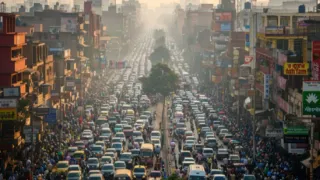
India’s roads are carrying more vehicles than at any point in the country’s history. As car ownership expands across income groups and geographies, so does the risk exposure that comes with it. For individual car owners, that risk shows up as financial liability after accidents, legal costs, and compensation obligations that can run into significant amounts.
Why is car ownership rising all over India?
According to the Ministry of Road Transport and Highways (MoRTH), the total number of vehicles registered in India was 36. 59 crore by the end of March 2024. In that very year, October itself saw 4. 78 lakh passenger vehicle registrations - a figure not seen in any one month previously.
Behind this growth are several converging factors. Incomes have risen, vehicle financing has become easier to access, road infrastructure has expanded, and public transport gaps in many cities make personal vehicle ownership a practical necessity for a growing number of families.
The practical result is higher traffic density, increasing interactions between road users and raising the likelihood of collisions and accident-related disputes. Every additional vehicle added to already busy roads increases driver interactions, raising the likelihood of collisions and accident-related liability situations.
How is an ever-larger vehicle population transforming the risk landscape on Indian roads?
According to MoRTH, there were 4,87,707 road accidents in India in 2024 - resulting in 1,77,175 fatalities and 4,71,441 injuries. Each one of these figures represents a situation in which fault will be critical. If a driver is held at fault, this will be followed by compensation payments, property claims, legal costs - and in very serious cases, long-running tribunal proceedings lasting years themselves.
More vehicles on the same roads increases the chance of something going wrong, particularly in cities where traffic density is already high. Road infrastructure in many parts of the country has struggled to keep up with the pace of vehicle additions, and that gap adds to the pressure.
For a car owner, an accident that injures someone or damages their property does not end at the scene. It opens a legal and financial process with consequences that can extend well beyond what was visible on the day.
What Makes Liability Risks a Growing Concern for Today’s Car Owners?
Third-party liability under the Motor Vehicles Act, 1988 is not optional. Every vehicle on Indian roads is legally required to carry at minimum a valid third-party insurance policy. The Motor Vehicles (Amendment) Act, 2019 raised compensation thresholds for hit-and-run accidents, pushing up the minimum financial obligations a driver or insurer carries.
As per IRDAI, over 10.46 lakh motor accident claims worth Rs 80,455 crore were pending nationwide. That figure reflects not just the volume of accidents but the financial scale of the liability that road incidents can generate.
Accident victims today are more aware of what they are entitled to claim. Tribunal filings are more consistent, awards have grown, and the financial exposure for a driver found at fault in a serious accident is considerably higher than it was ten years ago.
What Happens When a Driver is Held Responsible for an Accident?
When a driver is found responsible, a claim goes to the Motor Accident Claims Tribunal. What the court awards can cover medical treatment, lost earnings, long-term rehabilitation, and in cases involving a fatality, compensation to the dependants of the person who died.
The table below covers how liability costs can build up across different types of road incidents:
| Accident Type | What the Liability Involves | Scale of Financial Impact |
| Pedestrian or cyclist injured | Medical treatment, lost income, rehabilitation | Often runs into several lakhs |
| Third-party vehicle damaged | Repair or full replacement of the other vehicle | Higher when the vehicle is newer or premium |
| Fatal accident | Tribunal-determined compensation to the family | Legally set, frequently substantial |
| Multi-vehicle collision | Fault shared or assigned across drivers | Can involve several simultaneous claims |
| Property damage only | Cost of fixing or replacing what was damaged | Varies with the extent of damage |
A driver without sufficient insurance bears all of this themselves. A valid car insurance policy transfers the third-party liability onto the insurer within the policy terms themselves. Damage to one's own vehicle is not included in third-party liability insurance; therefore, vehicle owners might need to have extra cover if they wish to be protected from repair or replacement costs that will affect their own vehicle.
Why Can Even a Single Road Incident Lead to Significant Financial Consequences?
The costs that follow a serious road accident do not arrive as a single bill. Medical treatment for an injured third party may continue for months. Legal proceedings at a Motor Accident Claims Tribunal can take years to conclude.
The compensation awarded by tribunals really takes into account the long-term effect on the victim itself - not simply the immediate costs at the moment of the accident. To lots of car owners, the actual financial impact really starts after the accident itself. Medical costs, legal fees, loss-of-income compensation and those settlements decided upon by a tribunal may carry on for quite some time after that very first incident - turning one road accident into a pretty massive financial burden.
Because these costs are often so hard to predict well in advance, lots of vehicle owners opt for car insurance that will give them financial protection against third-party liabilities coming from accidents themselves. Depending on the degree of cover they've chosen, insurance will really help cut down the amount of money that they have to pay out of their own pocket - which is something that happens all too frequently after an unexpected road incident.
Why is accident-related liability cost becoming an even greater concern across India?
The economic value of accident-related claims continues to rise as medical treatment costs are going up, so too are the compensation amounts based on income levels and there's a growing awareness amongst victims of accidents about their legal rights themselves. Consequently, today's liability-related costs can be very much higher than they were some ten years back.
Pursuant to IRDAI, insurers are supposed to be following board-approved claims policies and will settle motor insurance claims all within pre-defined timeframes themselves. To policyholders, this whole structure really matters. This implies that the insurance product they have is backed by regulatory standards itself.
Why is Liability Protection Becoming More Important Than Ever for Indian Car Owners?
The legal requirement for third-party insurance has existed since the Motor Vehicles Act, 1988. What has changed is the environment in which that liability operates. More vehicles, more accidents, higher compensation amounts, and greater legal awareness among road users have all raised the stakes.
The owner of a car that holds only the minimum essential insurance coverage might discover that it will suffice in a minor accident, yet fall short in a more severe one. There is a considerable difference between what a basic policy covers and what the cost really is of a very severe accident itself.
Why are so many vehicle owners looking beyond the standard third-party coverage?
With liability risks and the cost of vehicle repairs continuing to rise, lots of car owners are asking themselves whether the most basic third-party protection will be enough.
Although third-party insurance does meet the legal requirements, it doesn't safeguard your own vehicle against damages resulting from an accident, theft, fire or numerous other very common risks.
This is one reason why a lot of vehicle owners opt for a comprehensive car insurance policy. In addition to obligatory third-party liability cover, it gives protection against damage to the insured vehicle itself because of accidents, theft, fire, natural disasters and all sorts of other covered events. To car owners seeking to reduce their exposure to both liability-related and vehicle repair costs, comprehensive coverage offers much wider financial security against those very same liability-related responsibilities and also against any damage that might affect their insured vehicle itself.
As India’s Vehicle Numbers Continue to Grow, What Should Responsible Car Owners Keep in Mind?
The growth in India’s car population is not slowing down. For individual owners, that means the risk environment they operate in will continue to evolve. A few things are worth keeping in mind:
- Third-party insurance is a legal requirement under the Motor Vehicles Act, 1988, and lapsing on it carries penalties
- Comprehensive cover brings the owner’s own vehicle into the protection, not just the liability side
- Accident claim amounts have been climbing over the years, which raises the stakes on having adequate cover
- Add-ons like zero depreciation and engine protection can make a material difference to what comes out of pocket after a claim
- Keeping renewal dates in check avoids coverage gaps that can expose an owner at the worst possible time
Insurance does not make someone a better driver. What it does is make sure that when something goes wrong, the financial damage does not fall entirely on the owner.
Conclusion
India’s rising vehicle population is a reflection of economic growth and expanding mobility. It also brings with it a rising exposure to road risk and the financial liability that follows. For car owners, the question is not whether that risk exists but whether the cover they carry is adequate to meet it. As road accident volumes remain high and compensation claims continue to grow, liability protection deserves more attention than it typically receives at the time of policy purchase.