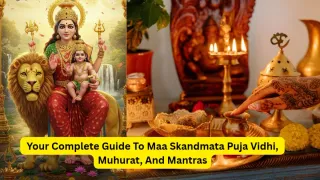
Maa Skandamata is worshipped as the fifth form of Navdurga on the fifth day of Shardiya Navratri. Revered in her compassionate, motherly form, she is traditionally worshipped with devotion, prayer and mantra japa during Navratri.
The name of the Goddess Skanda refers to Lord Kartikeya (commander of gods), and 'Mata' means mother. She is the mother of Lord Skanda.
Devotees believe that worshipping her awakens the Vishuddha chakra, blessing seekers with maternal protection, peace, and divine salvation.
Let's understand the auspicious timings, significance, puja vidhi, mantra and special offering related to Maa Khushmanda.
Sacred Attribute | Ritual Detail |
Sharad Navratri 2026 Date | October 15, 2026 |
Goddess | Maa Skandmata (5th Manifestation Of Navadurga) |
Ruling Chakra | Vishuddha (Throat Chakra) |
Sacred Colour Of The Day | Yellow |
Traditional Bhog | Bananas |
Favourite Flower | Offer Red Flowers, Especially Hibiscus, Jasmine Or Lotus |
Navratri Day 5: Date And Auspicious Timings
Day 5 of Sharad Navratri is on October 15, 2026, which corresponds to Panchami. According to Drik Panchang, the auspicious timings for the puja rituals are:
Chaturthi Tithi begins: October 15, 2026, at 1:14 AM
Chaturthi Tithi ends: October 16, 2026, up to 3:25 AM
Brahma Muhurta: October 15, 2026,04:42 AM to 05:32 AM
Rahu Kalam (Inauspicious Time): October 15, 2026, 01:33 PM to 02:59 PM
Who Is Skandamata And Why Is She Worshipped?
On the fifth day of Navratri, devotees worship Goddess Skandamata, the mother of Skanda (another name of Lord Karthikeya).
She is often depicted in idols or images as the Goddess carrying child Skanda in her lap while seated on a lion or lotus.
She has four hands, in which she is carrying lotus flowers in her upper hands and holding the child in the other two.
Maa Skandmata was manifested as the loving divine mother to protect Kartikeya, who liberated the universe from Tarakasura. She represents nurturing love, protection, patience and strength.
On the fifth day of Navratri, devotees worship Goddess Skandamata (Image: Instagram/aiartera)
Maa Skandamata Mantras
1. Primary Mantra
ॐ देवी स्कन्दमात्रे नमः॥
Om Devi Skandamatre Namah॥
2. Prathana Mantra
सिंहासनगता नित्यं पद्माञ्चित करद्वया।
शुभदास्तु सदा देवी स्कन्दमाता यशस्विनी॥
Simhasanagata Nityam Padmanchita Karadvaya।
Shubhadastu Sada Devi Skandamata Yashasvini॥
3. Stuti
या देवी सर्वभूतेषु माँ स्कन्दमाता रूपेण संस्थिता।
नमस्तस्यै नमस्तस्यै नमस्तस्यै नमो नमः॥
Ya Devi Sarvabhuteshu Ma Skandamata Rupena Samsthita।
Namastasyai Namastasyai Namastasyai Namo Namah॥
ALSO READ: 5 Powerful Durga Mantras Traditionally Chanted For Protection
What To Offer Maa Kushmanda On Day 4
Traditionally, offering bananas to Maa Skandmata on Day 5 is considered auspicious. If bananas cannot be offered, devotees can also include other fruits, sweets, and a simple vegetarian meal.
The exact offering varies by regional traditions, household customs and the fasting practices followed by devotees.
Navratri Day 5 Colour
The dedicated colour for the fifth day of Navratri is Yellow. This colour symbolises positivity, hope, energy and happiness.
Wearing this colour on the fifth day helps devotees align with the cosmic energy which Maa Skandmata radiates.
Puja Vidhi: Step-by-Step Worship Guide For Day 5
To perform Maa Skandmata puja correctly at home, here are some steps that are traditionally followed:
- Devotees should wake up at the Brahma Muhurat and bathe and wear clean clothes (preferably in the colour yellow)
- Clean the puja altar, your home temple and the area surrounding the Navratri Kalash.
- Light a diya and incense. Ensure the Akhand Jyoti is not disturbed.
- Offer fresh flowers, kumkum, akshat and other puja materials to Maa Skandamata according to your family traditions.
- Offer the bhog that you prepared for the Goddess.
- Then chant the Om Devi Skandamatre Namah mantra 108 times using a mala.
- Conclude the puja with Durga Aarti or the aarti followed in your household.
Clean the puja altar, your home temple and the area surrounding the Navratri Kalash (Image: Pexels)
ALSO READ: Why Are Women Traditionally Not Allowed To Visit Temples During Periods?
Worshipping Maa Skandamata on the fifth day of Navratri is a beautiful way to invite her blessings into life.
FAQs
1. What is the significance of worshipping Maa Skandamata?
Worshipping Skandamata on the fifth day of Navratri is believed to bestow wisdom, progeny, and salvation.
2. Can unmarried women also perform Maa Skandamata puja?
Anyone can worship her, and she is particularly known to bless devotees with children or a suitable life partner.