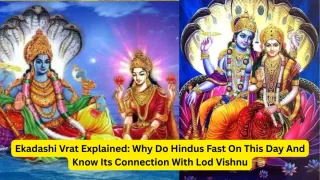
Ekadashi is observed twice a month on the eleventh day of both the waxing (Shukla Paksha) and waning (Krishna Paksha) lunar cycles. This day holds immense spiritual significance in Hinduism as it is dedicated to Lord Vishnu.
On this day, devotees observe a fast (vrat) and seek Lord Vishnu's divine blessings. According to the Vishnu Purana and Padma Purana, fasting on Ekadashi is believed to cleanse the soul, remove past karmas and bring prosperity, health, and divine grace.
Let's understand in detail why Hindus fast on Ekadashi and its connection with Lord Vishnu.
Why Do Hindus Fast On Ekadashi?
According to the Padma Purana, Lord Vishnu himself declares Ekadashi as his most beloved day. He said, "Of all fasts, the Ekadashi vrat is the dearest to me. He who observes it with devotion reaches my supreme abode".
According to legends, a demon named Mura terrorised all three worlds. To defeat him, the gods took help from Lord Vishnu, who fought with the demon for 1000 years. However, after fighting for these many years, the demon still remained strong.
So Lord Vishnu changed his strategy and acted as if he was exhausted by the battle and hid in a cave in the Himalayas. He decided to take a nap in this huge cave.
The demon, seeing the right opportunity, tried to attack him. As he was about to swing the sword, suddenly a divine female energy emerged from Lord Vishnu to kill the demon, Mura. That was the eleventh day of the waxing moon.
Lord Vishnu, impressed by the Goddess, named her Ekadashi and gave her a boon. He said that if a person observes the fast of Ekadashi, then he will be able to free himself from all the sins and impurities of the mind and will surely attain Moksha.
Lord Vishnu himself declares Ekadashi as his most beloved day (Image: Facebook/lordvishnuthesupremegod)
Spiritual Benefits Of Fasting On Ekadashi
- It purifies the mind, body and soul of the devotee.
- Fasting on this day is considered to have equal merits as the Aswamedha sacrifice.
- It cleanses past life sins and helps attain moksha (liberation)
- Brings prosperity, peace, and well-being in the household.
Scientific And Ayurvedic Benefits Of Fasting On Ekadashi
According to Ayurveda, fasting on Ekadashi has a connection with the moon. Just as the moon controls the ocean tides, similarly, on lunar days, particularly the 11th day (Ekadashi), the body's Jatharagni (digestive fire) is believed to be at its weakest.
So, when a person eats heavy foods on this day, Ama (toxins) build up inside their body, which Ayurveda considers the root cause of most disease.
According to modern science, short-term fasting can help the body detoxify, improve digestion, and optimise metabolic function. Fasting combined with mindful practices also encourages introspection and awareness.
When the body is not busy digesting heavy meals, that energy can be directed toward mental clarity and spiritual focus, which can lower cortisol levels (the hormone associated with stress), helping reduce anxiety and improve overall mood.
Who Cannot Do Ekadashi Fast?
These are the few individuals who are refrained from observing this fast:
- Pregnant women
- Children under the age of 8
- Elderly people
- People with illness
What Can We Eat In Ekadashi Fast?
On Ekadashi, meat, grains, flour, pulses, onion, garlic and non-veg foods are prohibited. Instead, you can eat fruits, milk-based products, and non-grain foods such as paneer, ghee, makhana, singhara atta, kuttu atta, and rajgira atta.
Those observing the extreme variant of this fast (i.e. Nirjala Ekadashi) must not drink water. Smoking and drinking alcohol are strictly prohibited during the fast.
On Ekadashi, meat, grains, flour, pulses, onion, garlic and non-veg foods are prohibited (Image: Pexels)
So, these were a few reasons why Ekadashi vrat holds so much importance in Hinduism.
FAQs
1. How many Ekadashis are there in a year?
There are 24 Ekadashis in a regular Hindu calendar year (two per month). In a leap year (Adhik Maas), there are 26.
2. Can I drink water during Ekadashi fast?
Yes, you can drink water during Ekadashi vrat if you keep phalhaar vrat. However, Nirjala Ekadashi does not permit drinking water.