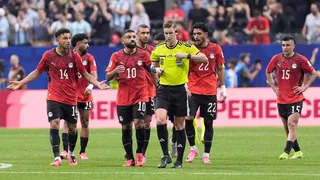
The Egypt World Cup Fixing Claim has become one of the biggest talking points of the FIFA World Cup 2026 after Egypt's dramatic 3-2 defeat to Argentina in the Round of 16.
What looked like one of the greatest knockout matches in recent World Cup history has now been overshadowed by explosive allegations from Egypt's camp, with players and coaching staff suggesting that the tournament was "fixed" in favour of defending champions Argentina and Lionel Messi.
Egypt national football team raced into a stunning 2-0 lead through Yasser Ibrahim and Ziko before Argentina produced an incredible comeback to win 3-2. However, several refereeing decisions throughout the contest left the Egyptian players furious, leading to strong post-match reactions that have sparked a global debate.
Here's everything you need to know about the Egypt World Cup Controversy and why the allegations have become one of the biggest stories of the tournament.
Why did Egypt's star player claim the tournament was fixed?
The controversy erupted immediately after the final whistle when Egypt players openly questioned the officiating during the Egypt vs Argentina Round of 16 clash.
Forward Ziko, who scored Egypt's second goal, did not hold back while speaking to the media after the match. "No fair, no fair. The referee was not fair. The injustice was clear. We did a good job in the early stages of the match. There's been an unfairness, right from the start of the match. A 2–0 lead isn't enough to beat Argentina, it's clear that this tournament has been fixed."
His comments quickly went viral across social media, with many fans debating whether the statement was simply an emotional reaction after a heartbreaking defeat or a serious accusation regarding the competition.
Backup goalkeeper Mohammed Alaa also criticized the officiating, insisting Egypt had been denied crucial decisions. "The refereeing was obvious in front of everyone. We had a goal disallowed, and we had a penalty not called. The penalty turned into a counter-attack goal for Argentina's third goal. Our objections were only toward the referee regarding the refereeing errors," he stated.
The remarks fueled the ‘tournament fixed’ claim, placing even greater scrutiny on the officials who handled one of the tournament's biggest knockout fixtures.
What happened in the Argentina vs Egypt World Cup match?
The Argentina World Cup campaign looked to be in danger after Egypt produced a sensational first-half display.
Yasser Ibrahim opened the scoring before Ziko doubled Egypt's advantage to stun the defending champions. Argentina, however, responded through Cristian Romero as Lionel Messi inspired a remarkable comeback as the South American giants eventually secured a 3-2 victory and booked their place in the quarter-finals.
While the quality of the football received widespread praise, Egypt's players and coaching staff were left furious over several controversial moments.
Among the incidents that generated debate were:
- A disallowed Egyptian goal.
- A penalty appeal that Egypt believed should have been awarded.
- Several refereeing decisions that Egypt felt consistently favoured Argentina.
- Argentina's decisive third goal arriving shortly after Egypt's penalty claims were waved away.
Although none of these incidents have been officially declared incorrect by FIFA, they became the foundation of the Egypt World Cup Fixing Claim following the team's elimination.
Egypt coach accuses FIFA World Cup 2026 of favouring Argentina
The strongest criticism came from Egypt coach Hassan, who suggested commercial interests may have influenced the outcome. "It's all about money. They want Messi to stay in the tournament. In football, many things happen off the pitch because of interests. What happened was unfair. Egypt deserved to qualify. We were the better team."
He continued by questioning the integrity of the competition. "Why isn't there any fairness in sport? I do not want to try to put it nicely here with beautiful wording. We have been treated unfairly today. We have suffered injustice," he exclaimed.
Hassan also claimed he had lost interest in watching the remainder of the competition. "I am not going to watch another match in this tournament."
His final remarks further intensified the controversy. "There seems to be pressure from the Argentine side on this outcome. In football, there are sometimes external factors that go beyond the technical aspects. The world champion received support at every level," he finished.
These comments immediately became one of the biggest headlines of the FIFA World Cup 2026.
How have fans reacted to the Egypt World Cup Controversy?
The Egypt World Cup Controversy has divided football fans worldwide. Many Egyptian supporters backed their team's criticism, pointing to the disputed refereeing decisions and arguing that key moments significantly influenced the outcome.
Meanwhile, Argentina supporters dismissed the allegations, arguing that the defending champions simply showed their quality by recovering from two goals down. Several fans also noted that controversial refereeing decisions are an unfortunate part of football and do not necessarily indicate bias or manipulation.
Across social media, hashtags related to the Egypt World Cup ‘fixing’ claim and tournament ‘fixed’ claim began trending, with thousands of supporters debating the authenticity of Egypt's accusations.
Could the claim have any impact on FIFA?
At the time of writing, FIFA has not publicly responded to the allegations made by Egypt's players or coaching staff.
Strong criticism of refereeing decisions is common after major tournaments, but accusations suggesting that a competition is "fixed" are significantly more serious. If Egypt decides to submit an official complaint regarding the officiating, FIFA could review the match under its standard disciplinary and refereeing assessment procedures.
However, it is important to note that there is currently no publicly available evidence proving that the FIFA World Cup 2026 was fixed or manipulated. The comments from Egypt's camp remain allegations made in the immediate aftermath of a painful elimination.