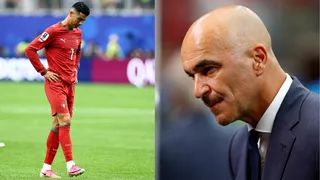
Cristiano Ronaldo has spent nearly two decades proving doubters wrong. From his teenage days in Lisbon to conquering Europe with Portugal, the five-time Ballon d'Or winner has built a career on delivering when his nation needed him most. He is Portugal’s all-time leading scorer, their greatest-ever player, a European champion, and one of football's most iconic figures.
Yet, after Portugal’s frustrating draw against DR Congo in their FIFA World Cup 2026 opener, a question that once seemed unimaginable is now being discussed across the footballing world: Is Cristiano Ronaldo still Portugal’s greatest asset, or is he slowly becoming their biggest liability?
With a squad packed with elite talent such as Bruno Fernandes, Nuno Mendes, Vitinha and João Neves, Portugal were expected to begin their World Cup campaign with dominance. Instead, Roberto Martinez's side looked blunt, predictable and unable to break down a disciplined DR Congo defence. Most of the spotlight fell on Ronaldo after his poor performance and lazy gameplay.
The Ronaldo Drama
Over the years, Ronaldo's greatest strength has been simply scoring goals. Even when his overall game evolved with age, he remained one of football's deadliest finishers inside the penalty area. But against DR Congo, the chances came and went.
The Portuguese captain missed two clear opportunities that could have secured all three points and his overall influence on the match raised fresh concerns.
Cristiano Ronaldo vs DR Congo Stats
- 25 touches
- 19/21 successful passes
- 5 touches inside the opposition box
- 1 pass into the final third
- 0/3 shots on target
For a player whose role is to provide the decisive moment, the statistics paint a worrying picture. At 41, Ronaldo remains a threat whenever the ball arrives inside the penalty area. Few players in history possess his instincts or movement around goal. However, modern football increasingly demands much more than simply finishing chances.
The explosive acceleration that once terrorised defenders has naturally faded. The relentless pressing that defined elite forwards in the modern era is no longer a major part of his game. His ability to consistently beat defenders in one-on-one situations has decreased, while his involvement in build-up play remains limited.
Portugal's attacking structure often appears organized around finding Ronaldo, but against DR Congo that strategy seemed to restrict the freedom of several younger stars.
Former France legend Thierry Henry highlighted one such moment during the match. "The team needs to score, not you need to score," Henry remarked, suggesting Ronaldo's positioning prevented Bruno Fernandes from having a direct sight of goal.
The concern is not whether Ronaldo can still score goals. The concern is whether Portugal's attack becomes too focused on creating opportunities exclusively for him as his farewell World Cup.
When a team possesses creative talents such as Bruno Fernandes, Vitinha and João Neves, forcing every attacking sequence through one player can become predictable and easier for opponents to defend.
Is Portugal Becoming Too Dependent?
Perhaps the bigger issue is not Ronaldo himself, but Portugal's continued dependence on him. Throughout the match, many supporters felt the team was actively searching for Ronaldo even when alternative options appeared more dangerous. On multiple occasions, the veteran forward could be seen demanding possession, while teammates seemed hesitant to take responsibility themselves.
Portugal possesses one of the most talented squads in the tournament, yet there remains a perception that several younger stars are still operating in the shadow of their legendary captain. If the Seleção are serious contenders for the World Cup, that balance must change.
The younger generation needs to assume greater responsibility, take more shots, score more goals and help carry the attacking burden rather than relying solely on a 41-year-old icon.
The draw sparked intense debate among supporters online. One fan wrote on X: “If Ronaldo was not glory hunting, Bruno Fernandes would have scored." Another supporter was even more critical.
"Stating the obvious but Ronaldo is holding this Portugal side back. Saw it at last, Euros and World Cup qualifying vs Ireland. So much potential in this squad but they're wasting their prime years accommodating a 41-year-old up front. It's absolutely insane," he said.
While such reactions may seem harsh, they underline the growing divide among football fans regarding Ronaldo's role in the national team.
The situation became even more uncomfortable after DR Congo supporters celebrated the result by chanting "Messi, Messi" following the final whistle.
Should Roberto Martinez Consider Change?
This is perhaps the most difficult question facing Roberto Martinez. Dropping Ronaldo remains almost impossible given his regard, experience and ability to produce moments of brilliance from nowhere. Even in games where he struggles for long periods, he remains just a chance away from changing the outcome.
Martinez himself appears unconcerned by the criticism. The Portuguese coach argued that keeping Ronaldo on the pitch for the full 90 minutes remained crucial because of his proven goal-scoring ability, particularly in matches where Portugal struggles to break down defensive opponents.
Yet the debate refuses to disappear. Would Portugal benefit more from using Ronaldo as an impact substitute?
What's Next For Portugal?
Writing off Cristiano Ronaldo has rarely ended well. Time and again throughout his remarkable career, the Portuguese superstar has answered criticism with goals and match-winning performances. His entire legacy has been built on proving people wrong. However, this challenge feels different.
Age is the one opponent even Ronaldo cannot defeat forever. While his mentality remains unmatched, the physical realities of elite football are becoming increasingly difficult to ignore.
Portugal's next clash against Uzbekistan now carries great importance. Not only for their World Cup ambitions, but also for the debate surrounding their captain. The football world will be watching closely. Portugal’s remaining fixtures in the 2026 FIFA World Cup Group K are 23 June: vs Uzbekistan (Houston Stadium, Houston) and 27 June: vs Colombia (Miami Stadium, Miami)