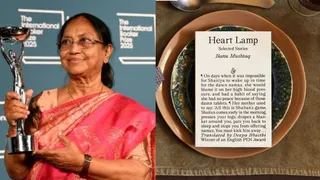
All About Banu Mushtaq And Her Book Heart Lamp: Indian author Banu Mushtaq has made history by winning the International Booker Prize 2025 for her short story collection book "Heart Lamp," written in Kannada and translated to English by Deepa Bhasthi. This award-winning collection is both the first Kannada-language work and the first book of short stories to receive the International Booker Prize. This historic win was announced on May 20, 2025, and is personally rewarding for Mushtaq, but a victory for Kannada literature as well, which has never before had such a significant international honour applied to a book written in this South Indian language.
Heart Lamp is unique in representing the first-ever short story collection recognised with an International Booker Prize. In this article, we will explore all about her early life, education, writing and more. Also, what is so special about this book, Heart Lamp, that it won the International Booker Prize 2025.
Who Is Banu Mushtaq? Her Early Life, Education And More
Born in 1948 in a muslim family in Hassan, Karnataka, Banu Mushtaq is a 77-year-old writer, lawyer and activist, who has dedicated her life to both writing and fighting for justice. Her journey as a writer began early. Despite societal pressure for girls at that time, she pursued her education and started writing even as a schoolgirl. Later, she became a journalist and even served two terms on the Hassan City Municipal Council. Mushtaq has been an advocate for women's rights her whole life, consistently opposing patriarchal beliefs and those from religious conservatism through her role as a writer and activist.
She has also suffered serious challenges, including a social boycott and even a knife attack, but these things only gave strength to her to grow even more determined to write authentically and bravely. she has since released 6 collections of short stories, a novel, essays, poetry, and has been one of the main voices in the Bandaya Sahitya movement, which challenges caste and class oppression.
About Her Award-Winning Book Heart Lamp
Heart Lamp is a collection of 12 short stories written between 1990 and 2023. The stories look at the lives of women and girls in Southern India in Muslim communities and themes of patriarchy, religious oppression and social hierarchy. Mushtaq's stories are known for their humour, vividness and emotional dimension with an intersection of warmth and dark humour. The collection is comprised of several of Mushtaq's important stories, including "Black Cobras," "Red Lungi," and the title story, "Heart Lamp," which is Mushtaq's account of her own experiences with postpartum depression.
The Role of Heart Lamp Translator Deepa Bhasthi
Deepa Bhasthi, the translator of Heart Lamp, played a significant role in bringing Mushtaq's stories worldwide. Bhasthi translates Heart Lamp while retaining some of the multilingual quality of the original text, drawing from the Kannada, Urdu and Arabic in the text to offer the cultural context. Her translation has been recognised and noted for its inventive use of language and emotional impact. Bhasthi made history as the first Indian translator to receive the International Booker Prize and shared the £50,000 award equally with Mushtaq.
Significance of the International Booker Prize Award
The recognition of Heart Lamp as a winner for the International Booker Prize highlights the global importance of regional Indian literature and the ability of translation to connect cultures. Mushtaq's victory provides a platform and visibility for Kannada literature, as well as a focus on a type of storytelling that brings the stories of marginalised communities forward. The award has received accolades from literary celebrities and politicians such as Karnataka Chief Minister Siddaramaiah and MP Shashi Tharoor, both of whom have celebrated this as a proud moment for Indian literature.
Heart Lamp is published in English via Penguin Random House India and the UK alternative press And Other Stories. The success of this collection is a significant moment for Indian literature, demonstrating the wider appeal of writing that emerges from local experience.